About.......Contact.......Society.....................
Showing posts with label Museums. Show all posts

Thursday, June 1, 2017

Double Whammy Discrimination: Diversity at all Cost
Even if it Means Empty Museums


In our postmodern era I would be defended as a discriminatee.

My non-White, Third World background would automatically place me in the "victim" pigeonhole where my word against my white "antagonist" would preside, NO MATTER WHAT.

That is, until I start to defend this "white" monster and say he is the one being discriminated against.

Then the wrath, slow though it may come, is full on!

Especially if it is a white women who is regulating the discrimination channel.

This happened to me recently after I attended (and participated in) a lecture at the Art Gallery of Mississauga, where a group of artists were to discuss the works of Homer Watson, a late 19th early 20th century painter from southern Ontario.

I wrote about the exhibition and the panel discussion here: Homer Watson, Native Son. But I left out my questions to the panel.

As wrote in my post:
Last year, I attended a panel discussion on the exhibition Beyond the Pines: Homer Watson and the Contemporary Canadian Landscape at the Art Gallery Mississauga. I had visited the exhibition numerous times, going through Watson's work one by one, to study his technique, his evolution as an artist, his views, his concerns, and his Canada.

The exhibition also displayed works by contemporary Canadian artists to bring this pine "narrative" to the fore. Some were reasonably good, but none reached the overall skill and beauty of Watson's paintings.
I was gong to leave it at that, just a personal observation (not naive or untutored, since I have a solid background in the arts), hoping that I would gain some insight from these artists.

But I should have known better.

The catalogue the AGM produced for this exhibition prefaced with this objective:
Contemporary Canadian artists looking at landscape must also find a way to access the ‘truth’ of a subject that is not only strongly represented in our national artistic history, but one that is both deeply political and personal.
So the "truth" of a subject is now mandated to "represent" not just our nation "objectively" but has to incorporate political and personal views as well.

A tree is not a tree is not a tree, to paraphrase Gertrude Stein .

I asked Reinhard Reitzenstein, one of the panelists, who is a pretty good sculptor (and who is white), if he believes that Homer Watson's standards, and art, set an example for artist in general or if his English (Western) heritage is insignificant. This was of course not what I was asking, as Reitzenstein clearly understood. I was asking him if he thought that Watson's work was good, was superior.

Reitzenstein talked for a bit and finally admitted that he doesn't want to emulate the now archaic art of Watson. We are in the modern age after all!

So, irrespective of technical expertise, artistic beauty, or individual ingenuity, as long as an artist follows the archaic art of Watson, his work can not be deemed "good."

This is the tired discussion of art which has reached now such a comical zenith that works are exhibited in museums and galleries simply based on their mockery (and not simply rejection) of this western tradition. And many artists have become wealthy doing so.

But the public isn't with the program, which is why the Art Gallery of Mississauga has to go through loopholes to get people to visit its exhibitions, including set up committees and workshops to "study" this lack of museum attendance.

I received a "newsletter" email about a year after this exhibition from the AGM, one of the few I have received from them to invite me to participate in two workshops ttled: Collections Through The Prism of Diversity Series (here are day one and day two of the schedules):

But I was given about a week's notice for a two day workshop, where would have had to pay $250/day to attend. My first reading of the email, before I saw the dates, was to figure out ways could come up with the sum, including asking for a reduced fee. Soon after, I realized that I was put on the list as a "visible minority" participant.

Here is the email I sent the gallery:
I can only surmise from this late notification that the AGM is getting some kind of monetary benefit from this "email list" which it seems to use haphazardly to meet with its program mandates.

In my case, the mandate appears to be that of a minority female artist who can participate in the discussion on how to add more "diversity" into the art collections of the region.

Through your lack of appropriate notification, you indeed lost the participation of a minority female artist (myself) who would have made a unique and substantial contribution to this discussion.
And the reply I received from Mandy Slater the director:
The AGM prides itself on its high professional standards and its strong relational manner. We provide a safe and accountable space for our diverse staff, volunteers, artists and audience. All of this supports the democratic nature of the work we do at the AGM.


Moving forward, if you are able to visit the AGM in a congenial and supportive way I encourage you to do so. If at any point in the future, you visit the AGM and create an unsafe, critical and or threatening space, we will contact security who will request that you leave the premises. If you do not comply they will be entitled to further legal action under the Ontario Trespass to Property Act. I have cc’d senior Security Officers at the City of Mississauga on this and other incidents regarding inflammatory and false statements made by yourself.

The AGM prides itself on embracing diversity and inclusion as a core institutional value. We strive to create an accountable and inclusive space that supports like-minded individuals.
Diversity counts at all costs, even if it means getting the "diverse" complainant out the door!

The irony of the AGM's position of course doesn't occur to its staff: that they are discriminating against me (shutting down my "voice" ) in order that they might continue with their program is exactly what they are accusing the white inheritors of Homer Watson.

This time though, they have found a whole different story: An "ethnic minority" who supports a white tradition!

Tuesday, May 30, 2017

Chasing the Equinox


The Exterior of the Hayden Planetarium
American Museum of Natural History, New York
[Photo By: KPA]


Below is John Coltrane's saxophone piece Chasing the Equinox.

From my Camera Musica blog.

Saturday, April 1, 2017

Bust of the Christ Child


[Photo by KPA]
Antonio Rossellino
(Italian, 1427–1478)
Bust of the Christ Child, ca. 1460–70
(On wooden base over column. The halo on His head is modern.)

Marble, with nineteenth-century metal halo
With base, 18 7/8 inches x 11 inches x 15 3/8 inches
Purchased by Pierpont Morgan, 1906
More information here

Tuesday, July 14, 2015

Infused With Beauty


The last time went to the Fraunces Tavern Museum website (only about a week ago), I didn't notice this new acquisition:
Fraunces Tavern Museum is proud to announce the most recent acquisition, a terra cotta bust of George Washington. This bust is a 19th century draped a l ‘antique unsigned copy of the original bust made by Jean-Antoine Houdon in 1785.
I've written about this bust here and here. And, Larry Auster, whose admiration of the bust I shared, wrote about the bust, and made a post here on my commentary on the sculpture.

I wrote in the commentary Auster/Asrat: Interaction on Beauty:
Although Larry Auster didn't directly write about beauty, his work is infused with the desire to bring beauty back into our world.

One of the most memorable posts he did on art (and beauty) was his reaction to a bust of George Washington. The image of the bust he has posted is huge and takes up the whole screen, so that we, like him, can have as close a look at it as possible. [the rest of my post is here]
So, it is a nice surprise that a museum is bringing this piece into its collections.
------------------------------------------------------------------------------------------
Posted By: Kidist P. Asrat

Thursday, June 18, 2015

George Washington: The World Historical Figure in the Quintessentially American Tradition


George Washington, 1780
Charles Willson Peale (American, 1741–1827)
Oil on canvas; 95 x 61 3/4 in.
Metropolitan Museum of Art, New York

Part of what makes his live story so gripping is that he shaped himself into the world-historical figure he became, in the quintessentially American tradition of men who spring, as F. Scott Fitzgerald famously wrote, from their own Platonic conception of themselves. But his self-conception was extraordinary: it began as a worthy ideal and evolved into a magnificent one. In his fiercely ambitious youth, he sought to win acclaim for his for his heroism and savoir faire. In his maturity, he strove to be, in his own conscience even more than in the eyes of others, virtuous, public-spirited, and (although his ethic wouldn't allow him to claim the word (noble). He did hope, however, that posterity would recognize and honor the purity of his motives; and Americans, who owe him so much, do him but justice in understanding not only what he did for them but also what greatness of soul he achieved to do it.

From: The Founding Fathers at Home (p. 94)
By: Myron Magnet
.
----------------------------------------------------------------------

Friday, April 24, 2015

Frakturs, Fotografs, Farmicia, Francois, Flames and Fighting Songs

Here is the packed schedule I had in Philadelphia and New York. Visit these places, if you can...

I already posted on my visit to the Longwood Gardens (but further down in this post, I post a photograph which was on view from the Spring Blooms competition).

The New York Public Library
Exhibition: Over Here: WWI and the Fight for the American Mind


Let's All Be Americans Now
Lyrics and words by Irwin Berlin

[Verse 1]
Peace has always been our pray'r,
Now there's trouble in the air,
War is talked of ev'rywhere,
Still in God we trust;

Now that war's declared,
We'll show we're prepared,
And if fight we must.
It's up to you! What will you do?

[Chorus]
England or France may have your sympathy, over the sea,
But you'll agree That, now is the time, To fall in line,
You swore that you would so be true to your vow,
Let's all be Americans now. now.

[Verse 2]
Lincoln, Grant and Washington,
They were peaceful men, each one,
Still they took the sword and gun,
When real trouble came;
And I feel somehow, they are wond'ring now,
If we'll do the same.

[Repeat Chorus]

All this in the New York Public Library.

--------------------------------------------------------------------------------------------------------

Longwood Gardens
Photographic Exhibition: Spring Blooms
From the Delaware Photographic Society's annual Wilmington International Exhibition of Photography


Ellis Underkoffer

--------------------------------------------------------------------------------------------------------

Philadelphia Museum of Art
Exhibition: Drawn with Spirit: Pennsylvania German Fraktur from the Joan and Victor Johnson Collection


Pennsylvania German
Birth and Baptismal Certificate for Johannes Gass
1790-1800
Pen, ink and watercolor
12 3/4 x 15 1/2
Philadelphia Museum of Art


I got this postcard from the museum's shop. I couldn't find the exact piece on line, so what you see is my photograph (I don't have a scanner) of the postcard.

From what I can find out, the designer of this piece is known as Christian Beschler, the "Sussel Unicorn artist" according to this piece.
In 2007, Dr. Don Yoder identified the words gemacht von CB (made by CB) on two newly discovered "Sussel-Unicorn" taufscheine (birth and baptismal certificates).3 These initials belonged to the schoolmaster Christian Beschler,
[...]
His taufscheine are characterized by a bright orange or orange and yellow central rectangular area that contains the text adorned with compass stars and geometric designs. Whimsical unicorns and birds with manes eating berries, lions with faces, angels, hearts, half circles, compass stars, and pots of flowers fill the colorful documents. There seems to be an obsession to fill all available space. His religious text and drawing share these motifs.

--------------------------------------------------------------------------------------------------------

Farmicia
Food and Tonics


15 S. 3rd Street
(Between Market and Chestnut Streets)
Philadelphia


Here is the menu, but the lentil salad, with baked goat cheese, greens and sherry dressing is more than just a salad!

--------------------------------------------------------------------------------------------------------

The Red Flame Diner

67 West 44th St
New York, NY 10036


Good diner food for a fair price. Here's the menu.

--------------------------------------------------------------------------------------------------------

Plaza Hotel's Food Hall:
Francois Payard Patisserie


The Passion fruit (with a light chocolate) macaron, for $2.50, will take you down a few blocks.

--------------------------------------------------------------------------------------------------------

I didn't make it to the Morgan, the Cloisters, Macy's or Bergdorf Goodman. But, so far, it looks like New York will stand for a while.

Posted By: Kidist P. Asrat
--------------------------------------------------------------------------------------------------------

Saturday, January 17, 2015

Camel at the Cloisters


Wall Painting of a Camel, first half 12th century (perhaps 1129–34)
From the hermitage of San Baudelio de Berlanga
Fresco transferred to canvas; 65 x 134 in. (165.1 x 340.3 cm)
The Cloisters Collection, 1961 (61.219)

[Photo By: KPA, December 13, 2012]


I just found a way to get to my XD-Picture Card files, from my old Olympus camera. Apparently, this card is pretty much out of date now, but I managed to find a memory card reader, which allows me to download a variety of files.

This is not a great photograph (my camera then was having problems with interiors and using a flash would produce too much glare). I only recently found it (or was able to find it due to the reader).

I took the photograph in August 2012, when I came to New York for a brief summer trip. I met Larry Auster for several outings, despite his ill health, and we went to the Cloisters together. I went twice, (the first time is when I took the photograph). The second time, I went with Larry, having figured out that it would be possible for him to make the trek all the way out there.

I think this photograph is symbolic of our times, and also symbolic of the battle Larry was fighting. It is a reminder not to stop, and not to lapse into complacency. We may stop, but this hard and determined enemy doesn't. I will explain below.

For some reason, I didn't take any photos of Larry. I think I was just being polite. But below is one of him taken at the dinner planned for (and by) him, to celebrate Christmas together with his friends.

He sent me the photo with these remarks: "A photo of me at the dinner with my little pig eyes... My eyes are already small, and when I haven't had much sleep they get even smaller."

Larry was never one to fall to vanity, nor was he one to mince his words. I think he looks cheerful. We came from far and wide to celebrate Christmas with him. He was happy to be amongst friends.


Larry Auster
Kennedy's Pub and Restaurant, New York City
December 8, 2012


Now back to the camel.

Here is how the Metropolitan Museum of Art describes this wall painting:
The hermitage of San Baudelio de Berlanga was constructed in the beginning of the eleventh century at the heart of the frontier between Islamic and Christian lands. Its interior was transformed 150 years later with the addition of two cycles of vibrant wall paintings. The upper walls of the church were decorated with a series of scenes from the life of Christ, while the lower sections include boldly painted hunt scenes and images of animals, all of which derive from earlier Islamic objects.

Associated with aristocratic power and pursuits, the camel was a subject often seen on the courtly fine arts of the Umayyad caliphate and Ta’ifa monarchies. Islamic court art was known and admired by inhabitants of the Christian kingdoms for its costly materials and unparalleled craft. Though the Christians under Alfonso VII had definitively wrested Berlanga from Islamic forces in 1124, the paintings in the hermitage suggest that they continued to rely on Islamic motifs and the style of the Islamic court when seeking to create a luxurious setting.
We are back again in that fascinated mode of the medieval Christian kingdoms. Camels are desert creatures, belonging to their Muslim masters. The medieval artist who created this wall painting didn't quite know how to depict the camel's hooves. He cleverly made them flat and wide, suitable for travel along unstable desert sands. But why create camels in the first place, other than a desire to bring the exotic closer? It was this openness, and "tolerance" that eventually led to the Islamic conquest of Spain.

In our eagerness to experience the exotic, we contemporary folk have made our cities dangerous for conquest once again. It seems that we in the West will always have this perennial cycle of openness, then conquest (by those we opened our doors to), then war, then freedom once again. But this time, it may not have that desired ending.

Larry spent a good deal of his time writing about this civilization we might lose. He exhorted us to stop our lazy ways and not to neglecting this civilization. And he warned us about the dire consequences if we did.

In view of the recent shocking events in France, where armed Jihadis were in the middle of the streets of Paris with sophisticated weaponry, I say that we pay especial heed to his words.

----------------------------------------------------------------------------
Posted By: Kidist P. Asrat

Wednesday, July 30, 2014

Illustrating Natural Histories

Below are a couple of photographs I took at the Natural Histories exhibition in the American Museum of Natural History, in New York. There is a lot to say about this magnificent exhibition. First, in the exhibition's display Curiously Colorful Fishthough, there was a time when fantasy played a large part in illustrating scientific books, as the intricate cataloging of the earth's species proceeded. And the beauty of shells, this time with realistic and beautiful illustrations of shells and mollusks, is shown in the display Dawn of Malacology.

(There are many sites which have posted photos of the collection. But, I took my own partly to keep a record of what I saw and liked - I also took photos of the descriptive logs below the illustration - and partly to test out a non-flash environment for my camera.)

For more information on the collection, this site on the AMNH's website is a useful start.

More links and information along the way may provide what you might wish to obtain.

The best thing, of course, is to visit this marvelous place. And make sure the research library is open when you get there.

Curiously Colorful Fish


The following information was obtained from the American Museum of Natural History online catalog.

Title: Three species of fish with engraved text from Renard's Poissons, écrevisses et crabes

Medium: Engravings

Coverage: Moluccas, Indonesia

Rare books: Asia, Fishes, Fishes -- Pictorial works, Ocean life

Publisher: American Museum of Natural History Research Library

Artist: Renard, Louis, b. ca. 1678

Department / Discipline: Ichthyology

Collection Name: Rare Book Collection

Note: Natural Histories: Extraordinary Rare Book Selections from the American Museum of Natural History Library: 1. De Groot Tafel-visch (additional descriptive text in french): 2. De Spits-Neus (additional descriptive text in french): 3. Ican Suangi (additional descriptive text in french)

Author: Renard, Louis, b. ca. 1678

Book Title: Poissons, écrevisses et crabes, de diverses couleurs et figures extraordinaires, que l'on trouve autour des isles Moluques et sur les côtes des terres australes :peints d'après nature durant la régime de messieurs Van Oudshoorn, Van Hoorn, Van Ribeek & Van Zwoll, successivement gouverneurs-généraux des Indes orientales pour la Compagnie de Hollande

Imprint:Amsterdam: Chez Reinier & Josué Ottens, 1754

Date of Publication: 1754

Language of Publication: French

Call Number: RF-74-F

Bibliographic Number: b10715216

Description of Publication: 2 v. in 1 ([14] p., 43 leaves of plates; [6] p., LVII leaves of plates) : chiefly col. ill. (459 figs.) ; 42 cm. (fol.)

View this book in the library catalog: http://libcat1.amnh.org/record=b1071521

Here is the information describing the illustrations of "colorful fish" provided by the museum:
Fish, Crayfish and Crabs of Diverse Colors and Extraordinary Forms
Author: Louis Renard (1678-1746)
Illustrator: Samuel Fallours (active 1706-1712,
and other local artists
Imprint: Amsterdam, 1754
Two volume work illustrated with
100 hand-colored, engraved plates

Dreary tropical fish? Sounds like an oxymoron.
But when Europeans saw collections of preserved
tropical fish in the 1700, their colors had long
since faded away and they resembled familiar, drab-colored,
local fish.

No wonder the work of Louis Renard was so exciting.
Renard collected and published fantastically colored
and boldly patterned images of fish and
crustaceans from the Dutch East Indies (now Indonesia).
Artists included Dutch East India Company
soldier Samuel Fallours and anonymous locals
---------------------------------------------------

The Dawn of Malacology


The following information was obtained from the American Museum of Natural History online catalog.

Title: Voluta magnifica (Cymbiola magnifica) from Martini's Neues systematisches Conchylien-Cabinet

Medium: Engravings

Rare books: Aquatic invertebrates, Shells, Shells -- Pictorial works, Mollusca

Publisher: American Museum of Natural History Research Library

Collection Name: Rare Book Collection

Artist: Unknown

Original Caption: Voluta magnifica

Author: Martini, Friedrich Heinrich Wilhelm, 1729-1778

Book Title: Neues systematisches Conchylien-Cabinet

Imprint: Nürnberg : Bey Gabriel Nikolaus Raspe, 1769-1829

Date of Publication: 1769-1829

Language of Publication: German

Call Number: 14-A

Bibliographic Number: b10657605

Description of Publication: 12 v. in 13 : col. ill. ; 30 cm.

View this book in the library catalog: http://libcat1.amnh.org/record=b1065760

Here is information close to the display "Voluta magnifica" provided by the museum:
In the late 1700s Friedrich Heinrich Wilhelm Martini,
a German physician and devoted shell collector,
set out to describe and illustrate all mollusk species.
His work was cut out for him: estimates indicate that
there are more than 100,000 species. Martini did not
fulfill his dream, dying after only the third volume
of descriptions. Johann Hieronymus Chemnitz, a German
clergyman, continued his work. Unfortunately, the authors
did not adopt the binomial naming system introduced by
Linnaeus in 1758, rendering the series less scientifically
useful than it might have been.
The shells are beautifully illustrated
and scientifically accurate.
[Photos By: KPA]

-------------------------------------------------------------------------------------------------------------------------------------------------------------
Posted By: Kidist P. Asrat
-------------------------------------------------------------------------------------------------------------------------------------------------------------

Monday, July 14, 2014

25 West 81st (at Central Park West)

Below are photographs of a building on 81st street, just around the corner from the American Museum of Natural History, in New York.

As I got off the bus (M10), I thought I would take a look at some of the buildings around the museum, and settled on 25 West 81st Street.

It happens to be a landmark building. Here is some of its background:

Architects: Gronenberg & Leuchtag
Built (completed): 1927
Floors: 16
Designation: City Landmark

The building is across from the side entrance to the American Museum of Natural History. Despite the imposing design of the museum, I found its sprawling structure with a combination of architectural styles too confusing (compare it to the elegant Metropolitan Museum of Art).


[Photos By: KPA]
-------------------------------------------------------------------------------------------------------------------------------------------------------------
Posted By: Kidist P. Asrat
-------------------------------------------------------------------------------------------------------------------------------------------------------------

Thursday, April 24, 2014

Museum of Beauty


Pope Benedict XVI said when addressing a group of artists assembled in the Sistine Chapel
Beauty, whether that of the natural universe or that expressed in art, precisely because it opens up and broadens the horizons of human awareness, pointing us beyond ourselves, bringing us face to face with the abyss of Infinity, can become a path towards the transcendent, towards the ultimate Mystery, towards God. [Meeting with Artists. Address of His Holiness Benedict XVI. Sistine Chapel. November 29, 2009].
In my last post, I briefly mentioned the idea of a Museum of Beauty. Beauty is best appreciated when it is seen. I think our perception and appreciation of visual beauty surpasses all our other sensory perceptions of beauty. Ideally, there is a plethora of beauty to be seen, from the buildings we pass by, to the gardens we walk through, and the dresses we see on people. I say ideally, because these days, we are living in a cult of ugliness, and finding beauty is like a thirsty wanderer in a desert finding water.

At one time, people created their surroundings with beauty in mind. They knew that what they saw affected them deeply, from the temporary pleasure at the initial viewing of a beautiful object, to the deeper connection beauty (the beautiful object) instills over time.

If one's surroundings are ugly, why bother to preserve them, or live in them?

I think this is the impasse we have reached now.

I cannot redesign our modern world around beauty, but I can try to create small islands of respite where beauty can be viewed and appreciated.

I hope my blog provides such a place. But the ephemeral world of the internet is not enough. We need concrete places where our thirsty eyes can be filled with the wonders of beauty

My idea is to create a Museum of Beauty.

This is not as far-fetched as it sounds. There are the following kinds of museums:
- The Museum of Natural History in New York, which looks at Nature
- The Museum of War, in Ottawa Canada
- The Museum of Science and Technology, in Washington D.C.

There is even a Museum of Bad Art (which I term as a Museum of Ugliness). So why not a museum of beauty?

There are many questions to answer. One of which is: Aren't there enough museums which show beautiful things already?

Yes, there is the Louvre in Paris, the Metropolitan in New York, and many other smaller museums and galleries around the Western world which show art and other objects which are beautiful. But there is none that I can find which exclusively looks at beauty.

And modern curators are not interested in beauty. And the collections which they preside over which show beautiful objects are from past eras and centuries. Modern museums and curators do not want beauty in their museums. This often results with horrific and horrible things displayed in these museums, and museum visitors are hijacked to view them without complaint.

Creating a museum around a concept isn't a far-fetched idea.

Here are the working titles of my book project Reclaiming Beauty, around which the various sections of the museum can be created:
An Introduction to Beauty
- Seek and Ye Shall Find
- Beauty, Truth and Goodness
- Synthesis of Beauty
- Beauty in the Worship of God
- Beauty and the Transcendent
- Beauty and Humanity
- Beauty and Femininity
- Beauty and Masculinity
- How to be a Beautiful Movie Star
- Beauty: I will be your mirror
- Rejecting Beauty
- Elimination of Beauty

Beauty in Art
- Architecture
- Painting
- Drawing and Illustrations
- Film
- Photography
- Dance
- Design and Fashion
- Art Criticism

Beauty in Language
- Literature
- Poetry
- Writing
- Books
- Blogging
- Humor

Beauty in Culture and Society
- Religion
- Christianity
- Islam
- Myths and Legends
- History
- Traditions
- Conservatism
- Politics
- Immigration
- Multiculturalism

Beauty in Nature

Beauty in Science

Desecration of Beauty

Reclaiming Beauty
Even the last two chapters, Desecration of Beauty and Reclaiming Beauty are important. It is necessary for people to see how our modern world is destroying beauty,and how this is historically unprecedented: No other civilization aimed to destroy beauty. And I feel it is important to give guidance on how we can reclaim this beauty lost, since ordinary people have been subliminally hijacked into accepting ugliness as the norm.

I equate this "seeing" with Christianity. From the very beginning, God shows us his presence, perhaps the earliest being when he appeared as a burning bush to Moses, and later gave him tablets to read, with scripted words, rather than words to memorize and recount to the Israelites. These became the visual, written words: The Ten Commandments.

The ultimate revelation, at least in our era, is that of Jesus, who came to show us that God wasn't an entity in the heavens, but a real being, who disclosed himself to us as a human being through Jesus.

And the first words in Genesis, the very beginning of the Bible, are:
And the earth was without form, and void; and darkness was upon the face of the deep. And the Spirit of God moved upon the face of the waters.

And God said, Let there be light: and there was light.[see below for verses 1-31]
The light to see things, to view his beautiful creations.

But, light also enables us to differentiate and discern the beautiful from the ugly, and by extended logic to discard the ugly, or to reshape it to become beautiful.

In those first verses of Genesis, we do not read about the wonderful sound of the seas:
And God called the dry land Earth; and the gathering together of the waters called he Seas: and God saw that it was good
.
We are presented with "the seas" as a visual differentiation between land and water. We may love the sound of the bubbling brook, but it is foremost its vision, with the grass and rocks around it, that captures our imagination.

Pope Benedict XVI said when addressing a group of artists assembled in the Sistine Chapel
Beauty, whether that of the natural universe or that expressed in art, precisely because it opens up and broadens the horizons of human awareness, pointing us beyond ourselves, bringing us face to face with the abyss of Infinity, can become a path towards the transcendent, towards the ultimate Mystery, towards God. [Meeting with Artists. Address of His Holiness Benedict XVI. Sistine Chapel. November 29, 2009].
My post "An Introduction to Beauty: Seek and Ye Shall Find" expands on this.

So, a beauty museum, or a Museum of Beauty, can continue with this movement of "Reclaiming Beauty."

-----------------------------------------------------

Genesis 1

1 In the beginning God created the heaven and the earth.

2 And the earth was without form, and void; and darkness was upon the face of the deep. And the Spirit of God moved upon the face of the waters.

3 And God said, Let there be light: and there was light.

4 And God saw the light, that it was good: and God divided the light from the darkness.

5 And God called the light Day, and the darkness he called Night. And the evening and the morning were the first day.

6 And God said, Let there be a firmament in the midst of the waters, and let it divide the waters from the waters.

7 And God made the firmament, and divided the waters which were under the firmament from the waters which were above the firmament: and it was so.

8 And God called the firmament Heaven. And the evening and the morning were the second day.

9 And God said, Let the waters under the heaven be gathered together unto one place, and let the dry land appear: and it was so.

10 And God called the dry land Earth; and the gathering together of the waters called he Seas: and God saw that it was good.

11 And God said, Let the earth bring forth grass, the herb yielding seed, and the fruit tree yielding fruit after his kind, whose seed is in itself, upon the earth: and it was so.

12 And the earth brought forth grass, and herb yielding seed after his kind, and the tree yielding fruit, whose seed was in itself, after his kind: and God saw that it was good.

13 And the evening and the morning were the third day.

14 And God said, Let there be lights in the firmament of the heaven to divide the day from the night; and let them be for signs, and for seasons, and for days, and years:

15 And let them be for lights in the firmament of the heaven to give light upon the earth: and it was so.

16 And God made two great lights; the greater light to rule the day, and the lesser light to rule the night: he made the stars also.

17 And God set them in the firmament of the heaven to give light upon the earth,

18 And to rule over the day and over the night, and to divide the light from the darkness: and God saw that it was good.

19 And the evening and the morning were the fourth day.

20 And God said, Let the waters bring forth abundantly the moving creature that hath life, and fowl that may fly above the earth in the open firmament of heaven.

21 And God created great whales, and every living creature that moveth, which the waters brought forth abundantly, after their kind, and every winged fowl after his kind: and God saw that it was good.

22 And God blessed them, saying, Be fruitful, and multiply, and fill the waters in the seas, and let fowl multiply in the earth.

23 And the evening and the morning were the fifth day.

24 And God said, Let the earth bring forth the living creature after his kind, cattle, and creeping thing, and beast of the earth after his kind: and it was so.

25 And God made the beast of the earth after his kind, and cattle after their kind, and every thing that creepeth upon the earth after his kind: and God saw that it was good.

26 And God said, Let us make man in our image, after our likeness: and let them have dominion over the fish of the sea, and over the fowl of the air, and over the cattle, and over all the earth, and over every creeping thing that creepeth upon the earth.

27 So God created man in his own image, in the image of God created he him; male and female created he them.

28 And God blessed them, and God said unto them, Be fruitful, and multiply, and replenish the earth, and subdue it: and have dominion over the fish of the sea, and over the fowl of the air, and over every living thing that moveth upon the earth.

29 And God said, Behold, I have given you every herb bearing seed, which is upon the face of all the earth, and every tree, in the which is the fruit of a tree yielding seed; to you it shall be for meat.

30 And to every beast of the earth, and to every fowl of the air, and to every thing that creepeth upon the earth, wherein there is life, I have given every green herb for meat: and it was so.

31 And God saw every thing that he had made, and, behold, it was very good. And the evening and the morning were the sixth day.
-------------------------------------------------------------------------------------------------------------------------------------------------------------
Posted By: Kidist P. Asrat
-------------------------------------------------------------------------------------------------------------------------------------------------------------

Monday, September 9, 2013

Penn Station

Here is a lovely, delicate illustration of Penn Station in 1906.


Pennsylvania Station Interior, 1906
Jules Crow
Watercolor, Ink and Graphite on Paper
New-York Historical Society, Mckim, Mead & White Collection


I found the image at the webiste for the New York Historical Society, in an article titled: McKim, Mead & White’s Glorious Old Penn Station Turns 103. The New York Historical Society is on Central Park West, on 77th Street, a grand and beautiful location.

The original Penn Station (now demolished) was designed and built by McKim, Mead & White, who also built the Morgan Library, which I've visited and written about here.

The original architects for the New York Historical Society's building are York and Sawyer. According to Wikipedia:
The partners Edward York (1863–1928) and Philip Sawyer (1868–1949) had both trained in the office of McKim, Mead, and White. In 1898, they established their independent firm, based in New York City.
The building was later extended in 1938 by Walker & Gillette. And it went further renovations and extensions, by a third team of architects - Platt Byard Dovell White - which were completed in 2011.

Platt Byard Dovell White Architects make post-modern, ugly buildings, dominated by glass, so I was worried what they could have done to the Beaux-Arts and Roman Eclectic architectural styles of the New York Historical Society. Fortunately, they mostly "renovated" the building rather than restructure it.

Here is the list of renovations they made, none affecting the aesthetic structure of the building:
On the basis of a Master Plan developed early in the process, we reconfigured the following areas:

Entrances & Façade Improvements:
The building was made more visible, more inviting, and more accessible by reconfiguring the entrances on Central Park West and 77th Street and adding doors, ramps, and generous front steps as well as enlarged windows, new signage, and colorful exterior lighting. Exterior changes to the designated landmark required approval of the New York Landmarks Preservation Commission.

Gallery Improvements:
The ground floor, formerly a warren of cloakroom spaces, has been transformed into a single gallery that puts the most popular elements of the collection next to the front door. We upgraded other galleries in a similar fashion with new wall and ceiling finishes, lighting, and climate control.

Auditorium:
Halfway through construction the Society asked us to renovate their neoclassical auditorium into a space that would support a variety of media productions and live performances. We completely reconfigured the plan and added a balcony to bring the capacity to 418, with excellent sight lines from every seat. New finishes, new lighting, and an 80’ wide screen make the auditorium the setting for a dazzling 18-minute introductory video and the centerpiece of a robust slate of public programs.
I had the NYHS on my list to visit during my last trip to the city. I didn't make it. It is a priority on my list for my next visit, especially as a place I can photograph as an illustrative image for my book.
-------------------------------------------------------------------------------------------------------------------------------------------------------------
Posted By: Kidist P. Asrat
-------------------------------------------------------------------------------------------------------------------------------------------------------------

Friday, May 24, 2013

"He Who Seeks Beauty Will Find It" Such Optimism Is Not Enough Anymore


Seeking Beauty

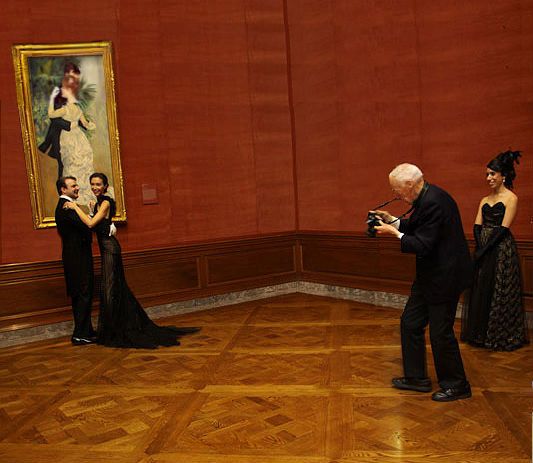
Bill Cunningham at the Frick's Young Fellows Ball in
April 12th 2013, in the East Gallery

The exhibition is:
Renoir: Impressionism, Fashion, and Full-Length Painting
which ran from February 7, 2012 to May 13, 2012

The painting, on loan from the Musée d’Orsay in Paris, is:

Pierre-Auguste Renoir (1841–1919)
Dance in the City, 1883
Oil on canvas
70 7/8 x 35 1⁄2 inches
Musée d’Orsay, Paris


-------------------------------------------------------------------------

Re-written from the Camera Lucida posts:
Bill Cunninghham New York
He Who Seeks Beauty Will Find It

Bill Cunningham New York is a documentary about a gentle man, who is the New York Times fashion photographer. Cunningham started off as a milliner (as a child, he used to inspect the hats of women sitting in front of him in church), and eventually got into fashion photography. His early post was with Women's Wear Daily, where he took photographs of ordinary women wearing designer clothes in the streets. But, after the lady's journal mocked these ordinary women by juxtaposing them with wealthy socialites wearing those same clothes, he quit. Women continually bring up his kindness, saying that he is one of the kindest fashion photographers they know, and won't ridicule them with his pictures. He continues to take photographs of fashion on ordinary women in the streets, and on socialites at various functions. He his two regular columns in the New York Times Styles section Sunday edition: "On the Street" and "Evening Hours." He also has a slide show section of "On the Street" in the New York Times online issue.

Cunningham appears delicate and humble, but his photographic method is feline, and almost predatory. There are moments when he waits, with humped shoulders, looking like a wild cat about to pounce on his prey. He has a strange method where, still humped over, he brings his camera high above his head and takes shots of whatever is below. I think experience has shown him there is always something (or someone) interesting in the view beyond his sight.

New York City is his fashion depository, and he travels throughout the city on a bicycle. He is somehow able to take out his camera and shoot the passing scene of New York's street style as he rides his bike. He has never been in an accident, at least as far as I could learn from the film, but he has had his bike stolen twenty eight times.

The sound track to the film is by jazz musician John Lurie, whose raw music fits with Cunningham's cut throat maneuvers through New York City traffic, exposed (and raw) on his bicycle.

He wears a blue jacket, which has become his uniform of sorts. He found it in Paris, where it is the uniform for garbage collectors. He likes its utilitarian sturdiness, but one of his fashion icons says that it has its own style. He purchases a whole batch on his trips to Paris. Through rough weather, he wears a plastic poncho which covers him and his camera, and which he regularly patches and repairs with duct tape.

He started out at Details magazine, where the editor would give him a hundred pages (limitless, to any photographer) to fill per issue. This freedom of creation has passed on to his New York Times assignment, where, although his newspaper space is limited, he nonetheless has the whole of New York City with which to fill his blank pages.

He even educates his photo editor, a matter-of-fact type of guy who just want to get the job don. In one scene, this editor cut off the hands of a photograph of a New York socialite Mercedes Bass. Cunningham comes to the rescue, saying that the woman looks like the portrait of Madame X by John Singer Sargent, and cutting off the hands would destroy any resemblance.

His fame now allows him access to the most prestigious in the fashion world - people will stop and pose in their latest regalia for him to photograph, and fashion editors will sing his praises. But, I think it is his unassuming personality that convinces people. They don't fear malice or mockery from him, and talk of the kindness in his photographs. Through his humbleness, he also convinces everyone he meets, from the street to the gala dinners, that they are worth photographing.

He has lived for decades in a rent-stabilized artist's studio in Carnegie Hall. During the film, he was in the process of getting evicted - Carnegie Hall wanted the spaces for educational facilities. He has since moved into more spacious quarters.

He has an infectious cheerfulness about him. Perhaps that is why everyone, from people in the street who know nothing about him, to the high society in their designer outfits, allow him to take their photographs.

There was a serious, emotional moment in the documentary when he said that he goes to mass every Sunday (I think he said at St. Patrick's). He started to well-up, and it took him a while to collect himself. He gave no explanation for his emotions. I think that now in his early eighties, he must be thinking about his mortality, and his place in the afterlife. The interviewer, to his credit, left him alone.

He was drafted into the Korean War. He said it came naturally for him to wish to fight for his country. Throughout his life, his family has thought that he was a homosexual. This genuinely perplexes him, although he says he understands that a fashion photographer is not a very manly profession, in their eyes at least. But to the contrary, it needs the hardy, steely determination that he has, which allows him to do death-defying maneuvers such as cycling through New York City traffic. His determination is apparent everywhere. He even fights, in his own affable way, with his photo editor, who finally gives in to his unwavering persistence.

There were many gently funny moments in the film, but the funniest was his story of how he photographed the 1960s hippies and their clothes in Central Park, all in black and white. Their psychedelics were lost in his two-toned photographs. He recounts this with his signature laugh, but that is how he told all his stories.

He calls describes fashion as "the ahmor to survive the reality of everyday life," in his Bostonian accent. "I don't think you could do away with it," he continues. "It would be like doing away with civilization."

But it was a phrase which he used during his acceptance speech for his Chevalier of the Order of Arts and Letters in France that best describes his commitment to fashion photography: "He who seeks beauty will find it." It is a wonder how this eighty three-year-old battles through life camera in hand. Because he knows he has to fight to find that beauty.

But his optimism may not be enough. Our society is facing the degradation of beauty, aided by those very bastions of beauty that Cunningham admires: The fashion magazines, the designers, and the elite who showcase their items. Perhaps in the years to come, Cunningham will leave these mainstream institutions of beauty, and try to build other, less conspicuous islands of beauty, where unadulterated beauty can once again regain its rightful place in society.

I tried to find out if "He who seeks beauty will find it" is part of a depository of famous quotes. But no, it is simply a Bill Cunningham quote, soon to be famous. Perhaps he said it with "He who seeks finds" in mind, from Matthew 7:8. Not everything he photographs is beautiful, but one can see his intent is to capture the beautiful, however clumsily it is presented to him. Our century is the least beautiful of the centuries. But, we are lucky that we have a Bill Cunningham, who through his ferociously persistent personality, will never tire to search for, and capture, that illusive beauty.
-------------------------------------------------------------------------------------------------------------------------------------------------------------
Posted By: Kidist P. Asrat
-------------------------------------------------------------------------------------------------------------------------------------------------------------

Sunday, April 28, 2013

Book Project: The Sturdy Periwinkle at the Cloisters: Linking the New World with the Old

I will develop this essay outline for the Nature chapter, under Gardens, or in Chapter Four's Culture and Society . Some of the information is at this blog post from February 2013 in Reclaiming Beauty.


The Trie Garden in the Cloisters
Discussed in: Garden Guide: New York City pp. 33-37
Cloisters Flowers
[Photo by Kidist P. Asrat, August 2012]


The Cloisters show the us the New World's medieval, European historical and cultural inheritance. Yet, although the Cloisters seem to take us that far back in time, the Hudson River below, and the George Washington Bridge in the distance soon brings us to the present, to New York and to the New World. In New York, we have a New World city that has a historical link going further back than medieval Europe to ancient Greece and Rome, as medieval Europe inherited its culture and history from ancient Greece and Rome. Thus, the history of New York, like the history of America, is tied to Antiquity, which is the root of Western civilization. Historians and anthropologists have tried to expand America's cultural and historical inheritance to cover the breadth of the world. "America," they tell us "is multicultural." By that they mean that since contemporary America appears to accommodate every race and culture of the world, then America is an amalgam of the world's histories and cultures: Chinese, Indian, African, Southern European, South American.

By virtue of having landed on her shores, anyone can become an American, bringing with him a piece of himself which becomes ingrained in this multicultural fabric. But nothing could be further than the truth.

The earliest arrivals, admittedly are the non-Europeans Indians, who crossed the span of the country securing some kind of territorial possession. Yet, we cannot allocate land to anyone who put up a post (and often temporary), and lived in dispersed and often warring communities. The Indians did not form a cohesive society or culture that could have built up the vast land the occupied in clumps of tribes, leaving vast spaces empty, uninhabited and uncultivated. That was the accomplishment of the later arrivals, the Europeans. The Bible tells us, and we should dutifully listen, that God rewards those who bring back more than they were give.
14 "For the kingdom of heaven is like a man traveling to a far country, who called his own servants and delivered his goods to them.

15 And to one he gave five talents, to another two, and to another one, to each according to his own ability; and immediately he went on a journey.

16 Then he who had received the five talents went and traded with them, and made another five talents.

17 And likewise he who had received two gained two more also.

18 But he who had received one went and dug in the ground, and hid his lord’s money.

19 After a long time the lord of those servants came and settled accounts with them.

20 "So he who had received five talents came and brought five other talents, saying, 'Lord, you delivered to me five talents; look, I have gained five more talents besides them.'

21 His lord said to him, 'Well done, good and faithful servant; you were faithful over a few things, I will make you ruler over many things. Enter into the joy of your lord.'

22 He also who had received two talents came and said, 'Lord, you delivered to me two talents; look, I have gained two more talents besides them.'

23 His lord said to him, 'Well done, good and faithful servant; you have been faithful over a few things, I will make you ruler over many things. Enter into the joy of your lord.'

24 "Then he who had received the one talent came and said, 'Lord, I knew you to be a hard man, reaping where you have not sown, and gathering where you have not scattered seed.

25 And I was afraid, and went and hid your talent in the ground. Look, there you have what is yours.'

26 "But his lord answered and said to him, 'You wicked and lazy servant, you knew that I reap where I have not sown, and gather where I have not scattered seed.

27 So you ought to have deposited my money with the bankers, and at my coming I would have received back my own with interest.

28 Therefore take the talent from him, and give it to him who has ten talents.

29 'For to everyone who has, more will be given, and he will have abundance; but from him who does not have, even what he has will be taken away.

30 And cast the unprofitable servant into the outer darkness. There will be weeping and gnashing of teeth.'[Matthew 25: 14-30]
And how do we tackle the multiculturalists, who insist that America is for everyone? It is time that Western, European Americans claim their culture. John D. Rockefeller and George Grey Barnard brought back bricks from ancient castles in France to build the American Cloisters. They traveled to Europe to accumulated the treasures that fill up the museum.
Much of the sculpture at The Cloisters was acquired by George Grey Barnard (1863–1938), a prominent American sculptor and an avid collector of medieval art. Barnard opened his original cloisters on Fort Washington Avenue to the public in 1914; through the generosity of philanthropist and collector John D. Rockefeller, Jr. (1874–1960), the Museum acquired the cloisters and all of their contents in 1925. By 1927, it was clear that a new, larger building would be needed to display the collection in a more scholarly fashion. In addition to financing the conversion of 66.5 acres of land just north of Barnard’s museum into a public park, which would house the new museum, Rockefeller donated 700 additional acres across the Hudson River to the state of New Jersey to ensure that no developments on the property would spoil the view from The Cloisters. In addition to providing the grounds and building to house the Barnard collection, Rockefeller contributed works of art from his own collection—including the celebrated Unicorn Tapestries—and established an endowment for operations and future acquisitions [source: The Cloisters Museum and Gardens].
They made a concerted effort to make the American link an European one, and not Indian (native or continental), Chinese, African or South American. The non-Western's interest in America is not to build this American culture, but to try and leave his own cultural mark. But, that isn't working, since where-ever that happens, the result is destruction. There is no Chinese haute cuisine; there are no Indian cathedrals; there is no African classical art; there is no Mexican architecture. And these multiculturalists know this, since once at the shores of America, they immediately start delineating their boundaries: this is my Indian food, these are my Chinese children, here is my African holiday. Yet, they cannot ignore the beauty and the sophistication of the European culture, and in fact that is why they made the journies across oceans: to bask in the good life of handsome homes, abundant food, erudite teachers, and safe and civilized neighborhoods, many of the things they couldn't get (or get at a price) in the countries they left behind. And still, they insist on maintaining their old beliefs. Mostly because they wouldn't know what to do with the culture that awaits them, but also because their own cultures are like an old sweater which comfort them amidst all this alienness. Material comfort only goes so far. There are also spiritual and psychological comforts to appease.

Their existence is like the last servant in the parable who said: "And I was afraid, and went and hid your talent in the ground," and incurred the wrath of God. Their talent may work in their own lands, and they may indeed double it, but in this continent, they don't know what to do with it, and they let it waste. Their lack of productivity, over time, becomes destructive. Nothing new gets built, and what they live off is what came before them, which diminishes with time. That is where the anger of God came from, not just the wastefulness and laziness of the last servant, but also his lack of imagination and daring in creating less than what he was given.

As I was looking through my files and notes on the Cloisters, mainly to find an appropriate image for the front cover of my proposed book, I found the above photo I took of the garden. I was struck by a tiny flower, the periwinkle (also known as the myrtle).


Periwinkles in the Cloisters
Discussed in Garden Guide: New York City pp. 33-37
Periwinkle Label:
Common Periwinkle, Myrtle
Vinca minor
[Photo by Kidist P. Asrat, August 2012]


The periwinkle, which grows in the gardens of the New York, New World, Cloisters, originated in Europe, and was brought over to North America in the 1700s.
The Trie Cloister Garden is home to a collection of plants native to the meadows, woodlands, and stream banks of Europe. Planted as a single filed of herbs and flowers, the garden evokes the verdant grounds of medieval millefleurs tapestries, in which a myriad species are shown blooming simultaneously. Many of the plants gorwing in the garden can be found in the tapestries on display in the galleries, but they bloom here in their proper season.

The European flora is dominated by spring-blooming plants, and the garden is bright with blossoms in early spring, when hellebores, snowdrops, periwinkles, narcissus, violets, wild pansies and English daisies abound, followed by bluebells, columbine, dame's rocket, and iris in May. Foxglove, clary, meadowsweet and ox-eye daisies bloom well into summer. In July the flowering begins to subside, and the Trie becomes a green garden, in which plants chosen for their form and foliage predominate. Acanthus, royal fern, and flag provide a foil for the lesser number of summer-blooming flowers.

Small shrubs like myrtle and sweet gale give structure to the garden, and are repeated throughout to create a pleasing symmetry. In late summer, the cloister becomes a cool refuge, where the air is perfumed by the pots of poet's jasmine that line the parapets. Water splashes from the fountain at the center, and small birds come to drink from the spouts. [Notes from the information booklet]
In ancient Rome, Pliny wrote in The Natural History of Pliny:
Sprigs of myrtle, if carried by a person when travelling on foot, are found to be very refreshing, on a long journey.
- The information plaque by the periwinkle bed in the Cloisters describes the flower as a medieval cancer treatment:
Annual periwinkles have been used for centuries for folk medicine, especially for treating diabetes, and are the source of several cancer drugs.
- And from this site, on the meaning of the flower's name:
The Latin name of periwinkle's genus, Vinca, is derived from a word meaning "to overcome."
- In Christian symbolism, the periwinkle represents Gentiles converted to Christ.

Such a small flower, with such a sturdy name! And it embodies the spirit of the Western civilization in America: overcoming the odds to arrive on the continent from a distant Europe, and to survive and flourish in America; containing healing and life-prolonging properties; maintaining the spiritual and religious link; and whose presence and benefits are known since Antiquity.

This tiny flower is also featured in art, which the American inheritors have transplanted to their New World shores, in order to link them with their European heritage.


Window with Grisaille Decoration
Date: ca. 1325
Geography: Made in Rouen, France Culture: French
Medium: Pot metal glass, colorless glass, silver stain, and vitreous paint
Dimensions: Overall: 28 1/4 x 23 1/2 in.
The Cloisters Collection

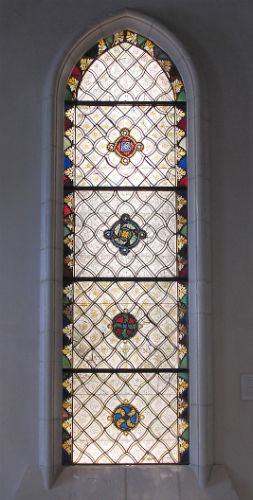
In this fourteenth-century panel, the vibrant color and robust lines of thirteenth-century stained glass were jettisoned in favor of colorless glass painted with leafy vines growing on a trellis. The three foliate designs, each of which is remarkable for its delicacy and refinement, are identifiable not only by their botanical species but also as patterns known to have originated at Saint-Ouen. The two lower panels display the periwinkle flower; the third panel represents the leaf of the strawberry plant; and the top two depict geranium foliage. The colored borders incorporate buttercup leaves with red and green quarries, and the center bosses are composed of whorls of artemisia leaves entwined with knotted ribbons of color. [Notes from theMetropolitan Museum of Art]
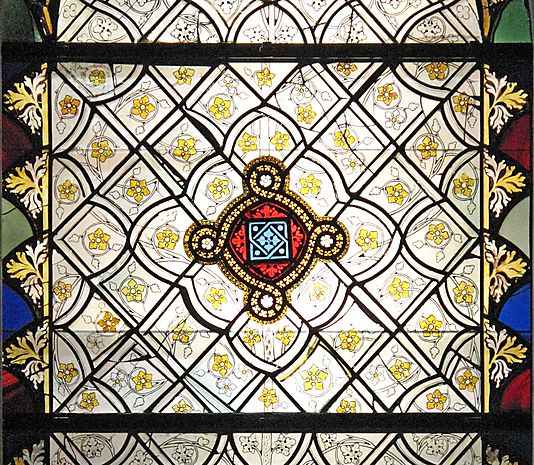
The plant forms in this detail are too highly stylized to be botanically identified, with the exception of the grisaille flowering vine with silver stain blossoms. This may be tentatively identified as a species of periwinkle, either Vinca major or V. minor, but it is not a botanically accurate representation. Periwinkle flowers are blue, not yellow or gold, but form is more important in the identification of plants in medieval art than color. Even botanically recognizable plants are represented in color forms other than those found in nature. [Notes from theMetropolitan Museum of Art]

Detail of the top square panel of the grisaille window, with stylized yellow periwinkles, from
stained glass window in the Cloisters' Gothic Hall
The five panels of this lancet window once decorated three different windows in the radiating chapels of the abbey church of Saint-Ouen at Rouen, in Normandy. As reassembled here, the lancet is only one-third its original height. Grisaille glass, which is colorless and translucent, was a popular glazing device in the thirteenth and fourteenth centuries. It not only allows more light into the interior than color-saturated pot-metal glass, grisaille also functions as an unobtrusive background for ornamental motifs painted with fine brush lines. Our glass panels are decorated with stylized yet recognizable plants such as periwinkle, strawberry, and artemisia, forming an elegant network of foliate motifs. The central bosses of the panels are richly colored with deep blue, red, yellow, and green. The bosses would have echoed the brilliantly hued horizontal bands once located at the windows' midpoints, which contained scenes from the life of the saint to whom the chapel was dedicated.

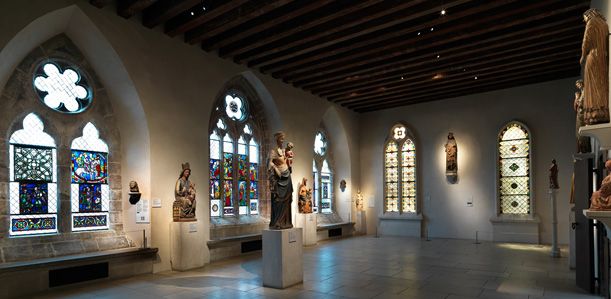
The Early Gothic Hall, Closters
The Early Gothic Hall houses works from the thirteenth and fourteenth centuries. The three thirteenth-century limestone windows overlooking the Hudson River are filled with Gothic stained-glass panels from the cathedrals of Canterbury, Rouen, Soissons, and other sites. Also on view are French, Spanish, and Italian sculptures of the period, as well as an altarpiece depicting the Adoration of the Shepherds painted by the Sienese artist Bartolo di Fredi about 1374. [Notes from the Metropolitan Museum of Art]
This surprising flower is an apt symbol for perseverance and persistence.
-------------------------------------------------------------------------------------------------------------------------------------------------------------
Posted By: Kidist P. Asrat
-------------------------------------------------------------------------------------------------------------------------------------------------------------

Saturday, April 27, 2013

Book Project: The Sturdy Periwinkle at the Cloisters: Linking the New World with the Old

I will develop this essay outline for the Nature chapter, under Gardens. Some of the information is at this blog post from February 2013 in Reclaiming Beauty.

Part of the reason I'm using the Cloisters is to show how a medieval, European, background bears the historical and cultural references to the New World. And New York is the epitome of the New World. Although visiting the Cloisters seems to take us back in time, the Hudson River below, and the George Washington Bridge in the distance soon brings us back to the present - to the New World.

The periwinkle seems to embody that. The flower originated in Europe, and was brought over to North America in the 1700 as a horticultural plant.


The Trie Garden in the Cloisters
Discussed in: Garden Guide: New York City pp. 33-37
Cloisters Flowers
[Photo by Kidist P. Asrat, August 2012]

The Trie Cloister Garden is home to a collection of plants native to the meadows, woodlands, and stream banks of Europe. Planted as a single filed of herbs and flowers, the garden evokes the verdant grounds of medieval millefleurs tapestries, in which a myriad species are shown blooming simultaneously. Many of the plants gorwing in the garden can be found in the tapestries on display in the galleries, but they bloom here in their proper season.

The European flora is dominated by spring-blooming plants, and the garden is bright with blossoms in early spring, when hellebores, snowdrops, periwinkles, narcissus, violets, wild pansies and English daisies abound, followed by bluebells, columbine, dame's rocket, and iris in May. Foxglove, clary, meadowsweet and ox-eye daisies bloom well into summer. In July the flowering begins to subside, and the Trie becomes a green garden, in which plants chosen for their form and foliage predominate. Acanthus, royal fern, and flag provide a foil for the lesser number of summer-blooming flowers.

Small shrubs like myrtle and sweet gale give structure to the garden, and are repeated throughout to create a pleasing symmetry. In late summer, the cloister becomes a cool refuge, where the air is perfumed by the pots of poet's jasmine that line the parapets. Water splashes from the fountain at the center, and small birds come to drink from the spouts. [Notes from the information booklet]

[Photo by Kidist P. Asrat, August 2012]

As I was looking through my files and notes on the Cloisters, mainly to find an appropriate image for the front cover of my proposed book, I found the above photo I took of the garden. I was struck by a tiny flower, the periwinkle (also known as the myrtle).


Periwinkles in the Cloisters
Discussed in Garden Guide: New York City pp. 33-37
Periwinkle Label:
Common Periwinkle, Myrtle
Vinca minor
[Photo by Kidist P. Asrat, August 2012]


The periwinkle is also featured in a stained glass window on display in the museum. Although I was able to take a couple of photographs, museum guards soon came to me to tell me I couldn't use a flash. I was unable to take photos of the stained glass with the periwinkle motif, but the Metropoltian Museum of Art, of which the Cloisters are a part, have some images on their website, with descriptive notes.
The five panels of this lancet window once decorated three different windows in the radiating chapels of the abbey church of Saint-Ouen at Rouen, in Normandy. As reassembled here, the lancet is only one-third its original height. Grisaille glass, which is colorless and translucent, was a popular glazing device in the thirteenth and fourteenth centuries. It not only allows more light into the interior than color-saturated pot-metal glass, grisaille also functions as an unobtrusive background for ornamental motifs painted with fine brush lines. Our glass panels are decorated with stylized yet recognizable plants such as periwinkle, strawberry, and artemisia, forming an elegant network of foliate motifs. The central bosses of the panels are richly colored with deep blue, red, yellow, and green. The bosses would have echoed the brilliantly hued horizontal bands once located at the windows' midpoints, which contained scenes from the life of the saint to whom the chapel was dedicated.

The Early Gothic Hall, Closters
The Early Gothic Hall houses works from the thirteenth and fourteenth centuries. The three thirteenth-century limestone windows overlooking the Hudson River are filled with Gothic stained-glass panels from the cathedrals of Canterbury, Rouen, Soissons, and other sites. Also on view are French, Spanish, and Italian sculptures of the period, as well as an altarpiece depicting the Adoration of the Shepherds painted by the Sienese artist Bartolo di Fredi about 1374. [Notes from the Metropolitan Museum of Art]

Window with Grisaille Decoration
Date: ca. 1325
Geography: Made in Rouen, France Culture: French
Medium: Pot metal glass, colorless glass, silver stain, and vitreous paint
Dimensions: Overall: 28 1/4 x 23 1/2 in.
The Cloisters Collection

In this fourteenth-century panel, the vibrant color and robust lines of thirteenth-century stained glass were jettisoned in favor of colorless glass painted with leafy vines growing on a trellis. The three foliate designs, each of which is remarkable for its delicacy and refinement, are identifiable not only by their botanical species but also as patterns known to have originated at Saint-Ouen. The two lower panels display the periwinkle flower; the third panel represents the leaf of the strawberry plant; and the top two depict geranium foliage. The colored borders incorporate buttercup leaves with red and green quarries, and the center bosses are composed of whorls of artemisia leaves entwined with knotted ribbons of color. [Notes from the Metropolitan Museum of Art]

Detail of the top square panel of the grisaille, with stylized yellow periwinkles
The plant forms in this detail are too highly stylized to be botanically identified, with the exception of the grisaille flowering vine with silver stain blossoms. This may be tentatively identified as a species of periwinkle, either Vinca major or V. minor, but it is not a botanically accurate representation. Periwinkle flowers are blue, not yellow or gold, but form is more important in the identification of plants in medieval art than color. Even botanically recognizable plants are represented in color forms other than those found in nature. [Notes from the Metropolitan Museum of Art]

In ancient Rome, Pliny wrote in The Natural History of Pliny:
Sprigs of myrtle, if carried by a person when travelling on foot, are found to be very refreshing, on a long journey.

- The information plaque by the periwinkle bed in the Cloisters describes the flower as a medieval cancer treatment:
Annual periwinkles have been used for centuries for folk medicine, especially for treating diabetes, and are the source of several cancer drugs.
- And from this site, on the meaning of the flower's name:
The Latin name of periwinkle's genus, Vinca, is derived from a word meaning "to overcome."
- In Christian symbolism, the periwinkle represents Gentiles converted to Christ.

Such a small flower, with such a sturdy name!
-------------------------------------------------------------------------------------------------------------------------------------------------------------
Posted By: Kidist P. Asrat
-------------------------------------------------------------------------------------------------------------------------------------------------------------

Thursday, April 4, 2013

Brahms: Contained Melodrama


Johannes Brahms (1833-1897)
Waltz in A Flat
Op 39 No. 15
Pianist: Stephen Bishop Kovacevich


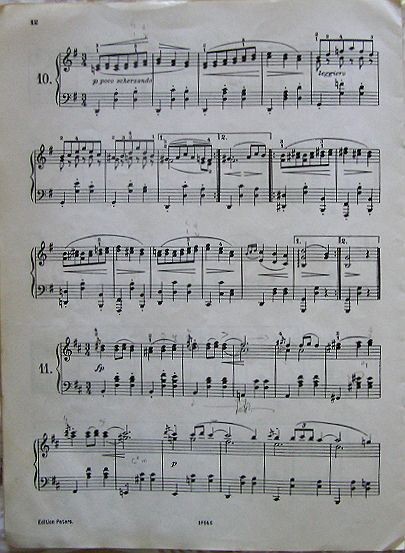
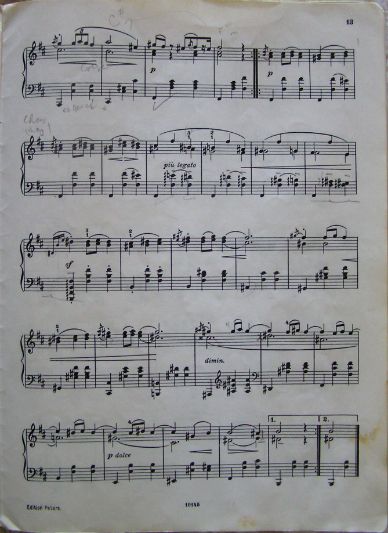
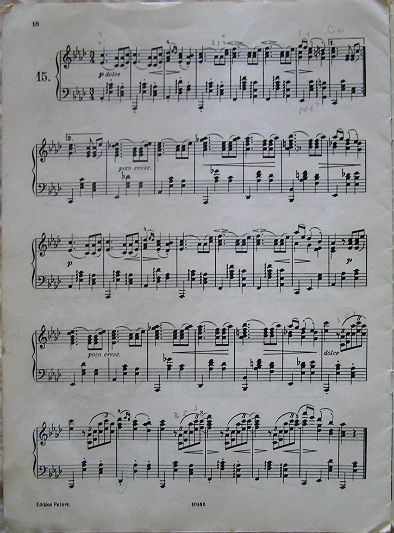
I used to play (still play? that requires a piano, which I don't have, and slogging through my music books to get nimble fingers once again) some of Brahms' waltzes for piano. The Waltz in A Flat Major (No. 15) is one of the easier ones in the collection Brahms Waltzes (for piano solo), but it has difficult octaves. The Waltz in B Minor (No. 11) is harder. But before that comes the short but fast and furious Waltz in G Major (No. 10). (The waltzes can be listened to at this Wikipedia site: Sixteen Waltzes, Op. 39 - Brahms.) My hands are too small to play the octaves in No. 15 effectively, much less the octaves with chords! I compromise and play the octaves without the chords. Playing octaves fast is actually easier since I just have to skim across the notes without putting too much pressure on the keys. The volume can be increased with a loud and dramatic base with the left hand.

Below are pages from my music book: Brahms Waltzes Opus 39. Piano Solo
(Emil Sauer)
Edition Peters

The light pencil marks in my old piano book (which I kept as clean as possible, and protected as much as possible by covering it with a plastic cover) are still visible. Such reminders help during a difficult passage, or when the placement of fingers need to be changed (e.g. using the thumb instead of the index finger), to make for a smoother performance.

I've played at least two of the waltzes from this collection in public recitals.


Johanne Brahms
Waltz in G Major
Op 39 No. 10

Waltz in B Minor
Op 39 No. 11
Page 1


Johanne Brahms
Waltz in B Minor
Op 39 No. 11
Page 2


Johanne Brahms
Waltz in A Flat Major
Op 39 No. 15


I wrote about my visit to the Morgan Library in New York, this past December, where I posted copies of Brahms' transcripts on display in the library.

I have hand written notes on Brahms' music manuscripts. I was surprised by his messy style, and wrote down in my notes "drama - also in manuscript" comparing his melodramatic music with his writing style.

But Brahms' music is less chaotic than his writing style. That is what art is, after all, to contain energy so that it comes out ordered and structured, rather than chaotic and loose.

Below is one Brahms manuscript from the Morgan:


Brahms, Johannes, 1833-1897
Score, p. [3] (3 of 4)
Lieder und Gesänge, op. 59
Dämmrung senkte sich von oben
Autograph manuscript, 1871?
Morgan Library

Monday, March 11, 2013

An Etiquette Guide by a Future President


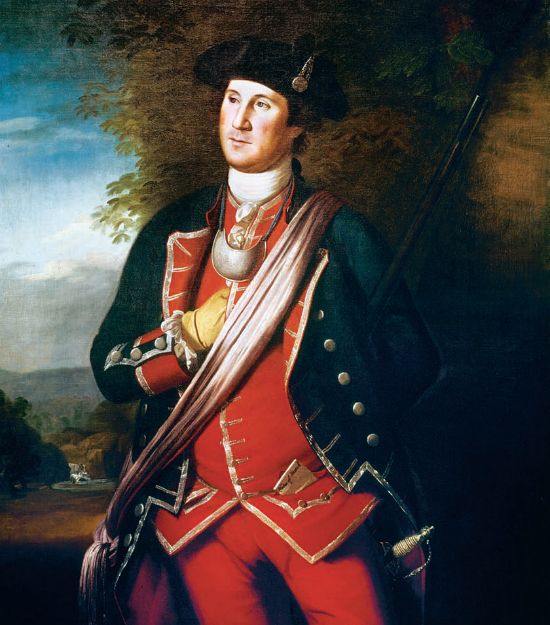
Portrait of George Washington (1732- 1799)
Date Painted: 1772
Artist: Charles Willson Peale (1741 – 1827)
Oil on canvas
The earliest authenticated portrait of George Washington shows him wearing his colonel's uniform of the Virginia Regiment from the French and Indian War. The portrait was painted about 12 years after Washington's service in that war, and several years before he would reenter military service in the American Revolution [Source].
-------------------------------------------------------------------------------------------------------------------------------------------------------------

I'm finding notes I wrote down, and haven't yet transcribed, of various items on view at the Morgan Library (here is my last post on the Morgan, which also includes a photograph I took of the ceiling).

Here is what I scribbled from the label I found below a manuscript of George Washington at the Morgan:
Washington requests "some additional aids." Letter to Elbridge Gerry, 25 Dec. 1777
With a bit of a search (I should have written better notes) I found the full, transcribed letter here, from the manuscript The Writings of George Washington from the Original Manuscript Sources, 1745-1799. John C. Fitzpatrick, Editor. (To find the letter, type in "additional aids" in your server's search/find box at the manuscript website - without quotations marks.)

Here is the letter:
Valley Forge, December 25, 1777

Dear Sir: Notwithstanding my last Letters to Congress were very explicit, and expressive of the wants of this Army, the necessity of arranging many matters in it, and making the necessary appointments without a moments loss of time, yet, when I consider the advanced Season, and consult my past experience of delay, I am induced to take the liberty of claiming your particular attention to this business; hoping thereby, that the method suggested by you, of having a Comee. of Congress, or from the board of War, sent to Camp to consult with me, or a Comee. of my appointing (for it would be impossible for me to give that close attention which the nature of the thing would require) on the best regulations, arrangements, and Plans for the next Campaign will be approved.

If this method should be adopted by Congress, I would feign hope that the powers of their Comee. might not be confined to particular matters, but generl. and extensive; Congress reservg. to themselves the right of approving or disapproving the proceedings. Our whole Military system might then be considered, and such alterations as should be found necessary and beneficial, and that circumstances would admit of, be adopted.

If this Comee. should happen to be composed of Members from the board of War, they could fix many matters at the sametime with Genl. Knox in the Ordnance department, which requires as close attention and dispatch; as any thing whatever; in short I can foresee many great advantages which would result from it, without one possible evil.

I shall be obliged to you for recollecting what I mentioned respecting some additional Aids; I find, especially at times; the multiplicity of writing, and other business too great for those I have. Congress may be assured I do not want to run the public to any unnecessary expence on this Acct. and that I shall be as sparing as possible in my appointments under the Indulgence they may give. I am, etc.

P.S. If Congress mean to adopt the half pay establishment. &c. much good would result from anouncing it soon; that all Officers who should be retaind, under the New regulations, may know at once what they have to trust to; this would, probably, begin the desired reformation in the Army whereas, under uncertainty and doubt, things at best, will jog on as usual.
I've tried to find the image of the manuscript to show Washington's handwriting (rather than the transcribed, typed form above). I was intrigued by the manuscripts at the Morgan, which showed me the personality behind the important figures. I found Washington's writing neat and meticulous, but with a certain flair. I liked the script style. I was surprised by (and disliked) Brahms' script in his music manuscripts which I describe in my notes as "drama - also in manuscript" - as in drama in music, and drama in musical manuscript.

Here is part of a letter that Washington wrote (not the manuscript of the letter I describe above - this letter can be found here - small pdf file):


George Washington (1732–1799)
Autograph letter to Henry Knox, April 1, 1789 (detail)
Gilder Lehrman Collection, on deposit
Morgan Library


And below is Brahm's music manuscript:


Brahms, Johannes, 1833-1897
Score, p. [3] (3 of 4)
Lieder und Gesänge, op. 59
Dämmrung senkte sich von oben
Autograph manuscript, 1871?
Morgan Library


Below is a recording of the song "Dämmrung senkte sich von oben" (upto the 3:38 point in the youtube recording, another song follows it - "Mein Wundes Herz")


Dämmrung senkte sich von oben (starts at the 0:26:22 point, ends at 0:30:14)
Angelika Kirchschlager, mezzo-soprano
Graham Johnson, piano


Dämmrung senkte sich von oben

Dämmrung senkte sich von oben,
Schon ist alle Nähe fern;
Doch zuerst emporgehoben
Holden Lichts der Abendstern!
Alles schwankt ins Ungewisse,
Nebel schleichen in die Höh’,
Schwarzvertiefte Finsternisse
Widerspiegelnd ruht der See.
Nun am östlichen Bereiche
Ahn’ ich Mondenglanz und -glut,
Schlanker Weiden Haargezweige
Scherzen auf der nächsten Flut.
Durch bewegter Schatten Spiele
Zittert Lunas Zauberschein,
Und durchs Auge schleicht die Kühle
Sänftigend ins Herz hinein.
Dusk has fallen from on high

Dusk has fallen from on high,
All that was near now is distant;
But there the evening star appears
Shining with its lovely light!
All becomes an uncertain blur,
The mists creep up the sky;
Ever blacker depths of darkness
Are mirrored in the silent lake.
Now in the eastern reaches
I sense the moon’s light and glow,
The branching hair of slender willows
Frolics on the nearby water.
Through the play of moving shadows,
The moon’s magic light quivers down,
And coolness steals through the eye
Soothingly into the heart.

-------------------------------------------------------------------------------------------------------------------------------------------------------------

While searching for the manuscript I mention above, I found this document on "Rules of Civility." It was a copy that Washington made from a 16th century French etiquette manual as part of a classroom exercise at age sixteen or so of Rules of Civility (and Decent Behavior in Company and Conversation) (seen notes below). This document, and the exercise, must have influenced his adult, and presidential, years. We underestimate the importance of memorization and rote learning (there are many lines of Shakespeare I still remember after those arduous memorization tests I had to take in high school). As Washington meticulously (that is his character, after all) copied those lines on civility and decent behavior, he must have had them engraved in the back of his head, later to be useful when he was running a country, and a very new one at that. The American people are lucky in their first leader, that he was wise, humble and decisive. His education surely had a part to play in his leadership.

From his meticulous script, I would think he also found daily etiquette as an important aspect of civility, and that he had a regard for morality.

I've posted below rules 54-67 of the young George Washington's Rules of Civility (and Decent Behavior in Company and Conversation), along with an introduction on these rules.

Here is the background behind these Rules:
Washington's concern for morality can be dated back at least to a list of “Rules of Civility and Decent Behavior” that he copied into his school writing book when he was 16. Most of these 110 rules, which have been traced to a late-16th century French etiquette manual, concern manners in both speech ("Mock not nor jest at anything of importance") and deed ("When in company, put not your hands to any part of the body not usually discovered"). But several address also the habits of the mind ("Be not hasty to believe flying reports to the disparagement of any"). The last rule reads: "Labor to keep alive in your breast the little spark of celestial fire called conscience." Conscience here refers to man's innate grasp of, or ability to reason about, moral right and wrong. When the American Founders would later declare independence from Great Britain in 1776, it was by virtue of this "spark of celestial fire" that they would establish the principles of human equality, unalienable rights, and government by consent as the foundations of American constitutional government.[Source: PBS.org]
Below are the rules 34-67:
George Washington's Rules of Civility (and Decent Behaviour in Company and Conversation)
[Source: The Papers of George Washington]
No 54-67

These maxims originated in the late sixteenth century in France and were popularly circulated during Washington's time. Washington wrote out a copy of the 110 Rules in his school book when he was about sixteen-years old.

This exercise, now regarded as a formative influence in the development of his character, included guidelines for behavior in pleasant company, appropriate actions in formal situations, and general courtesies, such as: "Superfluous Complements and all Affectation of Ceremonie are to be avoided, yet where due they are not to be Neglected" (no. 25); "Think before you Speak" (no. 73); and "Rince not your Mouth in the Presence of Others" (no. 101).
-----------------------------------------------------------------------------------------------------------------------------------------

54th Play not the Peacock, looking every where about you, to See if you be well Deck't, if your Shoes fit well if your Stokings sit neatly, and Cloths handsomely.

55th Eat not in the Streets, nor in the House, out of Season.

56th Associate yourself with Men of good Quality if you Esteem your own Reputation; for 'tis better to be alone than in bad Company.

57th In walking up and Down in a House, only with One in Compan[y] if he be Greater than yourself, at the first give him the Right hand and Stop not till he does and be not the first that turns, and when you do turn let it be with your face towards him, if he be a Man of Great Quality, walk not with him Cheek by Joul but Somewhat behind him; but yet in Such a Manner that he may easily Speak to you.

58th Let your Conversation be without Malice or Envy, for 'tis a Sig[n o]f a Tractable and Commendable Nature: And in all Causes of Passion [ad]mit Reason to Govern.

59th Never express anything unbecoming, nor Act agst the Rules Mora[l] before your inferiours.

60th Be not immodest in urging your Freinds to Discover a Secret.

61st Utter not base and frivilous things amongst grave and Learn'd Men nor very Difficult Questians or Subjects, among the Ignorant or things hard to be believed, Stuff not your Discourse with Sentences amongst your Betters nor Equals.

62nd Speak not of doleful Things in a Time of Mirth or at the Table; Speak not of Melancholy Things as Death and Wounds, and if others Mention them Change if you can the Discourse tell not your Dreams, but to your intimate Friend.

63rd A Man ought not to value himself of his Atchievements, or rare Qualities of wit; much less of his riches Virtue or Kindred.
-------------------------------------------------------------------------------------------------------------------------------------------------------------
Posted By: Kidist P. Asrat