I meant to write this review, of a film and a book, a while ago. I found it in my "draft" files, and here is the finished piece.
Starting out in the Evening is a quiet, graceful film about Leonard Schiller, a New York writer who is working on what could be his final book, and Heather, a young, aggressive graduate student who disrupts his life to do research for her master's thesis on him. Leonard is initially taken in by this bold young woman, and reluctantly agrees to her regular visits to interview him. He admires her persistent and intelligent personality. But he refuses to answer personal questions, saying that explaining his books and the ideas behind them is sufficient.
Leonard's daughter, Ariel, meets Heather on one of her visits to her father, and jokingly asks Heather if she a burglar. This becomes an inadvertently astute observation. Heather ends up "stealing" part of Leonard's life by digging into a past that he never told her, and putting it in her doctoral dissertation without his permission. And Leonard trusted Heather enough to give her a key to his apartment, which she betrays by rummaging around in his study for information that she wouldn't (or couldn't) obtain from him. She found a box full of photographs in Leonard's study, and took (stole) a photograph of Leonard in his younger days.
Heather, in her inquisitive and prying manner, finds out a sad story of betrayal about Leonard and his wife, which Leonard omitted from telling her during the interviews. Heather includes this piece of information in her final thesis draft, concluding that Leonard's writing turned nihilistic, and less literary, after this betrayal. Leonard is unaware of this addition until Heather gives him the final draft to read.
Any affection Leonard may have had for Heather is erased after he reads her work. He shows this during what is to be Heather's visit to his apartment, when she came to see his reaction to her work. Leonard makes no small talk with Heather, and lets her sit at his kitchen table as he drinks his tea. He then moves his hand towards her face, as though to stroke it, and Heather moves slightly forward to receive his caress. Instead, Leonard flicks his wrist in a short and sharp manner, and slaps Heather hard on her cheek. Like a true narcissist, Heather doesn't have any remorse, or realization of any wrong doing. "I didn't deserve that," she says. Leonard sits back, and closes his eyes as though for a nap. Heather leaves the keys to the apartment on the kitchen table, and walks out.
This little scene is a turnaround for Leonard, who finally tackles his typewriter to work on the book which had eluded him for so long. "My characters haven't done anything interesting for over a decade," he says at one point in the film. The novel is titled:
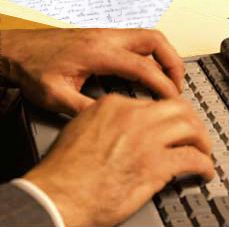
Starting Out in the Evening.The last scene of the film is Leonard hunched over his typewriter. It is a still life shot of him, although a cinematic still life. The camera slowly pulls out of this motionless Leonard, from the confined and restrictive frame of just his face and hands, to gradually include his typewriter, his desk, a lit lamp, and the open curtains behind him. We realize that Leonard is now in his writing "sanctuary." Leonard then begins to type confidently. He is starting out again, late in the afternoon, late in his life. But he's starting out again.
Despite the story being set in New York City, it is a film about interiors: the interior of Leonard's apartment, the interior of his mind, the interior where writers and artists access their thoughts. And these interiors are silent sanctuaries.
The film is a quietly elegant, much like Leonard's personality.
There is a DVD of the film - a little hard to find, but available (
here). It is worth buying and watching.
The book is surprisingly literary, and a pleasure to read. Here is how we are introduced to Leonard, at the very beginning of the book, when he meets Heather for the first time in a coffee shop:
The door opened and a man came in from the cold. He was wearing an enormous coat - a coat that was like a house - and a big, furry, many-flapped hat. He peeled off the hat and stepped for a moment in front of the cash register, stamping off the snow. He was wearing galoshes.
They had never met, but he picked her out instantly, and he came toward her, smiling.
[...]
"So," he said finally, "you've embarked on a project of questionable merit. You're working on a study. Of me." He shook his big head sadly.
The filmmakers stayed quite faithful to the book, but of course they had to leave out many small details, making a more impressionistic film, where expressions relay messages and images describe psychological states (like the camera making a slow zoom out of Leonard's room to show us his "liberation" from his past ghosts, and his resumption of his book). The book and the film complement each other very well.
Here is a surprisingly
good review by the
New York Times:
A crepuscular glow suffuses Andrew Wagner’s intelligent, careful adaptation of a near-perfect novel by Brian Morton. One of Mr. Wagner’s themes (and also Mr. Morton’s) is the waning of that old, literary New York, the twilight of an idea of the city as a capital of the modern mind. Leonard Schiller, one of the main characters, is a retired teacher and all-but-forgotten novelist. Leonard, as embodied by Frank Langella, is a picture of old-fashioned decorum and steadfast dignity. Watching Mr. Langella’s slow, gracious movement through “Starting Out in the Evening,” I was reminded of Burt Lancaster in Luchino Visconti’s adaptation of “The Leopard.” In some ways the comparison is absurd, but both movies concern an old man who has outlasted the social order in which his life made sense. And what is so remarkable about Mr. Langella is that he seems to hold Leonard’s intellectual cosmos inside him, to make it implicit in the man’s every gesture and pause. Instead of nostalgia, “Starting Out in the Evening” offers a clear-eyed elegy for that world. — A. O. Scott [The full review is here]
The review overestimates the talent of Lauren Ambrose, the actress who plays Heather. I thought Ambrose acted with a strained narcissism. Well, perhaps she does suit Heather.
And the review doesn't do service to the film's score. I thought the music was quiet and delicate. It is a film mostly about interiors, after all, and I think the composer,
Adam Gorgoni, captured that mood very well.
Here is a
good review of the film's music (which says the same thing I'm saying).
Below is a youtube of the music accompanying various scenes from the film.
Here is another link to various pieces from the film.
 Dusk on the Upper West Side
---------------------------------------------------------------------------------
Book:
Starting Out in the Evening, by Brian Morton
Film:
Starting Out in the Evening, Directed by Andrew Wagner
------------------------------------------------------------------------------------------------------------------------------------------------------------
Posted By: Kidist P. Asrat
------------------------------------------------------------------------------------------------------------------------------------------------------------