About.......Contact.......Society.....................
Showing posts with label Television. Show all posts

Tuesday, March 24, 2015

Derek Hough is Back


The talented, handsome, charismatic, and nice guy Derek Hough is back on Dancing With the Stars. He was debating whether to come back or not, but I think his overwhelming popularity (tweets, likes, blogs - like mine - and so on) persuaded him to give it one more chance.

His sister, Julianne Hough, is the judge, but she has also danced and won two trophies during her time as a pefromer on the show.

I have posted Hough's video above with his partner Olympic gymnast Nastia Liukin. His choreography is reminiscent of Fosse's, although less idiosyncratic, which the crazy Italian judge recognized last season.

I've blogged about Derek several times: 1, 2, 3, 4, 5.

---------------------------------------------------------------------------
Posted By: Kidist P. Asrat

Friday, February 20, 2015

East Coast Color


Newfoundland and Labrador television commercial

I've always wondered at the color in the "northern" lands. One would expect them to be dreary and grey. But, wherever people cherish the beautiful, they will always have color. Color is part of the world.

Above is the television commercial on Newfoundland and Labrador that is currently showing on the CBC (Canadian Broadcasting Corporation, more similar ones at the link). We have a few more months to plan for that vacation by the sea.

The survey on the website asks me (for a chance at a silkscreen of a whale) if I would travel to Newfoundland and Labrador. I answered honeslty "not very likely."

But, I can still look at the images!

-------------------------------------------------------------------------
Posted By: Kidist P. Asrat

Monday, January 12, 2015

It's All About the He


Bay of Pigs is an essential part of your Up Your Alley® weekend [Source]

Audience member: My fiancée and I are allergic to dogs, so we're thinking of getting a pig.

(At this point I assumed this fiancée was a "she.")

Wendy (of the Wendy Show): How about a cat?

Audience member: He's allergic to cats.

There you have it (it's all about the"he"...).

I suppose it shouldn't come as a surprise, but each time I am surprised, when the hes, shes (and maybe some day the its) are all mixed up.

----------------------------------------------------------------------------------------------
Posted By: Kidist P. Asrat

Thursday, December 18, 2014

Christine's Christmas Cheer with Chocolate-Covered Cherry Cups


Christine Tizzard, of CBC's Best Recipes Ever has a 1/2 hour daily slot to show us her culinary skills. And she is very good.


Below is the video of her showing us how to make a Christmas-themed, chocolate-covered cherry cups. Tizzard also writes for Canadian Living magazine.


I have posted the complete recipe below.
Preparation time: 45 minutes
Total time: 2 hours 30 minutes
Portion size: 30 pieces

Ingredients
10 oz (283 g) 70% dark chocolate, chopped
6 oz (170 g) milk chocolate, chopped
1 pkg (200 g) marzipan1/2 cup (125 mL) glacé cherries
Garnish:10 glacé cherries, cut in thirds

Preparation

In heatproof bowl over saucepan of hot (not boiling) water, melt together half each of the dark and milk chocolates until smooth. Pour by about 1 tsp into 1-3/4-inch (4.5 cm) wide candy cups. Refrigerate until firm, about 30 minutes.

Meanwhile, in food processor, pulse marzipan with cherries until smooth paste forms. Roll by fully rounded 1 tsp into balls. Gently press balls into candy cups, flattening tops almost but not all the way to edge.

In heatproof bowl over saucepan of hot (not boiling) water, melt together remaining dark and milk chocolates; pour by 1 tsp over filling to cover, smoothing tops. Refrigerate for 10 minutes.

Garnish: Top each chocolate with 1 cherry piece. Refrigerate until firm, about 1 hour. (Make-ahead: Layer between waxed paper in airtight container and refrigerate for up to 1 week.)
The ever-practical Canadian Living Magazine also has nutrient information:

Nutritional Information Per Piece:
Calories - 131
Protien - 2g
total fat - 8g
Saturated fat - 4g
Carbohydrate - 15g
Dietary fibre - 2g
Sugar - 12g
Cholesterol - 2mg
Sodium - 8mg
Potassium - 123mg

% RDI:
Calcium - 2
Iron - 9
Folate - 1

-------------------------------------------------------------------------------------------------------------------------------------------------------------
Posted By: Kidist P. Asrat
-------------------------------------------------------------------------------------------------------------------------------------------------------------

Sunday, November 23, 2014

The Meaning of Words


From Stilettos (and mini-skirts) to Sneakers (and sweaters): The Fox Five Bunch

The irritating commentary group The Five comes on periodically on Fox News. I don't know their schedule, and if I find them when I tune in, I listen for a while to see if they have anything worth listening to. Sometimes they do.

The infantile Greg Gutfeld, who almost always wears sneakers and some kind of sweater, and has his hair disheveled like a toddler, did have something to say yesterday.

The topic was Obama signing the two executive orders on Friday to delay deportation of illegal immigrants [KPA: I didn't know he signed them on Air Force One. Is this another of Obama's nonchalant and casual attitude when it comes to the laws, and the governing, of the United States?], then heading over to Las Vegas to rally support for his actions.

About two thirds into the video (below), which just has a portion of the hour-long program, Gutfeld talks about words that he says have been "abused." Gutfeld thinks he's a bit of a wordsmith, and adds his own embellishments usually at the end of the program, with words he declares "banned."


Gutfeld makes his case for a brief half a minute between 13:18 to 13:40 before he got interrupted. I've transcribed what he said:
America has a hard time trusting a President when the language keeps changing, when terrorism is "workplace violence." If breaking the law is considered "dreaming" [KPA: as in the Dream Act, Well Done Gutfeld!], consider the implications. Could theft be "A wish to own something?" We're screwing with the language so that the logic allows for a redefinition of abuses. So that almost anything could mean can mean anything. Rioting could mean...
Gutfeld was on a playful roll, but his dry co-hosts (one of the women is a lawyer) bring in the clearly obvious problems with these politicized words, and they drowned the insightful and amusing commentary Gutfeld was making. I think if he went any further, he would have brought up Orwell, 1984 (and probably Animal Farm), and how they relate (because they do!) to our present time.

The problem with "The Five" is that there are too many of them, they take themselves too seriously, and they are pedantically obvious. There is not much insight to be found there, except occasionally with Gutfeld, and if you can bear his sophomoric presence. Dana Perino is the most serious of the group, although she doesn't take herself as seriously as they do themselves), but she is strangely self-conscious. I don't think she has much practice in front of the camera like her other co-hosts, and she's probably thrown off by their juvenile banter.

Gutfeld has his own blog, so he probably has (or will have) this idea about Obama's words completed and written up somewhere.
-------------------------------------------------------------------------------------------------------------------------------------------------------------
Posted By: Kidist P. Asrat
-------------------------------------------------------------------------------------------------------------------------------------------------------------

Tuesday, November 18, 2014

Picture Perfect


In the Picture
Derek and his partner Bethany in the Semi-finals of
Dancing With the Stars


The talented and artistic Derek Hough created a gem of a piece last night at the semi-finals of Dancing With The Stars.

The dance had a frame as a central point. The two dancers (Hough and his "celebrity" partner Bethany Mota) danced with this frame, but the main story was how they moved within the limitations of this frame, with the girl at times trying to get out of the "frame" and the boy pulling her back in.


Derek Hough and Bethany Mota dancing with (and within) a frame
Video of the full dance

It was a piece about art, about painting, about human desires, about love and, of course, about (and of) dance.

Hough must have studied art in some capacity. Perhaps he knows the composition Pictures at an Exhibition by the Russian composer Modest Mussorgsky.

Perhaps he knows the endless (and often futile) debate by modern artists about "The Frame" and how it confines art (although I think it is a false premise, but that is for another discussion).

But, Derek didn't scorn this frame, or try to do away with it. Instead, he used its limitations, as great artists have done, to create a whole world within those four pieces of wood.

Of course, Derek's frame is also the dance floor, so even if his partner left that picture frame, she would still be confined to the dance floor's "frame." Unless she lept off the stage. And that would have been another dance.

But were that moment to arrive, I think Derek (or this character that Derek created) would try to keep her there on the dancer's stage, where art, and dance are, and not into the dark and mundane audience hall.

The piece was picture perfect.

(Don't pay much attention to the whiny music, which is supposed to be an acoustic version of the Jackson 5's "I want you back." It looks like contemporary dance is ahead of contemporary music - or "contemporized" music - although there are some really good singer/songwriters that are hidden from the pop public that coming out these days. Listen and decide, the whiny version, that is.)


Modest Mussorgsky, Russian (1839-1881)
Pictures at an Exhibition: Tuileries (1864)
Allegretto non troppo troppo,capriccioso
Pianist: Byron Janis

Although Mussorgsky's piece is titled Tuileries (after the Tuileries Gardens), he had never been to Paris. Instead, he based his piece on a painting of the Tuileries (now lost) by Russian architect and painter Viktor Hartmann.


Maurice Prendergast, American (1858-1924)
In Luxembourg Gardens (1907)
Oil on Panel
Height: 10.75 in x 14 in
-------------------------------------------------------------------------------------------------------------------------------------------------------------
Posted By: Kidist P. Asrat
-------------------------------------------------------------------------------------------------------------------------------------------------------------

Saturday, November 15, 2014

Soup Time


Tim Hortons Soups

Seinfeld's the Soup Nazi understood the deliciousness of soup, and how hard it is to get it right.

Well, the fast food Tim Hortons (which is more a Wendy's than a Macdonalds) has added a new selection to their soup roster: Sweet potato and spices bisque.

I'm trying to find the recipe, although I'm pretty sure the spices are a combination of paprika and cardamom, which adds to the sweetness of the sweet potato. Anything stronger, like chili peppers or curry, would drown the delicate sweet potato. Someone knows how to make soup here. Perhaps Tim's does have a soup Nazi, who will NOT divulge, at any cost, the exact (secret) ingredients of his creation.

The menu describes the soup as: "A savoury, velvety bisque with pureed sweet potatoes, spices and a touch of cream."

For a "cup of soup" which is just perfect for a very quick snack in this cold weather, it costs $3.15, with a roll. A combo is a larger "bowl" and includes coffee and chips or a donut.


Well, the Timmie's crowd is much nicer than Seinfeld's soup chef, and probably couldn't tell me what's in the bisque, with their "chef" most likely a committee somewhere at head office.

Laura Wood at the Thinking Housewife has posted what sounds like a delicious soup, which she made especially for her son and his guest.

Here is her post, An Autumn Soup, and the recipe for the soup, Curried Parsnip and Apple Soup.
-------------------------------------------------------------------------------------------------------------------------------------------------------------
Posted By: Kidist P. Asrat
-------------------------------------------------------------------------------------------------------------------------------------------------------------

Thursday, August 28, 2014

Unsung Modern-Day Heroes


Below is an interview of Will Estes, who plays the quiet, yet determined cop Jamie Reagan on the television series Blue Bloods. Estes is surprisingly similar to the character he plays, so much so that he ends the interview as though he were this cop: "All I know is I'll wear that uniform 'til the day I die."

-------------------------------------------------------------------------

MF: You've played a few servicemen. What draws you to roles like this?

WE: I enjoy it. The Sopranos was a show about villains. But [Blue Bloods] is a show about heroes, real-life heroes that wear uniforms. They are firemen and police officers, and that's what the show's about.

MF: Tell me how you trained for the role mentally and physically.

WE: We have an incredible technical advisor on the show who was a detective with the NYPD for 24 years. He did homicide, and has seen it and done it all. I go to him for everything, and I just try to soak it all up. For me as an actor, what helps me are the finer points, the small nuances and the things that give insight into the mentality and the emotional content of the work, of the job, of being a police officer.

I try to train based on the role. I played a marine once so all I did was running, pushups and boxing. I did anything that was combat-oriented. I would go shoot and box and just sort of get into the whole mindset. In general I just like to run around and stay active. I did a little gymnastics when I was a kid so I'll run around and find a bar and try to do as many pull-ups as I can do. In terms of nutrition, I just try to eat clean.

MF: Can you give an example of something small you took from your research?

WE: You have to deal with people in a way that no one else does. I mean, you learn to come in and control an isolated situation with other human beings for your safety and for their safety. You learn to deal with people and the roughest elements of society in a way that nobody else really does. That's why I think when you look at somebody who's a cop or military personnel not in uniform, you can just feel it. You don't know what it is, but you can tell that they're a cop or military person, and I think it's because the job changes you.

MF: What qualities do you think a person has to have in order to pursue that career?

WE: I think you've got to have thick skin. It's true that police are really scrutinized these days. I think that it's a frustrating part of the job. I mean, if you discharge your weapon in self-defense, you're guilty until proven innocent.

MF: Playing this role, what's been the biggest challenge for you?

WE: Probably the winter in New York. No, I'll be honest with you. I read this pilot and it was my favorite thing that I've read in a long time. I've always wanted to play a cop on television.

MF: Why is that?

WE: I saw myself in a suit, not in the uniform. Like a detective. But I love the uniform, too. They say that all songs are love songs. I think 90% of great stories are stories about heroes. And I think a cop in a uniform or a detective in a suit is a quintessential hero. It's about justice. And I think there's a reason that there are a lot of cop shows on television. Justice is often a really interesting story and there are a lot of different stories within the element of right and wrong and where you draw the line and the gray area. They make for good stories.

MF: Why do you think the NYPD is admired by some, but hated by others?

WE: I don't know why that is. My guess is that its because New York is the biggest fastest city in the world. And it is, I think in a lot of ways, still the front door to the United States of America for more immigrants than anywhere else that want to visit here or want to be Americans. So its a super fluid, dynamic situation to police. There is sometimes a negative connotation for NY police officers among New Yorkers, but those people haven't had to police New Yorkers either. It's one of the toughest jobs in the world. It's just a really dynamic situation. Just running around and trying to film NYC, you get a sense of what it would be like to police it. It's intense.

We were shooting right near Times Square and these two guys came up and they were wearing suits. And I knew they were detectives just because I know what a detective in a suit looks like after working on this show. I was in my uniform and I was standing on the sidewalk. It's a real uniform, so anyone would assume I'm a police officer from five feet away. So one of the detectives starts to ask me about what it is like being on duty while there's a shoot going on. The other detective stopped him and said, "He's not a real cop," and he says "What are you talking about"? and he says "The collar brass." He's talking about the collar brass on my uniform, which says 12, but there's no 12 precinct in real life. It's like a 555 phone number for the movies.

ME: What do you think it is that women love so much about a man in uniform?

WE: I don't know. That's like, one of those eternal questions. Your guess is as good as mine.

ME:All you know is you're lucky to be wearing it for a job.

WE: All I know is I'll wear that uniform 'til the day I die.
-------------------------------------------------------------------------------------------------------------------------------------------------------------
Posted By: Kidist P. Asrat
-------------------------------------------------------------------------------------------------------------------------------------------------------------

Wednesday, May 28, 2014

Neat, Precise, Inventive: Canada's Culinary Expert


Christine Tizzard's Best Recipes Ever

If you want to know who is the new Martha Stewart (of cooking at least), here she is:

Christine Tizzard, who has a daily 1/2 hour show on the CBC's Best Recipes Ever.

She is neat, precise, efficient, and creative. These are hard traits to combine. Her daily shows are posted on the CBC's Best Recipes Ever site, if you want to watch her in action.

She talks about her family, talks her way (a little too much, I have to say) through the food preparations, and gives us recipes on a daily basis. And lots of tips. She also has a weekly column in Canadian Living magazine.

Like Martha Stewart, she started her media career as a beauty pageant contestant. She's also acted in a couple of films. But, she realized her potential and went to George Brown College, the local Toronto college, to study culinary arts (cooking), and came out with a new vocation.

The Canadian media tries to glamorize her. This article says she's married to a "rock star." But, I've never heard of him. It's better to call him a musician. And for her to stick to her cooking, which looks like the more lucrative option.
-------------------------------------------------------------------------------------------------------------------------------------------------------------
Posted By: Kidist P. Asrat
-------------------------------------------------------------------------------------------------------------------------------------------------------------

Sunday, April 13, 2014

Easter and Passover


Moses and parting of the Red Sea, from Cecil B. Demille's The Ten Commandments

I wrote the article below in 2010, and it was published at Frontpage Magazine.

It is a critique of religion, contemporary American politics, multiculturalism, and Christianity. I am not a politician (nor a student of politics), but I'm surprised at how prescient some of my points were back then (this is four years before Obamacare becomes part of American health care)

----------------------------------------------------------------

Reclaiming Religion From the Left
Published in Frontpage Magazine
April 19, 2010


[Commentary on the 1956 Cecil B. DeMille's 1956 film The Ten Commandments should be screening this Easter on television, as it is an annual tradition. "Please check you local listings."]

Two television networks showcased Cecil B. DeMille’s epic 3 ½ hour The Ten Commandments this Easter: ABC and Canada’s CBC. The 1956 film had no need for our 21st century Computer Generated Imagery to convince us that the Red Sea was indeed parting, and that the “bush burned with fire, and the bush was not consumed” (Exodus 3:2). I wondered if the networks made this choice because there is really no superlative modern narrative of Christ’s crucifixion and resurrection? We have Mel Gibson’s The Passion of Christ, but its gore and blood is too hard to take at Easter. The Last Temptation of Christ by Martin Scorsese is too idiosyncratic, and would be something to watch and study at another time in the year. There are plenty of bland and insipid made-for-television versions of Christ’s story, many of which are programmed during Christmas, but for some reason they were not screened this Easter.

Perhaps these channels chose to commemorate Passover rather than Easter, which fell around similar dates this year. Or they’re simply following the ritual of politically correct inclusiveness. Even President Obama has made Passover Seder-at-the-White House a new tradition, hosting it for the second time as President. No other President before him has hosted the Seder at the White House. Obama’s Seder started on a whim, it seems. During his campaign trail, two young Jewish aides were celebrating their Seder in a basement of a Pittsburgh hotel, away from home and family, when Obama joined their festivities.

Obama’s interest in Jewish celebrations may indeed be a liberal’s outreach to cultural diversity – after all, the White House now hosts Ramadan dinners. But, it fits his narcissistic personality, conforming the Seder to any situation he may be experiencing at the time of the holiday. At the first, impromptu, Seder in Pennsylvania when his campaign was steeped in the Reverend Wright controversies and was “in the desert,” as another campaign aide put it, Obama proclaimed “Next year at the White House” as an addition to “Next Year in Jerusalem” commonly said at the end of the dinner. Perhaps, as suggests Judi Kantor from the New York Times, this year’s focus could have been one of the universalist themes that Obama is so fond of: to free Americans from the bondage of capitalist healthcare and to give them the abundance of Obamacare.

The Center for American Progress has another suggestion. In it’s article on Obama’s Seder celebration this year, CAP cleverly used the Bible’s New Revised Standard Version to quote from Exodus 22:21: “You shall not wrong or oppress a resident alien, for you were aliens in the land of Egypt.” Almost all the other versions use “stranger”, “foreigner” or “sojourner” in lieu of “resident alien,” clearly portraying a temporary dweller and not the long-term inhabitant that “resident alien” implies. The CAP’s advice to President Obama is that he treat Mexican illegal aliens with the same compassion they interpret from the NRS, and pass comprehensive immigration reform. But when we parse the words, it is clear that illegal aliens are not the “resident aliens” implied by CAP, but emboldened Mexicans, foreigners and strangers, who wish to take advantage of the lax rules and borders that makes it possible for them to enter and reside in the country with impunity.

One has to marvel at the President’s Seder chutzpah after his dismal treatment of Prime Minister Netanyahu during his recent visit to the United States. It is one thing to celebrate an ethnic festival, but another to respect the significance that the celebrants give their rituals. The Israelites that Obama commemorates in these Seders were freed from bondage in Egypt, and their descendants later received their Promised Land. Yet, Obama seems intent on removing this sacred land from the Jews, and forcing on them new enemies who are probably far more ruthless than the Egyptians.

Modern Christians are in as much danger as modern Jews. Our liberal neighbors, with their feel-good, made-up Christianity are destroying our religion and our communities. Liberal church leaders support issues ranging from comprehensive immigration reform to same sex marriage. Atheists, who have nonetheless constructed their own religion, now have their prophets. In the April 2010 publication of Vanity Fair, atheist Christopher Hitchens performs an iconoclastic dismantling of the Biblical Ten Commandments and then gives us his own petty ten. Like the Old Testament’s Jews, we have to trust that God will free us from our current tribulations.

In fact, End Time preachers use the exodus as an allegory for our liberation. Our ultimate release is entry into God’s heavenly land. But the Passover and Easter stories are also our personal stories. The journey from bondage to freedom reflects our own mundane ordeals. And we experience death and resurrection with each sin and atonement. Celebrating these holidays each year gives us the hope that we too will inherit our particular Israel.

The liberal, politically correct television stations were right after all. The story of Moses, recounting a people’s freedom from slavery, and culminating with the abiding Ten Commandments, was an apt choice for these holidays. Would that our leaders understand and practice its significance. Not just as at religious celebrations, but throughout the year.
-------------------------------------------------------------------------------------------------------------------------------------------------------------
Posted By: Kidist P. Asrat
-------------------------------------------------------------------------------------------------------------------------------------------------------------

Wednesday, April 9, 2014

Dancing with the Stars

Maksim and Meryl, dancing the Foxtrot

Meryl Davis is the Olympian figure skater from the US,who came back from the 2014 Winter Olympics with two medals, one gold and one bronze.

Derek Hough, the star dancer and instructor of Dancing With the Stars, choreographed the Ice Dancing routine, for which she won gold with her partner Charlie White (who is also competing in Dancing with the Stars this year)

Meryl is partnered with Maksim Chmerkovskiy, the competing "star" instructor of Dancing with the Stars, for the 2014 season.

Below is the video for week two, with her and Maksim doing the Foxtrot:


In week three, there was a "switch-up" of partners, and Meryl danced with Maksim's brother Valentin.

Here is the video, with her and Val doing the Tango:


Meryl is the talent to watch. She's received some flack for competing in Dancing With the Stars with her dancing background, but dancers are quick to point out that figure skating might actually be a disadvantage, for the kinds of moves that make up that discipline.

Derek won an Emmy for Choreography at the 2013 awards. For this episode of Dancing with the Stars, he choreographed the Dancing With The Stars Macy's Stars Of Dance. Below is the video:


It is a dark and sombre piece. But what is to be expected of young artists today influenced by vampires and dark fairy tales?

Still, the weavings of Derek's choreography shows true talent. Perhaps, at some point, he will find a better subject then death and destruction (or nihilism). The glimmer of hope is the beautiful young woman in the dance, who might be the muse trying to get out of the horror story.

But, at some point, beauty will have to stand side-by-side with talent, as I hoped at this posting in 2011 on another television dance competition, So You Think You Can Dance. One step at a time.

Dancing With the Stars is also one such show, where amateurs train for weeks to perform like graceful dancers. Some even succeed. And they can all go home and spread the message of beauty.

The Coveted Mirror Ball
-------------------------------------------------------------------------------------------------------------------------------------------------------------
Posted By: Kidist P. Asrat
-------------------------------------------------------------------------------------------------------------------------------------------------------------

Thursday, October 24, 2013

Yes, She Can


Michele Bachmann and Charlie Rangel on CNN's Crossfire
which aired September 19, 2013


Michele Bachmann stands her ground with humor and strength on CNN's Crossfire with race hustler Charlie Rangel, which aired on September 19, 2013.

Below is the video. Her "interaction" with Rangel begins aroud the 1:13 point. Here is the full transcript.


Here are some amusing sections, with Bachmann playing along, but also serious about her points. I've numbered the different sections.
1. BACHMANN: You believe in equal protection for all. You believe everyone should be treated equally.

RANGEL: I believe in the Constitution.

BACHMANN: Hey, we're on the same side. But you believe that everyone should be treated equally. I know you do.

[...]

2.

BACHMANN: Unfortunately President Obama decided he was going to give an exemption for big business...

JONES [Co-host]: Hold on a second.

BACHMANN: ... but not for Joe Six Pack. I'm for Joe Six Pack. Why aren't you for Joe Six Pack, Charlie?

[...]

3. RANGEL: The president got reelected on the issues.

BACHMANN: And so did I. And so did I.

[...]

4. RANGEL: She's a lawyer. She's a very good legislator.

BACHMANN: And don't forget attractive.

RANGEL: There's only one question. What?

BACHMANN: That came out of your mouth.

RANGEL: It did. I say that so often people say that that's sexist and everything, so...

BACHMANN: No, no, no, we like that.

RANGEL: I don't know about that "we," but no one's going to challenge your beauty.

CUPP: All right. Someone has to break up this love fest.

RANGEL: And even the beauty of having so many children that you've raised. So -- but...

BACHMANN: I like Charlie.

[...]

5. RANGEL: ...no one's going to challenge your beauty.

CUPP [co-host at Crossfire]: All right. Someone has to break up this love fest.

RANGEL: And even the beauty of having so many children that you've raised. So -- but...

BACHMANN: I like Charlie.

[...]

6. RANGEL: Do you agree with me that the Republican Party as a national party, it is so dead in ten years based on a whole lot of strange..

BACHMANN: Watch the phoenix rise from the ashes, Charlie.

RANGEL: And I need the Republican Party, because we've got to have someone to beat up on.

BACHMANN: Oh, Charlie, as a Congressman, you're going to be sorely disappointed.
Rangel is quite taken in by Bachmann. But, she won't let him argue based on her "beauty" and instead mocks him for not putting up a fight.
-------------------------------------------------------------------------------------------------------------------------------------------------------------
Published by Kidist P. Asrat
-------------------------------------------------------------------------------------------------------------------------------------------------------------

Thursday, October 3, 2013

Delmonico's and Blue Bloods

My favorite New York City Cop Show, Blue Bloods, starring Tom Selleck as my favorite New York City Cop, Frank Reagan the patriarch of the Blue Bloods, started a new season last week, but reruns have been going on for a while. In the 2011 rerun "Dedication" which aired last week, Frank was shot in front of a restaurant where he had finished a meal with some friends. Not to worry, he had a stay in hospital, but he was back to normal, and on to another episode by the end of the show. (I have to admit Selleck in not a particularly good actor - Donny Wahlberg of the "boy band" New Kids on the Block is a surprisingly superior actor despite his hip hop background. He plays Frank's son Danny. But Selleck has a gravitas that requires we take him seriously, and his earnestness, and rough good looks, gives him a high likability factor. We trust and like him as a widowed father of four (grown) children, and as New York City's Police Commissioner).

Delmonico's, the restaurant where Frank was shot, is an actual New York City establishment. The interior looks interesting, with large panel paintings of restaurant patrons covering most of the walls. I tried to find out who painted them. It looks like the artist is an anonymous painter.


Frank Reagan having a meal at Delmonico's with friends

Below are shots of Delmonico's lush interior and walls decorated with panel paintings.


The building has a complicated history: it has been demolished, relocated, rebuilt, and several Delmonico's built around New York. The final incarnation which we see in Blue Bloods is back on Beaver Street.
-------------------------------------------------------------------------------------------------------------------------------------------------------------
Posted By: Kidist P. Asrat
-------------------------------------------------------------------------------------------------------------------------------------------------------------

Monday, July 22, 2013

Columbo's Canine Aide


Good-bye, Lieutenant Columbo
By: Whiteling
Columbo with his beloved canine, Dog


My favorite detective, other than the classy Jessica Fletcher who solves murders in Murder She Wrote (I blogged about her here), is her complete opposite: the scruffy Columbo. Fletcher looks, and acts, efficient and observant. Her method is methodical. Columbo, with his scruffy jacket, mop of a hair, squinting eye (which he lost due to cancer at age three, and which is a prosthetic) and exuberant side-kick dog, is less threatening. People don't notice him much, so he gets away with rummaging through homes, cars and other private properties.

"He looks like a flood victim," Falk once said. "You feel sorry for him. He appears to be seeing nothing, but he's seeing everything."

Columbo's side kick dog is a large, friendly basset hound, with a deep and boisterous bark and an incessantly wagging tail. He is also pretty stubborn, and at times makes his master Columbo carry to where he's supposed to go. And Columbo obliges, even when he has not time for stubborn, tail-wagging dogs sabotaging his murder investigations.

The dog's name is...Dog. Nothing else would fit, is Columbo's excuse for not naming the poor Dog.

Columbo is a detective of Italian descent. He is actually played by Jewish actor Peter Falk. But to my surprise, during the episode Identity Crisis, Columbo rips through in Italian with one of his co-actors, Vito Scotti, who plays Salvatore Defonte, an Italian winemaker.

But, Dog takes over the scene whenever he appears, which is why Columbo leaves him in the car (with promises of ice-cream) as he goes about the important work of solving murders.
-------------------------------------------------------------------------------------------------------------------------------------------------------------
Posted By: Kidist P. Asrat
-------------------------------------------------------------------------------------------------------------------------------------------------------------

Thursday, June 20, 2013

The Legacy of the Rockefellers in New York City


Atlas Statue at Rockefeller Center in New York
The sculpture depicts the Ancient Greek Titan Atlas holding the heavens. It was created by sculptor Lee Lawrie with the help of Rene Paul Chambellan, and it was installed in 1937.

The sculpture is in the Art Deco style, as is the entire Rockefeller Center. Atlas in the sculpture is 15 feet tall, while the entire statue is 45 feet tall, as high as a four-story building. It weighs seven tons, and is the largest sculpture at Rockefeller Center. The North-South axis of the armillary sphere on his shoulders points towards the North Star as seen from New York City. [Source: Wikipedia]
A recent PBS program featured the Rockefeller family. Like the Morgans, this is a family which influenced New York, and of course America.

The program is in several parts. Here is a synopsis:
The Rockefellers" is the saga of four generations of a legendary American family whose name is synonymous with great wealth.

The story begins in the Christian revivalist fervor of the 1830s with a marriage of opposites: Eliza Davison, a pious young woman, and "Devil Bill" Rockefeller, swindler, snake-oil salesman, and eventually, bigamist. Their son, John D. Rockefeller, created an industrial empire -- and a personal fortune -- on a scale the world had never known. He ruthlessly crushed his competitors in the process, alienating the public and leaving a stain on the family name. His dutiful son, John D. Jr., was a self-sacrificing young man who devoted his life to redeeming his family's reputation. Junior's five sons scaled the heights of the American century. One, Nelson, reached highest, exposing the very private Rockefellers once again to the harsh judgment of public opinion. In the 1960s, a fourth generation of Rockefellers -- "the Cousins" -- rebelled against their family, which had come to personify what was then known as "the establishment. (More here)
I think this sums up the attitude of the PBS programmers: "The Rockefellers were evil capitalists who were only interested in how to get very rich, off the blood of sweat of ordinary Americans, including innocent competitors."

What I saw was a hard-working, unsentimental family, which understood that making money was not a fool's business. Yet, at the same time, its members were deeply involved in their community, and by extension, their country. As they built their fortune, they also built their country.

Rather than their financial contributions, I was more interested in their architectural and artistic legacy, and more specifically, their legacy in New York City.

According to a list at Wikipedia's The Rockefeller Family, the Rockefellers left behind:
- Rockefeller Center, a multi-building complex built at the start of the Depression in Midtown Manhattan, financed solely by the family

- Museum of Modern Art, New York City, from 1929 (Abby Aldrich, Junior, Blanchette, Nelson, David, David Jr., Sharon Percy Rockefeller)

- Riverside Church, New York City, 1930 (Junior)

- The Cloisters, New York City, from 1934 (Junior)

- Lincoln Center, New York City, 1962 (John D. 3rd)

- World Trade Center Twin Towers, New York City, 1973-2001 (David and Nelson)
A small, but significant, incident took place while the Rockefeller Center's mural was being designed. The chosen artist, Marixist Mexican Diego Rivera, had painted a portrait of Russian Communist leader Vladimir Illich Lenin on his mural. He was asked to replace it, but refused. He was removed from the premises, and the mural destroyed.

This is how serious these "capitalists" were.

Below is a more detailed account of Rivera's presence in New York:
Rockefeller’s contractors sent proposals to three chosen artists-—Pablo Picasso, Henri Matisse, and Diego Rivera-—inviting each to participate in a “contest.” Instructions were clear, down to the material (canvas, not fresco), color scheme (black and white), and even the varnishing requirements (5 coats). And all three artists rejected the offer. As Rivera explained twenty-five years later in his autobiography, “there are few indignities that can be thrown in the face of an established painter greater than to offer him a commission on terms which imply any doubts as to his abilities.” Architect Raymond Hood was ready to drop Rivera, but Nelson Rockefeller-—executive vice-president for Rockefeller Center-—intervened, and his mother backed him up. Nelson praised Diego’s Detroit murals and wrote notes containing such flattering statements as “Please let me know when your frescoes in Detroit are finished so that we can arrange to come up and see them. Everybody is terribly anxious to see how you have interpreted the industrial life of Detroit” (letter of October 13, 1932). Rivera eventually agreed to do the mural, although negotiations dragged on over the summer between architect and artist over Rivera’s demands. According to Rivera, Nelson Rockefeller intervened in May 1932 and, in the end Rivera won out—he would be permitted to use color and the material could be fresco rather than canvas.

Rivera submitted a sketch addressing the agreed upon theme: “Man at the Crossroads Looking with Hope and High Vision to the Choosing of a New and Better Future.” The design concept, although eulogizing workers and indicting the more flagrant facets of American industrial society, was approved by Nelson and the architects. In March of 1933, Rivera set to work with a cadre of assistants.

As the painting neared completion in late April, a New York World-Telegram reporter, Joseph Lilly, visited the R.C.A. building for a preview. The resulting April 24 article, titled “Rivera Paints Scenes of Communist Activity and John D. Rockefeller Foots Bill,” highlighted many themes that were not at all new to those familiar with Rivera’s work. The abundance of the color red and the representation of toxic materials, for example, had also appeared in the Detroit murals. On April 28, however, an element was added that would almost seemed calculated to create controversy, the figure of Russian revolutionary leader Vladimir Illich Lenin.

Several days later, Raymond Hood the architect was on the scaffold examining some ceiling paint that had dripped onto Rivera’s mural and noticed the addition. And then, as Rivera’s assistant remembered, “the fun began.” On May 4, Rivera received a letter from Nelson Rockefeller. Claiming to find the mural “thrilling,” he nevertheless requested that another figure be substituted for that of Lenin because it “might seriously offend a great many people.” Although the figure of Lenin had not appeared in his original sketches, Rivera refused to budge. Lenin would remain, but he did offer to compromise by balancing Lenin's mural with that of some great American such as Abraham Lincoln. (The Correspondence between Rivera and Rockefeller)

At this point, the matter was turned over to the management team of Todd, Robertson, and Todd. Several days later, the Rockefeller Center management team—-along with security guards-—escorted Rivera off the scaffold, handed him a check for $14,000—the balance of his $21,000 commission—and placed tarpaper over the mural. Workers protested by picketing outside. Intellectuals, artists, and activists mounted both pro- and anti-Rivera campaigns.

The mural remained covered for about ten months. During the fall and winter, Nelson, Abby, and people from MoMA, tried to find a way for the fresco to be removed intact and transported to the museum, but no technique for removing it proved workable. At midnight on Saturday, February 9, 1934, the mural was destroyed and the chunks of plaster carted off in fifty-gallon oil drums.

Before we proceed to explore the cultural drama behind the creation and destruction of the most famous mural of the twentieth century, we should pause to consider what it looked like -- more or less. In 1934, Rivera recreated the design orginially intended for Rockefeller Center in the Palacio de Bella Artes, Mexico City. He entitled it, "Man, Controller of the Universe," and, in three obviously pointed gestures, kept the image of Lenin and added portraits of Trotsky and Nelson Rockefeller himself shown enjoying a drink in the nightclub scene beneath the hovering syphilis cells. [Source: The Battle of Rockefeller Center, Published by University of Virginia]
Rivera recreated the mural in Mexico City, including Lenin and adding Trotsky. The Mexicans accepted it, and it still stands in the Palacio de Bellas Artes in the city's center. They can have it.

Diego Rivera's fresco Man at the Crossroads on the RCA building
at the Rockefeller Center, covered with canvas. It was destroyed over
the weekend of February 10–11, 1934 [Image and text source: Moma.org]


Below is a photo I took of the Cloisters, and here is a post I wrote on my visit to the Cloisters last year:


Garden in the Cloisters
Discussed in: Garden Guide: New York City pp. 33-37
Cloisters Flowers
[Photo by KPA, August 2012]


Cloisters Terrace With a View of the George Washington Bridge
[Photo by KPA, August 2012]


Above is a photo I took from Cloisters' terrace with a view of the George Washington Bridge and the Hudson River. Across the river is New Jersey, and the undeveloped stretch of land is the New Jersey Palisades. John D. Rockefeller had the Cloisters built especially to house his medieval collection. He also bought several acres of the Palisade hills across the river in order to have the best view possible from the Cloisters.
-------------------------------------------------------------------------------------------------------------------------------------------------------------
Posted By: Kidist P. Asrat
-------------------------------------------------------------------------------------------------------------------------------------------------------------

Sunday, June 16, 2013

The Beagle and The Hare


Debra Chamberlin writes about The Aesthetics of Foxhunting:
I kinda think Teddy is a beagle; his legs are short like a beagle's and his ears are longer than the foxhounds. I enjoyed reading this segment about hunting and Jessica Fletcher. It gave me an opportunity to call up distant memories of my own long-gone beagle, the magnificence of the hunt, and the fun of seeing the unparalleled Angela Lansbury in modified hunting livery.
Here is a Beagle, which looks like Teddy:


And here an American Foxhound, which is "taller" than the Beagle (and more handsome, I might add):


Beagles were also hunting dogs:
Beagles were developed primarily for hunting hare, an activity known as beagling...Before the advent of the fashion for foxhunting in the 19th century, hunting was an all day event where the enjoyment was derived from the chase rather than the kill. In this setting the tiny Beagle was well matched to the hare, as unlike Harriers they would not quickly finish the hunt, but because of their excellent scent-tracking skills and stamina they were almost guaranteed to eventually catch the hare. The Beagle packs would run closely together ("so close that they might be covered with a sheet") which was useful in a long hunt, as it prevented stray dogs from obscuring the trail. In thick undergrowth they were also preferred to spaniels when hunting pheasant.[Source: Wikipedia]
Debra continues:
Your readers might get a kick out of this five-minute youtube about beagles
Here is the link to the video (the embedding function has been removed). It is of rambunctious Beagle puppies scampering around. Play is training for work, and these puppies, with their cuteness factor removed a notch, will run after the hare when the time comes.

Still, there's Aesop's fable:
The Hare and the Hound

A Hound started a Hare from his lair, but after a long run, gave up the chase. A goat-herd seeing him stop, mocked him, saying "The little one is the best runner of the two." The Hound replied, "You do not see the difference between us: I was only running for a dinner, but he for his life."
-------------------------------------------------------------------------------------------------------------------------------------------------------------
Posted By: Kidist P. Asrat
-------------------------------------------------------------------------------------------------------------------------------------------------------------

Saturday, June 15, 2013

The Aesthetics of Foxhunting


John Ward Dunsmore (1856-1945)
The First Gentleman of Virginia: George Washington at the Hunt (c. 1777)
Frances Tavern Museum, New York City

Information on the painting is on page 20 of:
Images of America: Woodbrook Hunt Club
Joy Keniston-Longrie
Arcadia Publishing, 2009

-------------------------------------------------------------------------------------------------------------------------------------------------------------

Jessica Fletcher, the astute observer of human (and it seems, animal) behavior in Murder, She Wrote is on a Virginia estate solving the problem of the murdered estate owner Denton Langley in the episode It's a Dog's Life. The wealthy Langley leaves his estate to his dog Teddy, causing a lot of disappointment amongst his relatives, including the one who murdered him in the hopes of getting the spoils of his death. Teddy gets called a murderer (of his beloved master) by these greedy relatives, in order to disown him of the inheritance, and to claim it for themselves. It is up to Jessica to show that Teddy in as innocent as, well, a dog.

Here is the synopsis of the episode.

What was interesting was the foxhunt that took place during the program. Jessica usually carries out her special art of investigative activity in a charming Massachussets coastal town called Cabot's Cove. For this one, she travels to Virginia to visit a friend at Langley's estate. Foxhunting is apparently still practiced in the United States.

Jessica joins the crowd in her own charming version of a foxhunt attire:


Standard attire is:
[D]uring the formal hunt season (usually around late October to late March in the northern hemisphere)...hunt members [wear] 'colours'. This attire usually consists of the traditional red coats worn by huntsmen, masters, former masters, whippers-in (regardless of sex), other hunt staff members and male members who have been invited to wear colours as a mark of honour. Since the Hunting Act in England and Wales, only Masters and Hunt Servants tend to wear red coats or the hunt livery whilst out hunting. Gentleman subscribers tend to wear black coats, with or without hunt buttons. Ladies generally wear coloured collars on their black or navy coats. These help them stand out from the rest of the field.
Teddy, the dog is probably an American Foxhound, which was bred by George Washington, although he looks a little too small to be an American Foxhound (here are dimensions for the American Foxhound and here for the English Foxhound), since he was easily carried around by the various protagonists of the murderous show.


Teddy

Is this the face of a sleuth? Actually, it is the face of an intelligent and observant woman, with a sense of humor


Jessica Fletcher, who would rather be writing
her books than solving murders.

-------------------------------------------------------------------------------------------------------------------------------------------------------------
Posted By: Kidist P. Asrat
-------------------------------------------------------------------------------------------------------------------------------------------------------------

Tuesday, April 30, 2013

"I Felt Embarrassed for Her"


I wrote the post on Diana West with some trepidation, but since this is a site about beauty, and feminine beauty is a part of beauty, I felt it was necessary to point out the problems with modern women (conservative or liberal) in the public sphere. I'm not the only one who feels that way.

Debra Chameberlin writes:
I really, really like Diana West and visit her website at least daily, and I recommend it to others often throughout the week. She's among only a handful of true journalists, looking for truth and unafraid to report her findings, especially as it relates to Islam and its encroachment into our society and its ominous influence in our media and government. But I do wish that for interviews of this type, the one at ERAU Florida, she would wear a more modest skirt, perhaps a just-below-the-knee, flowing type of skirt, one with crinkle pleats or something. I was distracted by so much thigh skin being exposed, and I felt embarrassed for her, whom I admire so much. I am in the process of reading one of the books she mentioned, "Stalin's Secret Agents," so I am keenly interested in her new book and eagerly awaiting its release. (A side note: my daughter is an ERAU graduate of the Prescott, AZ., campus.)
Debra Chamberlin
-------------------------------------------------------------------------------------------------------------------------------------------------------------
Posted By: Kidist P. Asrat
-------------------------------------------------------------------------------------------------------------------------------------------------------------

Serious Talk While Maneuvering Mini-Skirts

I was looking forward to listening to Diana West's interview at the Presidential Speakers Series sponsored by Embry Riddle Aeronautical University in Daytona where she discusses her upcoming book American Betrayal: The Secret Assault on Our Nation's Character. The youtube video is an hour long, actually an hour and a half, so I found a long stretch of time where I could stay uninterrupted. The first couple of minutes of the video showed me this:


I stopped the video, and went back to the website to see if there was any transcript or a review of the interview. I wasn't going to watch West maneuver a mini-skirt, perched on a low sofa. I was disappointed. Actually, I was angry. I don't see how a middle-aged woman can sit with exposed thighs during a serious interview about a scholarly book.

It's a pity I didn't see West's C-Span interview first, which is posted at West's website, although she's wearing the irritating, ubiquitous pants.


Here is a video where West is being interviewed by the Canadian Michael Coren on his program The Arena. It is a "talking head" video, which is how Coren presents all his interviews. That is probably the best way to conduct such interviews, so our distraction (from the stage, seating, the suits and dresses, etc.) is minimal, and we really do concentrate on what people are saying.

What all this means is that whatever women wear, or do to their hair and their make-up, will be up for scrutiny, and their very presence will detract from the message they wish to convey. And all women will want to "look good," so they themselves, including the serious ones like West, contribute to the visually biased way they are perceived.

I've read West's Death of the Grown up, and wrote on it at Camera Lucida:
I just finished reading Diana West's brilliant book "The Death of the Grown-Up: How America's Arrested Development Is Bringing Down Western Civilization". It is wittily written, and connects many unlikely, but under West's pen, quite convincing, dots. She attributes this death of the grown up to the "birth of the teenager", which she says occurred around WWII. At this time, teenagers' sudden economic ascendancy gave them financial clout and independence to determined everything from pop music to fashion, and where they would go with their newly bought cars, without their parents’ presence, or even rules. But I think her rather mildly argued idea that all this might have started during the War, rather than after, more original. Young boys, left behind without the role model of fathers, and with the changing roles of their working mothers, shifted their attitudes about maleness that made the supremacy of the teenager possible. She writes:
Many of these youngsters...had experienced the war as a period of uprootedness: "Shepherded by women, they moved through strange cities and new schools, with only their teenage scenes in which to make sense of the world" [writes Phillih H. Ennis, rock and roll historian].
And who gave them this teenaged centeredness? None other than Elvis Presley, who:
[W]as too young to have seen action in either World War II or Korea. As a result, he gained prominence as a peacetime idol independent of "the adults who guided the nation through the great war." [This gave Presley] a connection with the younger generation of children, kids whose fathers and older brothers had gone to war.
Those future teenagers, guided by rock 'n' roll and an independent capacity to make their own money, which they used for their own enjoyment including buying their own records, no longer needed (or more accurately, allowed) their parents to intervene in their lives. West's last two chapters deal with our current war against Islam. She attributes our inability to face this war head on to our lost adulthood. So, a cultural abnormality becomes a civilizational disability, which may prevent us from standing up, like true soldiers, to fight this epic battle of our lives. Ultimately, West gives us hope that by identifying and recognizing the problem, as she has done so succinctly, we can be lulled out of our false childhood, and return to our normal and necessary maturity.
Like Pamela Geller, another prominent woman who writes books and appears on television shows (whose celebrity-chic style I briefly mention here), West is also keenly in tune with the encroachment of Islam in American life, and writes about it in her website and articles. Perhaps it is the stages on which they appear - television shows, radio interviews, conferences in exotic locations - that gives these women the impression that they need to glamorize their appearances. And ultimately, what woman doesn't want to look good, if not pretty and beautiful, whatever she's doing?

These are examples of how women are unsuited to public and political lives.
-------------------------------------------------------------------------------------------------------------------------------------------------------------
Posted By: Kidist P. Asrat
-------------------------------------------------------------------------------------------------------------------------------------------------------------

Friday, April 5, 2013

Where Have All the Intelligent Men Gone?


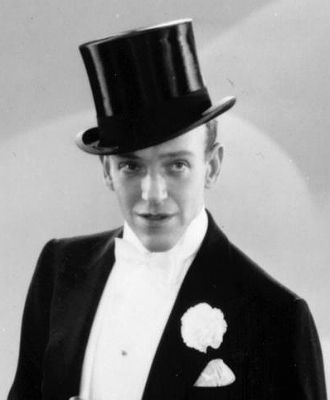
I watched Fred Astaire's 1935 screwball comedy Top Hat the other night. He is of course a phenomenal dancer, but he's also a very good actor. He has an intelligence about him, which would come out even if he were give a dumb role.

And Gregory Peck was in the 1958 western The Big Country. There were scenes when he would silently watch something unravel, or someone make some statement, or the woman he plans to propose to, and what we see is keen intelligence in the dark, pensive gaze. He takes courting the women, Julie Maragon, as seriously as he a does taming a wild horse, and approaches her with as much energy (although it is camouflaged with good manners and affection) to tame her as he does the horse.


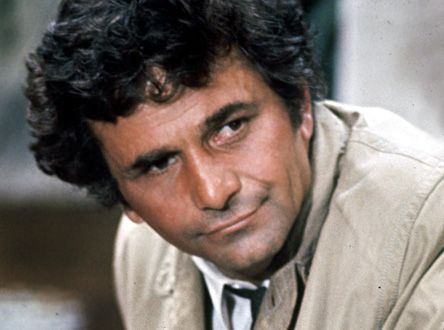
Columbo, Peter Falk's character, has a penetrating intelligence which is fun to watch, especially as I try to decipher what it is that he saw that would help him solve the case. But, in true post-60s fashion (the series was filmed in the 1970s), his signature look is not a top hat, or rancher's boots, but a crumpled, worn out top coat. His hair is as disheveled as his clothing. But he somehow manages to retain his intelligent look.


Everybody takes these men seriously, even Peter Falk, after his first penetratingly simple question. And the women respond to this intelligence by letting the men lead them. Ginger Rogers lets Astaire pirouette her around the dance floor. And the woman Peck woos is tamed from her rancher's life to the life of a rancher's wife. Falk's wife is never shown on screen, although she nags him via telephone calls at his work (often the house of a murder scene) to get bread or milk on his way home, which Falk deflates from escalating by talking to her kindly and patiently. But he goes about his professional duties without his wife's meddling, and I doubt he would have any patience with her if she were to meddle.

In a few more years we would be in the territory of the Brad Pitts and the George Clooneys. Pitt would get his snake woman Jolie to call all the shots, and Clooney would bubble along in a jovial manner, thinking he's in charge. And they both look like idiots on the screen.