About.......Contact.......Society.....................

Sunday, March 30, 2014

An American Foxhound in New York


A Winning Spirit


I saw a dog which looked to me like an American Foxhound near the Duane Reade on 106th and Broadway, when I was in New York last week. The second time I saw this happy and active dog, I asked the owner what kind of a dog he was. The young man told me that he didn't know, and that the dog was a "rescue dog" which he'd only had for a couple of months. The young man looked like he could do with a rescue more than the dog. As I was talking to his owner, the dog became friendly, but possessive, as though to ward me off his master. I took this as a greeting, and stroked him gently, while asking the man what he called the dog. "Grant," he said. "What a name you have," I told the dog, who by now looked like he just wanted to play.


"He looks like an American Foxhound," I said. "You should have him tested. George Washington's dog was an American Foxhound." I left Grant with his owner, still playful and rambunctious. I wonder where his owner got "Grant" from, the movie star (Cary), or from President Ulysses Grant? Either way, this Grant is a member of a prestigious group.


John Ward Dunsmore (1856-1945)
The First Gentleman of Virginia: George Washington at the Hunt (c. 1777)
Frances Tavern Museum, New York City

Information on the painting is on page 20 of:
Images of America: Woodbrook Hunt Club
Joy Keniston-Longrie
Arcadia Publishing, 2009


I've written about Jewel, an American Foxhound, who won several dog shows. And my post George Washington and his Dogs discusses how Washington bred the American Foxhound from English and French hounds, and the names he gave his large menagerie of hounds.
-------------------------------------------------------------------------------------------------------------------------------------------------------------
Posted By: Kidist P. Asrat
-------------------------------------------------------------------------------------------------------------------------------------------------------------

Monday, March 24, 2014

Rembrandt's Esther

The Jewish holiday of Purim ended last week. It commemorates:
...the deliverance of the Jewish people in the ancient Persian Empire where a plot had been formed to destroy them...

According to the Book of Esther, Haman, royal vizier to King Ahasuerus...planned to kill all the Jews in the empire, but his plans were foiled by Mordecai and his cousin and adopted daughter Esther who had risen to become Queen of Persia. The day of deliverance became a day of feasting and rejoicing [more here].
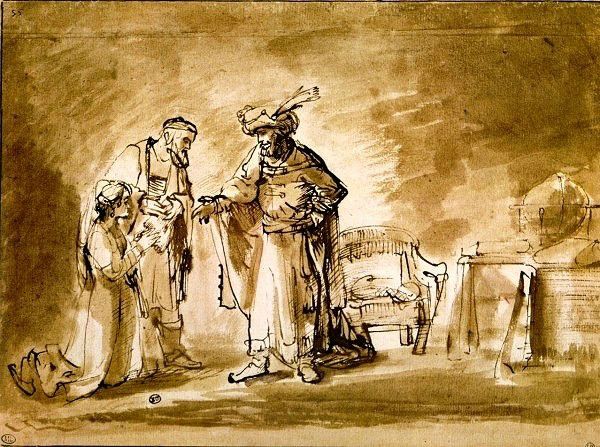
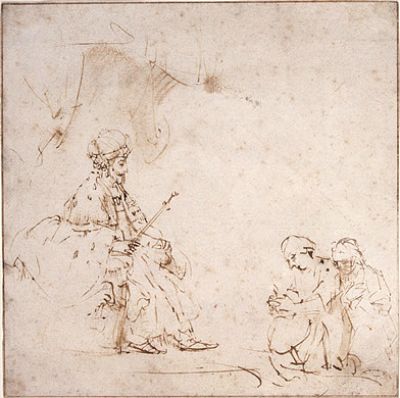
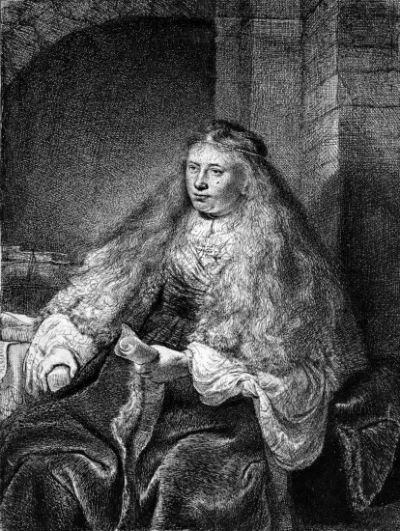
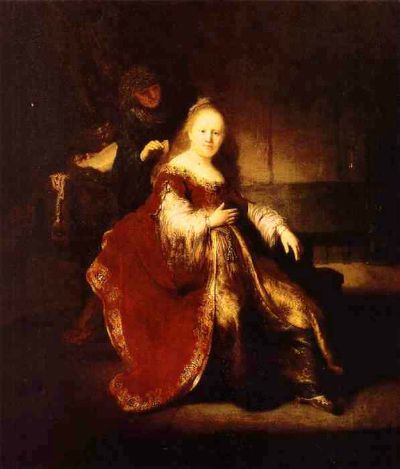
Rembrandt painted a series of paintings depicting Esther. Below are what I think it is a complete list:


Haman and Ahasuerus at the banquet with Esther


Haman Prepares to Honour Mordecai


Haman Begging Esther for Mercy


Esther is Introduced to Ahasuerus


Esther before Ahasuerus


Esther with the Decree of Destruction


Esther Preparing to Intercede with Assuerus

More paintings of Esther by various artists can be found: here, here, here and here.

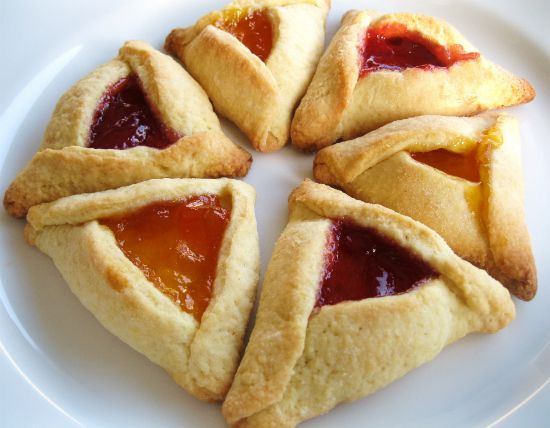
A special holiday cake called hamentashen is served for this holiday. I mention my first encounter with hamentashen in my post Kidist's Best of New York City (Best Hotel Bakery Item: The Hamentashen at the Plaza Hotel (apricot filling), which I discuss more here.


I'm not sure how the greeting goes, but I will just say: Happy Purim!
-------------------------------------------------------------------------------------------------------------------------------------------------------------
Posted By: Kidist P. Asrat
-------------------------------------------------------------------------------------------------------------------------------------------------------------

Saturday, March 15, 2014

Reclaiming Beauty Newsletter: New York in Spring

Below is the email newsletter I sent out for March 15, 2014. If you would like to be included in the list, please send me your email to cameralucidas@yahoo.com.

Kidist


March 15, 2014


Dear Friends of Western Civilization,

Thank you for those who made my upcoming trip to New York possible.

I will spend six days in New York City from March 17 - March 22. Actually, it will be four days, since on two of the days I will spend travelling from and to Toronto, a 12-hour trip by Greyhound. And before you feel sorry for me, it is a wonderful ride through western New York, parts of Pennsylvania, crossing New Jersey, before reaching Port Authority. The ride is mostly through rural and farm land, and we pass by some small towns. I blog about the route here at Camera Lucida in 2009. Here is post I did with photos I took of the mountain ranges I travel through. And here is a poston the Finger Lakes, with photos of Lake Cayuga. Customs at the American border is at Buffalo, and I am always surprised at the grand buildings in the center of the city.

In New York, I will join the roundtable group I mentioned in my last newsletter for dinner and discussion. I will spend most of my time at the New York Public Library to continue with my research for my book Reclaiming Beauty: Winning Back Our Civiliztion.

I am also going through various guides to find exhibitions that would be worth visiting (some might even be "essential viewing").

Two so far:
- Radiant Light: Stained Glass from Canterbury Cathedral
At the Cloisters, Feb 25-May 18
- The History of the Dressing Table
At the Metropolitan Museum of Art, through April 23

And Lincoln Center. When I was a student in New Jersey (in Rutgers) I used to make day trips to New York to listen to the free concerts. Actually, they were rehearsals open to the public. It was very intereting to see how the pieces were put together, and how the condictor went about doing so. Now, these rehearsals (called Open Rehearsals) cost $20, and the reviewer at the New York Philharmonic site agrees with me, saying:"An Open Rehearsal is a fascinating opportunity to watch the New York Philharmonic at work, and see how a piece of music is shaped and polished by the conductor and the musicians."

There's an Open Rehearsal on Thursday, March 20, at 9:45 am, at Avery Fisher Hall for:
- Ravel: Piano Concerto in G major
- Weill: Symphony No. 2
- Gershwin: Concerto in F

With Jeffrey Kahane conducting.

I had mentioned (in passing) on my blog that I had been through a long series of medical tests this past year. My latest doctor's visit (two days ago) showed that I have a clean bill of health. This is great news, and I believe that St. Michael, of St. Michael's Hospital, where I have been going through most of my tests, is watching over me.

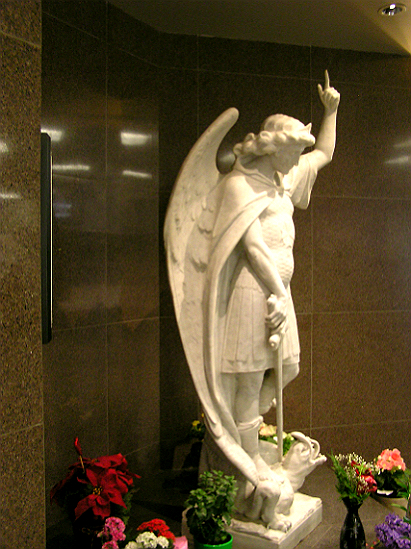
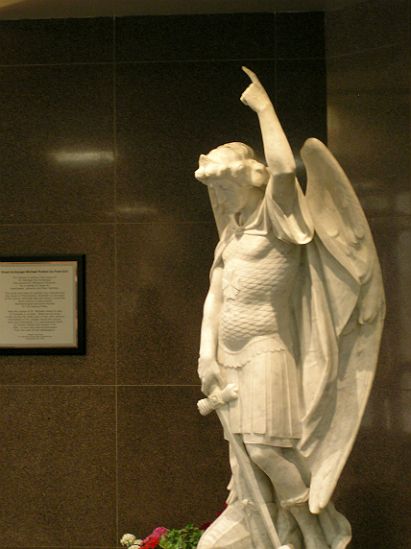
St. Michael Slaying Satan  St. Michael's Hospital, Toronto
[Photo by KPA]


Wednesday, February 26, 2014

Reclaiming The Beauty of St. Michael's Hospital


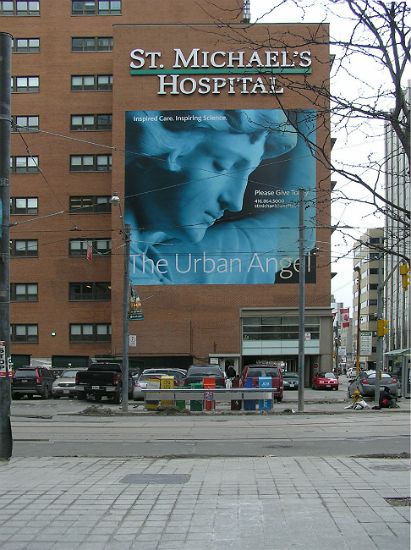
Mural of St. Michael's profile on the front wall
of St. Michael's Hospital in Toronto


Sculpture of St. Michael
in the front lobby of St. Michael's Hospital.
St. Michael is slaying Satan,
with his finger pointed up at God.


[Above photos by KPA: 2014]

Above are photos I took of St. Michael's hospital, and more specifically, the mural of the angel's profile, and the sculpture in the lobby.

Here is the background to the sculpture:
For almost a century the statue of Saint Michael the Archangel has graced St. Michael's as a symbol of hope for employees, patients and their families. The artist and date of creation of the statue are unknown, but the name of 'Pietrasanta' chiselled on the back of the statue indicates the stone is from the same quarry in Italy where Michelangelo procured the marble for his famous 'Pieta'.

How the statue made its way to Canada is unclear, but what we do know is that during the latter part of the 19th century the Sisters of St. Joseph found this statue, dirty and blackened, in a second-hand store on Queen Street. Recognizing its value, they wisely bought it for the sum of $49 - money they had accumulated from the sale of old newspapers.

The statue now stands in our Cardinal Carter lobby, meticulously restored, a symbol of hope and healing for all who visit. It is why St. Michael's is affectionately known as Toronto's Urban Angel.
[Source: St. Michael Hospital's website]

Key chain I received from the St. Michael's foundation,
after I gave a very modest contribution.
(Here is the foundation's webpage for online contributions)
.

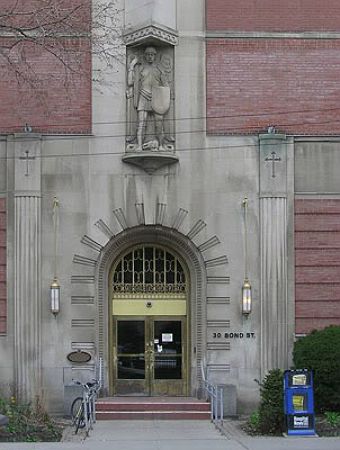
I had taken photographs of a side street entrance to the hospital at Bond Street several years ago. St. Michael is the sculpture above the entrance door. The sculpture was designed by Frances Loring.


St. Michael's entrance on Bond Street
The sculpture above the doorway is stiffer
than the life-like sculpture in the lobby


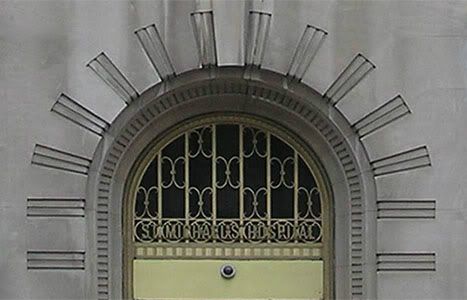
Archway above Bond Street entrance
[Above photos by KPA: 2012]


Here's the hospital's history at its website:
In 1892, in an old Baptist church on Bond Street, the Sisters of St. Joseph operated Notre Dame des Anges, a boarding house for working women. Responding to the need to care for their own and the poor population in the south end of Toronto, the Sisters founded St. Michael's Hospital.

The hospital opened its doors with a bed capacity of 26 and a staff of six doctors and four graduate nurses. Within a year, accommodation was increased to include two large wards and an emergency department. By 1912, bed capacity reached 300, and a five-room operating suite was added.

As early as 1894, St. Michael's Hospital received medical students and, in 1920, negotiated a formal agreement with the faculty of medicine at the University of Toronto that continues to this day.

Between 1892 and 1974, St. Michael's school of nursing graduated 81 classes, totalling 5,177 graduates. The school was closed in 1974 when nursing education was moved into the province's community college system. Later, the hospital opened a school for medical record librarians, the first in Canada, and also participated in the preparation of dietitians and X-ray and laboratory technologists.

As Toronto grew and expanded, so did the hospital. Ongoing physical expansion, most prominent in the 1960s, increased the original 26 bed facility to a high of 900 beds.
I have criticized the hospital's latest wing, completed in 2011, and its funding source here. But, the St. Michael's Hospital legacy is long and sustained. There is Saint Michael's Cathedral, and St. Michael's Choir School for boys, both in the vicinity of the hospital (more here), giving it moral support.


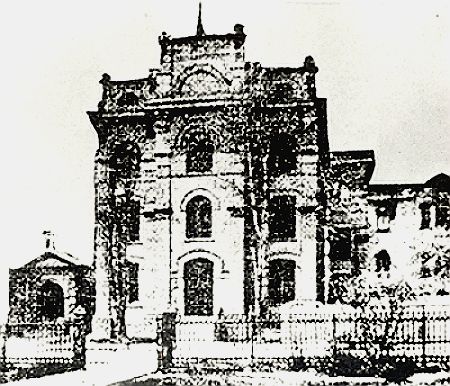
St. Michael's as it appeared in 1892 - the year of its founding.
[Image Source: St. Michael's Hospital Archives]


The plaque at the Bond Street entrance:


[Image Source:Toronto's Historical Plaques]

There were three architects involved in the original design of the hospital (more detailed biographies here - pdf file):

- Albert Asa Post (1850-1926):
Albert Post was born in Pickering, Ontario, and attended St. Michael's College in Toronto before entering an apprenticeship with Henry Langley...In 1879, Post opened his own practice in Whitby, Ont. before joining A. W. Holmes to form Post & Holmes in Toronto.

- James Patrick Hynes (1868-1953)
James Hynes was a Toronto-born architect...He was president of the Royal Architectural Institute of Canada, The Ontario Association of Architects, The Architectural League of America, and The Town Planning Association of Ontario. He was a fellow of the Royal Architectural Institute of Canada, president of the Ontario Association of Architects, and writer for the Canadian Homes and Gardens magazine.

- William Lyon Somerville (1886- 1965)
Willima Somerville, born in Hamilton, and responsible for designing McMaster University, practiced in New York before opening an office on Bay Street in 1919.

These architects continued to expand and renovate the hospital into the late 1960s. The original design and aesthetics of the building were never compromised, and the new additions fitted seamlessly with the original building.

The addition of the newest wing, completed in 2011, is an eye-sore. Glass, the preferred style of post-modernist architects, is the main material. Carefully patterned brick and delicately carved stone are substituted by relentless sheets of blank glass. Glass doesn't leave much for ornament, and instead exposes messy interiors, or to avoid that, empty interiors:


Li Ka Shing Knowlege Institute's empty interior, exposed by the sheets of glass.
Rather than fill the area with objects, both ornamental and functional,
it is left empty. This is a deliberate strategy, both for safety reasons
(exposing antique cabinets for all to see?), and for aesthetic reasons,
since the over-exposing glass will accentuate and magnify any object,
thus visually confusing the space.

With this new addition, the hospital's original aesthetic and design is destroyed.

[Image source: Diamond Schmitt Architects
]

The stark contrast of this post-modern structure with the rest of the building might alert people, patients, doctors, donors and other city folk, that this new addition is a mistake. And since the hospital is still undergoing renovations, future projects can still reclaim the beauty and dignity of the original ideas.


St. Michael's Foundation webpage for online contributions.

------------------------------------------------------------------------------------------------------------------------------------------------------------
Posted By: Kidist P. Asrat
------------------------------------------------------------------------------------------------------------------------------------------------------------

Sunday, February 23, 2014

Four Good Reasons for Marriage


The Basics:
British Army folding bed: ca. 1860

More of the above at:

Royal Warrants, Circulars, General Orders and Memoranda
Issued by the War Office and Horse Guards
August 1856 - July 1864


-------------------------------------------------------------------------------------------------------------------------------------------------------------

Allan Roebuck, over at The Orthospehere writes on the topic of marriage:
I argue here that most men should attempt to marry, for several basic reasons. First, marriage is necessary for the survival of a people. Second, men (and women) need to be a part of a good order if they are to live well and a good social order includes marriage. And three, men were designed for leadership, as they are more attuned to the practical application of truth and justice, and are more able to impose their will on a situation, than women are.[Bolds are mine, for clarity]
He forgot one important point:
Fourth: Wives have a civilizing influence on husbands. Other than the desire to protect their wives, and the children that ensue, the very character of women civilizes men.
I think this is noticeable in the home. Regardless of the domestic influence of the wife (making the house habitable, the environment clean, and the atmosphere peaceful), a husband behaves far more civilly in his home than when in his workplace or other exterior environment.

And if his home life is civil and peaceful, and he has a trustful wife to tend to that, then his external behavior is also affected.

Think of soldiers, who have been away from their homes for months, and whose only company are other soldiers. Their existence, outside of the brutality of war, is a camaraderie of loud, boisterous interactions. They would not behave this way towards woman, and would most likely not behave this way with each other if they were in their homes with their wives and children nearby.

Or think of bachelors. Even those with erudition and great education are victim to the infamous "bachelor's pad," which is really more about having the proper environment to accomplish a purpose, whether it is to write the novel, or to have a place for whisky and frolics. They are content with the basics of domestic life: food, shelter and sleep.

When the purpose is to protect his wife and children, and their upkeep, the man's behavior and environment change accordingly. This domestic civility manifests itself with social and cultural civility, upon which societies, and countries, are built.
-------------------------------------------------------------------------------------------------------------------------------------------------------------
Posted By: Kidist P. Asrat
-------------------------------------------------------------------------------------------------------------------------------------------------------------

Friday, February 21, 2014

Young and Lesbian: An Epidemiology?


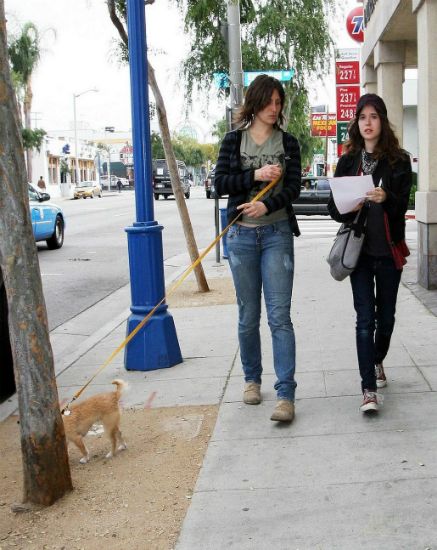
Photo from article: "Why Are So Many Girls Lesbian or Bisexual?"
From: Psychology Today, April 3, 2010
By: Leonard Sax, M.D., Ph.D.
These look just like the "college best friends" I write about below


Camille Paglia would be intrigued, and horrified, at this epidemiology of young lesbians, cheerfully "coming out."

Ellen Page

A few days ago, a young and pretty Canadian actress, Ellen Page, declared herself to be a closeted lesbian, that is until that moment when she dramatically announced to whomever bothered to listen: I am gay. She's twenty-six years old at this announcement, but according to her testimony, had been "gay" for years.

I found her video on New York Post's online magazine. It was hard to miss on the side column, with a large photo of her, and the headline: Tired of Hiding: Actress Ellen Page Comes Out as Gay.

Page is claiming that her "coming out" is "a personal obligation and a social responsibility [direct quote from the Youtube video here around the 6:15 minute point]", and is otherwise a "traumatic event."

It is interesting to see that "coming out" in the 21st century is such a traumatic event. I thought we had taken care of stigmatizing gays and had built such a "gay-friendly" world that people were declaring their "true selves" left and right.

Well, not so, apparently. Page tearfully declares: "I suffered for years because I was scared to be 'out'." Didn't Ellen DeGeneres, pernicious model for this young Ellen, present us with her "secret" in a similarly tearful declaration seventeen years ago? Her career hasn't diminished one bit, and in fact has climbed since then.


Page with "girlfriend"

Page was brought up in Eastern Canada, in Nova Scotia. Her parents divorced when she was very young, and her father remarried. She lived with her mother. At about fifteen, Page enrolled herself into a "Buddhist" school, with no academic structure, which emphasized "the arts." And her parents let her do this! Divorce is hard on any child, but a structureless one must be harsh. And worse, letting a young teenager decide on her intellectual and spiritual development is bizarre and cruel.


This is the best I could find of Page with her father.
Notice the impish quality of the father, who looks like he's out with his young son.
But then, what young boy would cling to his father like that?
Such is the ambiguous world of tomboys.


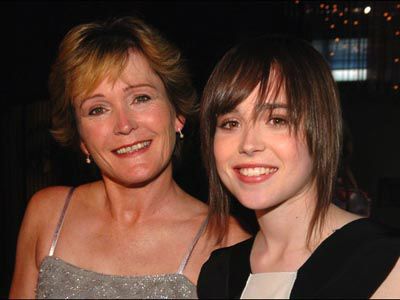
Page with her mother, looking dishevelled and tomboyish.
It looks like they were both out at some film premier,
where Page should be the star, but is upstaged
by her glamorous mother instead.


But homosexuality is still a social stigma, if "celebrities" have to make such a spectacle about their revelations. Normal, ordinary people, those that pay the films and shows to keep DeGeneres and Page in the business, will momentarily forget a gay person his abnormality as long as he entertains well. And if homosexuality is still a social stigma, despite all these efforts to normalize it, then it will always remain a social stigma.

And just in time for Obama's homosexual agenda of equality, the PBS program To The Contrary "for women, by women, about women" (my quotations), recently included on its panel an articulate black women, Danielle Moodie-Mills. I wondered who she was, with her caked make-up and twisted stringy hair.


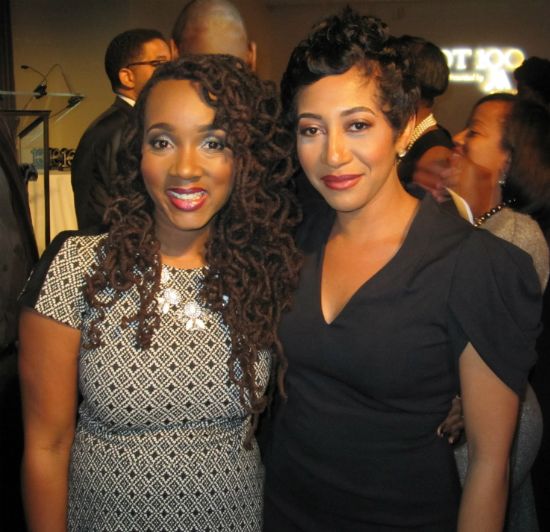
Moodie on the PBS program To The Contrary, which aired a couple of weeks ago

I found her profile all over the internet, since then. She is a black lesbian, whose "marriage" to another black woman was profiled in the black magazine Essence. They "married" in 2010, Mills at 32 and Moodie 31, and had "been together" for six years before that, which means they started this "relationship" when they were in their early twenties.


Danielle Moodie, on the right, is:
Advisor, LGBT Policy and Racial Justice
Center for American Progress
Nonprofit; 201-500 employees; Think Tanks industry
(LinkedIn Profile)

and Ayisha Millis is:
...a Senior Fellow and Director of the FIRE - Fighting Injustice to Reach Equality - Initiative at the Center for American Progress, where her work explores the intersections of race, class, and sexuality.
(Center for American Progress profile)


They both have those fluffy jobs just right for the Obama administration.

There must be dozens around of these "lesbians" around. Girls walking around the mall, chattering and laughing: are they "young lesbians"? Two young women eating in a restaurant, fancily dressed: are they on a date? A couple, women, picking up a young child at school or at a day care: are they "two mommies"? And so on.

I won't go into the pshychological, sociological, cultural, School of Camille Paglia, analyses of what I'm seeing here, so here's my take, at least on Page, Moodie and Mills.

There is very little information forthcoming from Moodie or Mills. I've gleaned what there is available from various websites and their limited profiles in their professional biographies.

Danielle Moodie

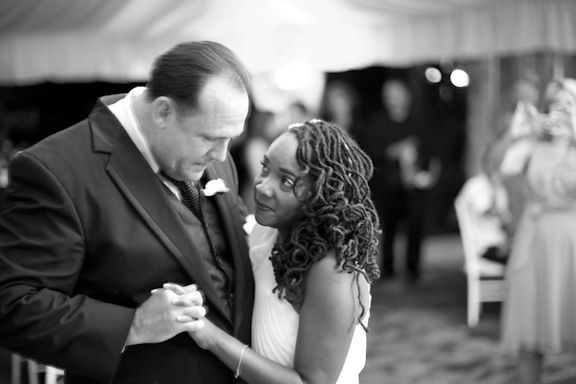
Danielle Moodie's only reference to her parentage (from searches around the web) is a photo of hers which appeared on Essence magazine's profile of her "marriage" to Mills. Here, she is standing with a white man, named as Michael Newton, with the caption:
Dance with my father:
Danielle’s dad Michael Newton was close to tears as he danced with his daughter on her momentous day.
Below is the photograph:


(Source: Essence)

I can only assume that she is adopted. Where is the mother (adoptee)? Why isn't she included in this wedding photograph? Is she white, black, other? What kind of life does Moodie live where she has to call a white man as her father? How hard was this for her as a young girl (assuming she was adopted young)? How much harder did it get as she became conscious of her surroundings? How did the "black identity" culture affect her identity? How does she relate to whites, and to the ominous White Male?

Aisha Mills


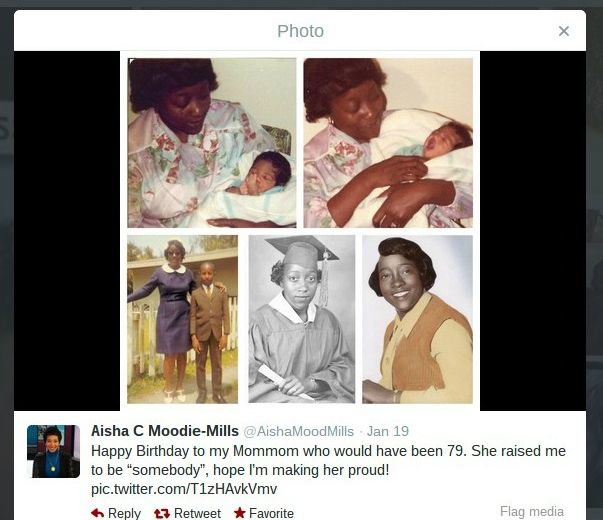
Mills posted this photo collage on her Twitter page

Mills was raised by her grandmother. She says: "My entire life, I have been a variety of 'others'." According to this post, her mother had "Asian" roots, but she was raised by her Black Southern Baptist grandparents, as the photos above indicate. The young, light-skinned boy in the photo collage could be her brother. Or is it her dressed in a suit and tie (as a young boy)? Yes! It is her, dressed as a young boy! So there you have it.

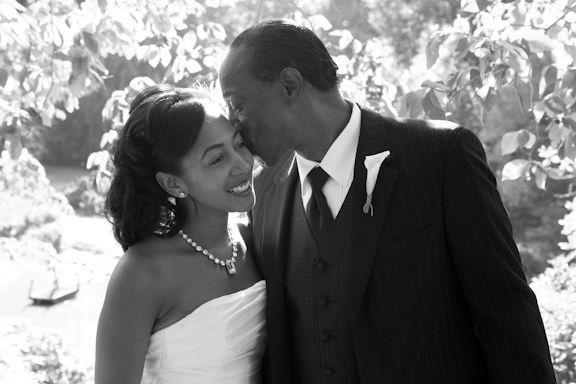
And here below, she is with her MIU (Missing in Upbringing) father at her "wedding."


Source: Essence
Caption reads:
Proud Father
Aisha's father James Mills kisses his baby girl and wishes her well on her big day

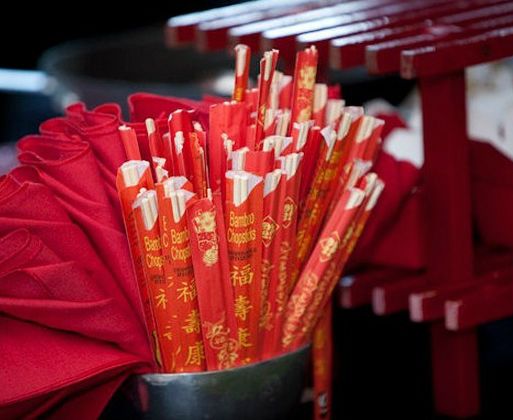
The Mills-Moodie "elegant affair" of a wedding included baskets of chopsticks. The ominous absence of her Asian mother must make even the most mundane of Chinese objects into bouquets of roses.


Chopstick elegance: Reaching for some ephemeral roots
Chopsticks, from the wedding album by Essence
The caption reads:
Cocktail Hour:
"The entire wedding was an elegant cocktail affair," Aisha explained.


------------------------------------------------------------------------------------------------------------------------------------------------------------


So what is it with these young women?

- A chaotic home life?
- A dearth of masculine young men?
- Feminism pushing young women into competitive and masculine roles, where they clash with young men, both the feminized ones, and those standing their ground and refusing to give in easily to a woman-centric environment?
- Black men, unavailable, either through their dropping out of society, their criminality, or their immaturity?
- Men refusing marriage, for fear of repercussions by feminism, and feminist women and wives?
- Men refusing to mature, and instead delaying marriage and family?
- The culture pushing, through mass media, that marriage is not necessary?
- Divorce rates, and divorce costs, high, especially (uniquely?) for men, so many opting out of marriage?
The "otherness" of the other becoming too much to deal with for young people these days, who are not used to natural competitions, and eventually some awe for differences.
- The desire by contemporary people to make everyone the same, to avoid this natural alienness or otherness of people?
- The desire to make everything "nice" and non-combative?

In any case, this "best friend" type of coupling is well suited for girls in college and high school. Under normal conditions, these girls will find staunch mothers or grandmothers who will diminish that seductive environment, give them the education they need, and place them in situations where they can lead a normal life, including building their future families.

The women I've described above are traumatized orphans, both in society and in family. They have been dealt with difficult beginnings. Since their families didn't come through for them, then it should have been up to the larger society to see that they didn't normalize their ambiguities and abnormalities. Now, as adults, they are seeped in their iniquities, and will only further terrorize society. Our job now is to see that they don't do that, and that they don't amass more vulnerable innocents along their way.
------------------------------------------------------------------------------------------------------------------------------------------------------------

Posted By: Kidist P. Asrat
------------------------------------------------------------------------------------------------------------------------------------------------------------

Saturday, February 15, 2014

#valentineheartthrob


No I'm not on twitter. But my yahoo mail has a red Valentine's heart on the top corner, and it throbs!

I thought it was cute.

But all cuteness aside, a day of lighthearted celebration of love is a good thing. The problem is when people take it so seriously that it means everything (or nothing). Red hearts all over the place are a nice burst of color, in this dark depths of winter, and after the festivities of Christmas and New Year, it brings a holiday mood into February. Our next holiday is Easter, and that is as late as March or April.

I was recently watching You've Got Mail with Meg Ryan (as Kathleen Kelly) and Tom Hanks (as Joe Fox). Kathleen sends herself a dozen red roses for Valentine's. She says to Joe that she does it for the possibility of love.

That is how we should all live: for the possibility of love, for the possibility of goodness, for the possibility of beauty, for the possibility of summer.

So many possibility, it gives us quite a busy schedule!

Here is a simple menu:
- Plate of sweet potato fries
- Glass of Cabernet Sauvignon Vista Point from California

Wine description from the menu:
Intense blackberry and currant, a smooth easy drinking wine for any occasion.
I don't know why the wine is described as "intense" but it is more flavorful than intense.

Here's one more site (pdf) with this brief description of the wine: "pleasant, semi-dry, smooth."

My evaluation is that the wine's fruity notes makes it a great match with the sweet potatoes.

Happy (belated) Valentine's to all!


-------------------------------------------------------------------------------------------------------------------------------------------------------------

Posted By: Kidist P. Asrat
-------------------------------------------------------------------------------------------------------------------------------------------------------------