About.......Contact.......Society.....................

Thursday, April 24, 2014

Museum of Beauty


Pope Benedict XVI said when addressing a group of artists assembled in the Sistine Chapel
Beauty, whether that of the natural universe or that expressed in art, precisely because it opens up and broadens the horizons of human awareness, pointing us beyond ourselves, bringing us face to face with the abyss of Infinity, can become a path towards the transcendent, towards the ultimate Mystery, towards God. [Meeting with Artists. Address of His Holiness Benedict XVI. Sistine Chapel. November 29, 2009].
In my last post, I briefly mentioned the idea of a Museum of Beauty. Beauty is best appreciated when it is seen. I think our perception and appreciation of visual beauty surpasses all our other sensory perceptions of beauty. Ideally, there is a plethora of beauty to be seen, from the buildings we pass by, to the gardens we walk through, and the dresses we see on people. I say ideally, because these days, we are living in a cult of ugliness, and finding beauty is like a thirsty wanderer in a desert finding water.

At one time, people created their surroundings with beauty in mind. They knew that what they saw affected them deeply, from the temporary pleasure at the initial viewing of a beautiful object, to the deeper connection beauty (the beautiful object) instills over time.

If one's surroundings are ugly, why bother to preserve them, or live in them?

I think this is the impasse we have reached now.

I cannot redesign our modern world around beauty, but I can try to create small islands of respite where beauty can be viewed and appreciated.

I hope my blog provides such a place. But the ephemeral world of the internet is not enough. We need concrete places where our thirsty eyes can be filled with the wonders of beauty

My idea is to create a Museum of Beauty.

This is not as far-fetched as it sounds. There are the following kinds of museums:
- The Museum of Natural History in New York, which looks at Nature
- The Museum of War, in Ottawa Canada
- The Museum of Science and Technology, in Washington D.C.

There is even a Museum of Bad Art (which I term as a Museum of Ugliness). So why not a museum of beauty?

There are many questions to answer. One of which is: Aren't there enough museums which show beautiful things already?

Yes, there is the Louvre in Paris, the Metropolitan in New York, and many other smaller museums and galleries around the Western world which show art and other objects which are beautiful. But there is none that I can find which exclusively looks at beauty.

And modern curators are not interested in beauty. And the collections which they preside over which show beautiful objects are from past eras and centuries. Modern museums and curators do not want beauty in their museums. This often results with horrific and horrible things displayed in these museums, and museum visitors are hijacked to view them without complaint.

Creating a museum around a concept isn't a far-fetched idea.

Here are the working titles of my book project Reclaiming Beauty, around which the various sections of the museum can be created:
An Introduction to Beauty
- Seek and Ye Shall Find
- Beauty, Truth and Goodness
- Synthesis of Beauty
- Beauty in the Worship of God
- Beauty and the Transcendent
- Beauty and Humanity
- Beauty and Femininity
- Beauty and Masculinity
- How to be a Beautiful Movie Star
- Beauty: I will be your mirror
- Rejecting Beauty
- Elimination of Beauty

Beauty in Art
- Architecture
- Painting
- Drawing and Illustrations
- Film
- Photography
- Dance
- Design and Fashion
- Art Criticism

Beauty in Language
- Literature
- Poetry
- Writing
- Books
- Blogging
- Humor

Beauty in Culture and Society
- Religion
- Christianity
- Islam
- Myths and Legends
- History
- Traditions
- Conservatism
- Politics
- Immigration
- Multiculturalism

Beauty in Nature

Beauty in Science

Desecration of Beauty

Reclaiming Beauty
Even the last two chapters, Desecration of Beauty and Reclaiming Beauty are important. It is necessary for people to see how our modern world is destroying beauty,and how this is historically unprecedented: No other civilization aimed to destroy beauty. And I feel it is important to give guidance on how we can reclaim this beauty lost, since ordinary people have been subliminally hijacked into accepting ugliness as the norm.

I equate this "seeing" with Christianity. From the very beginning, God shows us his presence, perhaps the earliest being when he appeared as a burning bush to Moses, and later gave him tablets to read, with scripted words, rather than words to memorize and recount to the Israelites. These became the visual, written words: The Ten Commandments.

The ultimate revelation, at least in our era, is that of Jesus, who came to show us that God wasn't an entity in the heavens, but a real being, who disclosed himself to us as a human being through Jesus.

And the first words in Genesis, the very beginning of the Bible, are:
And the earth was without form, and void; and darkness was upon the face of the deep. And the Spirit of God moved upon the face of the waters.

And God said, Let there be light: and there was light.[see below for verses 1-31]
The light to see things, to view his beautiful creations.

But, light also enables us to differentiate and discern the beautiful from the ugly, and by extended logic to discard the ugly, or to reshape it to become beautiful.

In those first verses of Genesis, we do not read about the wonderful sound of the seas:
And God called the dry land Earth; and the gathering together of the waters called he Seas: and God saw that it was good
.
We are presented with "the seas" as a visual differentiation between land and water. We may love the sound of the bubbling brook, but it is foremost its vision, with the grass and rocks around it, that captures our imagination.

Pope Benedict XVI said when addressing a group of artists assembled in the Sistine Chapel
Beauty, whether that of the natural universe or that expressed in art, precisely because it opens up and broadens the horizons of human awareness, pointing us beyond ourselves, bringing us face to face with the abyss of Infinity, can become a path towards the transcendent, towards the ultimate Mystery, towards God. [Meeting with Artists. Address of His Holiness Benedict XVI. Sistine Chapel. November 29, 2009].
My post "An Introduction to Beauty: Seek and Ye Shall Find" expands on this.

So, a beauty museum, or a Museum of Beauty, can continue with this movement of "Reclaiming Beauty."

-----------------------------------------------------

Genesis 1

1 In the beginning God created the heaven and the earth.

2 And the earth was without form, and void; and darkness was upon the face of the deep. And the Spirit of God moved upon the face of the waters.

3 And God said, Let there be light: and there was light.

4 And God saw the light, that it was good: and God divided the light from the darkness.

5 And God called the light Day, and the darkness he called Night. And the evening and the morning were the first day.

6 And God said, Let there be a firmament in the midst of the waters, and let it divide the waters from the waters.

7 And God made the firmament, and divided the waters which were under the firmament from the waters which were above the firmament: and it was so.

8 And God called the firmament Heaven. And the evening and the morning were the second day.

9 And God said, Let the waters under the heaven be gathered together unto one place, and let the dry land appear: and it was so.

10 And God called the dry land Earth; and the gathering together of the waters called he Seas: and God saw that it was good.

11 And God said, Let the earth bring forth grass, the herb yielding seed, and the fruit tree yielding fruit after his kind, whose seed is in itself, upon the earth: and it was so.

12 And the earth brought forth grass, and herb yielding seed after his kind, and the tree yielding fruit, whose seed was in itself, after his kind: and God saw that it was good.

13 And the evening and the morning were the third day.

14 And God said, Let there be lights in the firmament of the heaven to divide the day from the night; and let them be for signs, and for seasons, and for days, and years:

15 And let them be for lights in the firmament of the heaven to give light upon the earth: and it was so.

16 And God made two great lights; the greater light to rule the day, and the lesser light to rule the night: he made the stars also.

17 And God set them in the firmament of the heaven to give light upon the earth,

18 And to rule over the day and over the night, and to divide the light from the darkness: and God saw that it was good.

19 And the evening and the morning were the fourth day.

20 And God said, Let the waters bring forth abundantly the moving creature that hath life, and fowl that may fly above the earth in the open firmament of heaven.

21 And God created great whales, and every living creature that moveth, which the waters brought forth abundantly, after their kind, and every winged fowl after his kind: and God saw that it was good.

22 And God blessed them, saying, Be fruitful, and multiply, and fill the waters in the seas, and let fowl multiply in the earth.

23 And the evening and the morning were the fifth day.

24 And God said, Let the earth bring forth the living creature after his kind, cattle, and creeping thing, and beast of the earth after his kind: and it was so.

25 And God made the beast of the earth after his kind, and cattle after their kind, and every thing that creepeth upon the earth after his kind: and God saw that it was good.

26 And God said, Let us make man in our image, after our likeness: and let them have dominion over the fish of the sea, and over the fowl of the air, and over the cattle, and over all the earth, and over every creeping thing that creepeth upon the earth.

27 So God created man in his own image, in the image of God created he him; male and female created he them.

28 And God blessed them, and God said unto them, Be fruitful, and multiply, and replenish the earth, and subdue it: and have dominion over the fish of the sea, and over the fowl of the air, and over every living thing that moveth upon the earth.

29 And God said, Behold, I have given you every herb bearing seed, which is upon the face of all the earth, and every tree, in the which is the fruit of a tree yielding seed; to you it shall be for meat.

30 And to every beast of the earth, and to every fowl of the air, and to every thing that creepeth upon the earth, wherein there is life, I have given every green herb for meat: and it was so.

31 And God saw every thing that he had made, and, behold, it was very good. And the evening and the morning were the sixth day.
-------------------------------------------------------------------------------------------------------------------------------------------------------------
Posted By: Kidist P. Asrat
-------------------------------------------------------------------------------------------------------------------------------------------------------------

Monday, April 21, 2014

Beauty Museum


Influenced by my excursion in New York last month, I started to think about a beauty museum, which exclusively looks at beauty in its many capacities. The book that I am working on could be a working plan for this museum/study center.

Simply calling it a "Beauty Museum" should attract a bigger crowd than the usual fine arts people. Beauty touches everyone, and with clever targeting, even the Walmart crowd might come for a visit.

In any case, this is the idea I am mulling around. My website Reclaiming Beauty can be a forum for further discussions.
-------------------------------------------------------------------------------------------------------------------------------------------------------------
Posted By: Kidist P. Asrat
-------------------------------------------------------------------------------------------------------------------------------------------------------------

Sunday, April 20, 2014

Light


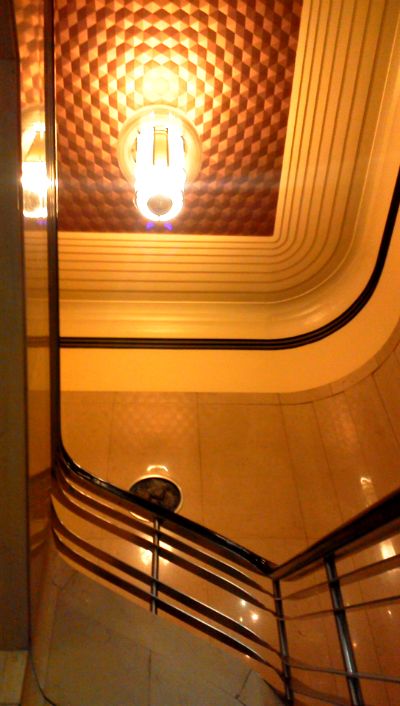
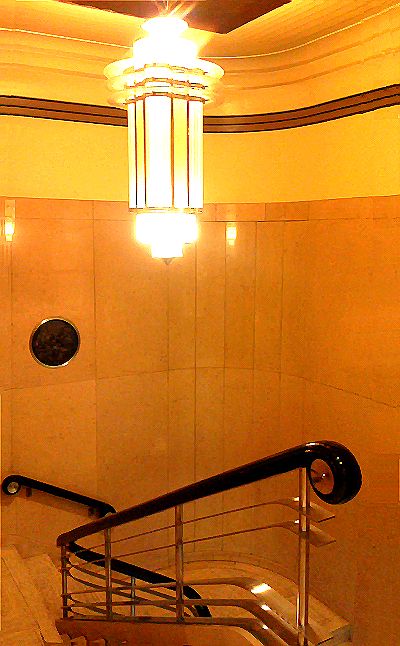
Light fixture on ceiling of the Design Exchange, Toronto
[Photo by KPA]


-------------------------------------------------------------------------------------------------------------------------------------------------------------
Posted By: Kidist P. Asrat
-------------------------------------------------------------------------------------------------------------------------------------------------------------

Saturday, April 19, 2014

Descent From the Cross


The Descent from the Cross, c. 1435
Rogier Van der Weyden (1399 or 1400 – 1464)
Oil on oak panel
86in x 103.5in

------------------------------------------------------------------------------------------------------------------------------------------------------------
Posted By: Kidist P. Asrat
-------------------------------------------------------------------------------------------------------------------------------------------------------------

Friday, April 18, 2014

This Good Friday


Andrea Mantegna, Calvary

The above image is posted at Laura Wood's The Thinking Housewife. Laura has posted paintings depicting Christ's ordeals through these holy days.

Also, on this Good Friday, Laura reminds us of the darkness of our times, by posting an article titled New York: City of Mohammed:
NEW YORK CITY becomes more and more congenial to Islam by the day. The Police Department recently announced that it will disband a surveillance unit that sent undercover detectives into Muslim neighborhoods for the purpose of identifying potential terrorists. The program, started in the wake of 9-11, was dropped in response to civil rights complaints, including civil rights complaints by Muslims.

And, Bill de Blasio continues to pledge to put Muslims holidays on the school calendar. According to one estimate, ten percent of New York public school students are Muslim
It is not enough to "observe" Good Friday this Easter, nor to optimistically wish each other Happy Easter on Sunday. Our calling now is bigger than words and songs. We have our enemies to ward off. We have to prepare for this.
-------------------------------------------------------------------------------------------------------------------------------------------------------------
Posted By: Kidist P. Asrat
-------------------------------------------------------------------------------------------------------------------------------------------------------------

Tuesday, April 15, 2014

Art Thieves

No Title
Annie Macdonell
"The images in this series are scans of found 35mm slides. I came across a box of them next to the trash a few months ago. They were unlabeled, undated, and unsourced. I’ve put together a selection of 15, which now form a slideshow you can click through on your computer monitor. Maybe you will recognize some of the images. Others you may not recognize specifically, but you will certainly be familiar with their sources – art monographs, fashion magazines, notebooks and textbooks, technical manuals." [Annie MacDonell, Interview in Either/And] on her work Split Screen
MacDonell was a former classmate of mine at Ryerson University, where she received a BA in photography. She went on to get a Master of Fine Arts in Lefresnoy, a university in France. Here is more on her statement of her work Split Screen in Either/And:
The slides were produced on a copy stand which, before the flatbed scanner, was the simplest means of reproducing images. Each one contains an interruption of the image by the spine of the book in which it originally appeared. The visibility of the spine is what attracts me to them. It marks only one of the many transformations these images have undergone since they were produced by the original photographer or artist. But in doing so, it places the histories and genealogies of these images in the foreground. The slides were shot for pedagogical purposes, to be projected large in front of a classroom and discussed as a group. Before that, they were published in books and magazines, to be purchased and leafed through by individuals. And before that they were, perhaps, images matted and framed behind glass on a wall. Now we may be browsing effortlessly through them, each on our slick backlit monitors. But the spine’s interruption of the image reminds us of where they came from in the first place, and how our ways of encountering them continue to shift along with the technology that delivers them to us.
That is a lot of words for simply showing pictures from magazines which spread across two pages (split by the spine of the book).

Such is the verbose nature of contemporary "artists" who have a lot to say about their vapid works.

MacDonell's Master of Fine Arts thesis was "about representation itself, which has always seemed to me a more interesting conversation," as she explains in the Either/And interview.

What this means is that MacDonell, for all her "artistic" vision, is not an artist. When tested, she's probably not very skilled at any of these artistic fields either: Film making (taking out the camera, shooting images, editing those images, producing a coherent whole), painting, drawing, or sculpture (she's big on "installations" which to her probably constitutes sculpture). All her works are borrowed, which I term as stolen, from various sources. And of course, not from real artists, which would have given her some exposure, and eventually something to emulate, but from the photographs and films she finds in people's garbage bins.

What a macabre and nihilistic way to represent the world! And it shows in her disjointed, cut ups, collages and installations.

Art for this conceited individual is about talking about art, rather than making art. And these "found objects" have been her means of "conversation" rather than creation.

Below is a photograph I took about two years ago which is around a similar theme of displaying cultural and sexual messages through contemporary cultural signs. The original post, with my commentary is in Camera Lucida under The Sexy Escape.

The Sexy Escape, 2010
Kidist P. Asrat

Here is how I see the superiority of my work:
a. My photograph shows:
- Context
- Humanity - how ordinary people look next to these iconic images
- Architecture - how images are placed in or on buildings
- Real life - the images show ordinary people juxtaposed with the images, mannequins and shop windows
- Poetry - I try to reference these views to come up with some kind of visual poetry

b. Macdonell's images show:
- Disjointed images, shapes and forms: Her cut-off hands of the mannequin, her burlesque dancer revolving in a few frames of a film, have no connection to the real world, and rotate within the image's confines
- Focused on phallic: Almost all her work, at some point, narrows in on the male or female sexual organs
- Cut off from real life: Even though she says she finds these "objects" in people's trash, she isolates them from the owners, and creates her own, insulated world out of them
- Morbid: Her objects form a collection of "found" items which have been thrown away, and which had no use for their owners. She doesn't salvage them and bring them back to their original use (building a new mannequin to of the hand, for example), or elevate them by creating something worthwhile, but uses them to further degrade them.
- Nihilistic: She says in an interview: "The work becomes about representation itself, which has always seemed to me a more interesting conversation [than talking about the work]." The objects, the images, the sculptures no longer count, which means what they represent does not matter either.

Macdonell, and the string of "artists" of her era, are clever wordmongers. They have not talent in art, but somehow decided that they wanted to work in art. This proved difficult, and their way out is to "have conversations about representation," as they spitefully malign art and creation.

Here are links to Macdonell's works and interviews:

- Commentary on film installation Time is a One trick Pony.

- Cinema and Visual Pleasure at the 2006 Viennale

- Interview at the Mercer Union: Originality and the Avant Garde (on Art and Repetition)

- Grange Prize short-list interview

- Macdonell's website
-------------------------------------------------------------------------------------------------------------------------------------------------------------
Posted By: Kidist P. Asrat
-------------------------------------------------------------------------------------------------------------------------------------------------------------

Sunday, April 13, 2014

Easter and Passover


Moses and parting of the Red Sea, from Cecil B. Demille's The Ten Commandments

I wrote the article below in 2010, and it was published at Frontpage Magazine.

It is a critique of religion, contemporary American politics, multiculturalism, and Christianity. I am not a politician (nor a student of politics), but I'm surprised at how prescient some of my points were back then (this is four years before Obamacare becomes part of American health care)

----------------------------------------------------------------

Reclaiming Religion From the Left
Published in Frontpage Magazine
April 19, 2010


[Commentary on the 1956 Cecil B. DeMille's 1956 film The Ten Commandments should be screening this Easter on television, as it is an annual tradition. "Please check you local listings."]

Two television networks showcased Cecil B. DeMille’s epic 3 ½ hour The Ten Commandments this Easter: ABC and Canada’s CBC. The 1956 film had no need for our 21st century Computer Generated Imagery to convince us that the Red Sea was indeed parting, and that the “bush burned with fire, and the bush was not consumed” (Exodus 3:2). I wondered if the networks made this choice because there is really no superlative modern narrative of Christ’s crucifixion and resurrection? We have Mel Gibson’s The Passion of Christ, but its gore and blood is too hard to take at Easter. The Last Temptation of Christ by Martin Scorsese is too idiosyncratic, and would be something to watch and study at another time in the year. There are plenty of bland and insipid made-for-television versions of Christ’s story, many of which are programmed during Christmas, but for some reason they were not screened this Easter.

Perhaps these channels chose to commemorate Passover rather than Easter, which fell around similar dates this year. Or they’re simply following the ritual of politically correct inclusiveness. Even President Obama has made Passover Seder-at-the-White House a new tradition, hosting it for the second time as President. No other President before him has hosted the Seder at the White House. Obama’s Seder started on a whim, it seems. During his campaign trail, two young Jewish aides were celebrating their Seder in a basement of a Pittsburgh hotel, away from home and family, when Obama joined their festivities.

Obama’s interest in Jewish celebrations may indeed be a liberal’s outreach to cultural diversity – after all, the White House now hosts Ramadan dinners. But, it fits his narcissistic personality, conforming the Seder to any situation he may be experiencing at the time of the holiday. At the first, impromptu, Seder in Pennsylvania when his campaign was steeped in the Reverend Wright controversies and was “in the desert,” as another campaign aide put it, Obama proclaimed “Next year at the White House” as an addition to “Next Year in Jerusalem” commonly said at the end of the dinner. Perhaps, as suggests Judi Kantor from the New York Times, this year’s focus could have been one of the universalist themes that Obama is so fond of: to free Americans from the bondage of capitalist healthcare and to give them the abundance of Obamacare.

The Center for American Progress has another suggestion. In it’s article on Obama’s Seder celebration this year, CAP cleverly used the Bible’s New Revised Standard Version to quote from Exodus 22:21: “You shall not wrong or oppress a resident alien, for you were aliens in the land of Egypt.” Almost all the other versions use “stranger”, “foreigner” or “sojourner” in lieu of “resident alien,” clearly portraying a temporary dweller and not the long-term inhabitant that “resident alien” implies. The CAP’s advice to President Obama is that he treat Mexican illegal aliens with the same compassion they interpret from the NRS, and pass comprehensive immigration reform. But when we parse the words, it is clear that illegal aliens are not the “resident aliens” implied by CAP, but emboldened Mexicans, foreigners and strangers, who wish to take advantage of the lax rules and borders that makes it possible for them to enter and reside in the country with impunity.

One has to marvel at the President’s Seder chutzpah after his dismal treatment of Prime Minister Netanyahu during his recent visit to the United States. It is one thing to celebrate an ethnic festival, but another to respect the significance that the celebrants give their rituals. The Israelites that Obama commemorates in these Seders were freed from bondage in Egypt, and their descendants later received their Promised Land. Yet, Obama seems intent on removing this sacred land from the Jews, and forcing on them new enemies who are probably far more ruthless than the Egyptians.

Modern Christians are in as much danger as modern Jews. Our liberal neighbors, with their feel-good, made-up Christianity are destroying our religion and our communities. Liberal church leaders support issues ranging from comprehensive immigration reform to same sex marriage. Atheists, who have nonetheless constructed their own religion, now have their prophets. In the April 2010 publication of Vanity Fair, atheist Christopher Hitchens performs an iconoclastic dismantling of the Biblical Ten Commandments and then gives us his own petty ten. Like the Old Testament’s Jews, we have to trust that God will free us from our current tribulations.

In fact, End Time preachers use the exodus as an allegory for our liberation. Our ultimate release is entry into God’s heavenly land. But the Passover and Easter stories are also our personal stories. The journey from bondage to freedom reflects our own mundane ordeals. And we experience death and resurrection with each sin and atonement. Celebrating these holidays each year gives us the hope that we too will inherit our particular Israel.

The liberal, politically correct television stations were right after all. The story of Moses, recounting a people’s freedom from slavery, and culminating with the abiding Ten Commandments, was an apt choice for these holidays. Would that our leaders understand and practice its significance. Not just as at religious celebrations, but throughout the year.
-------------------------------------------------------------------------------------------------------------------------------------------------------------
Posted By: Kidist P. Asrat
-------------------------------------------------------------------------------------------------------------------------------------------------------------