About.......Contact.......Society.....................
Showing posts with label Conservatism. Show all posts

Wednesday, April 12, 2017

The Destruction of Nations

The modern world wishes to build a new world. To do this there has to be a destruction of nations, as James Perloff, author of book Truth Is a Lonely Warrior: Unmasking the Forces Behind Global Destruction, describes in his blog.

It is hard to limit his idea (and ideal) of nation deconstruction and reconstruction to traditional Liberalism because the modern version of Conservatism aligns itself with the many of the ideas, and the ideals, of Liberalism.

Below is an excerpt from Perloff's blog:
The Agenda Behind the Refugee Crisis

Conflict between Islam and Christianity” is exactly what the Zionists behind 9/11 have been generating through the never-ending Middle East wars. Now, the transplanting of hundreds of thousands of young male “Syrian” refugees into Europe and America could turns these lands themselves into battlefields. Besides the natural tensions resettlement creates (job competition in already-stressed economies; conflicts in religion, culture and language; lingering resentment among Muslims over what the West has done to their homelands), some of these “refugees” may be sleeper ISIS fighters. All it would take to ignite chaos would a major false flag, such as the demolition of the Dome of the Rock, perpetrated by Mossad but blamed on others. (The Dome of the Rock in Jerusalem is one of Islam’s holiest shrines; it has been falsely claimed to be erected on the ancient site of Solomon’s Temple, which Zionists have long wished to rebuild as the throne of their false Messiah/antichrist, ruler of world government.)

The chaos of bloody street clashes between displaced Muslims and Americans/Europeans could achieve yet other Illuminati goals, including imposition of domestic martial law and suspension of remaining freedoms. Fighting could also expand, like a wildfire, into a global war including Russia and China, which would fulfill yet more Illuminati aims: population reduction, and emergence of world government as “the only way to relieve the planet’s suffering.

Thursday, February 23, 2017

Morality based on what?


Richard Spencer
"We Own the Alt-Right."


The Milo Phenomenon is now all over the news:
The obscene, sodomy-celebrating, and nasty provocateur; rising GOP star; and Breitbart contributor, Milo Yiannopoulos, was recently invited to be the keynote speaker at the Conservative Political Action Conference (CPAC). Fortunately, his invitation was quickly rescinded when an interview with Joe Rogan from ten months ago came to light in which Yiannopoulos gleefully recounted performing a sex act on a Catholic priest when Yiannopoulos was 14-years-old–a sexual act that Yiannopoulos insisted did not constitute pedophilia.
[Full article here]
Alt-Right[1] founder Richard Spencer has posted his commentary on Milo Yiannopoulos who used to be (or still is?) a follower of Spencer's Alt-Right movement. The video is at Altright.com's youtube page under: Milo Goes Up in Flames.

Below, I've excerpted from the long commentary (25 minutes long) on the points where Spencer discusses in moral terms the perverted sexual behavior of Yannopoulos.

As a side note, I have wondered why Spencer spent a rambling 25 minutes to discuss Yiannopoulos. I believe it is because of his inability to make a moral judgment on Yiannopoulos' behavior, and therefore his roundabout way to try to deem the behaviour as unacceptable. It is one thing to recognize the moral (or immoral) nature of someone's behaviour, it is quite another to judge it right or wrong.

I list and discuss the excerpts below.

----------------------------------------------------------------------------------------------------------------------------

Excerpts from the commentary:

- What Milo is saying..."is totally indefensible."

- "Speaking as a father, I just simply cannot abide what he said. Milo just needs to recognize the fact that no normal person is going to accept what he said. It makes our stomachs turn."

- "The fact is this [pedophilia rings that Yannopoulos was privy to] is criminal. This is not OK legally speaking."

- "Look the fact is, if you witness something like that...you're legally and morally at the very least, I'm not a lawyer but you are at the very least morally obligated to say something and to try to stop that, or at the very least to take that information to the authorities."

- "This is just not acceptable. No-one is going to defend Milo. I'm sorry Milo no-one is going to defend you on this."

- "When someone is being attacked and there's a scandal, I almost want to defend them, because I know just how unfair the media is. I faced this myself with Hailgate. Everyone knows the punching incident, and I appreciate the people who defended me."

- "If this were any other scandal, I would not pile on. I do not like piling on. But in this case you, I have to pile on."

----------------------------------------------------------------------------------------------------------------------------

In the 25-minute recording, Spencer vacillates between legal obligations, fatherly responsibilities (he has a toddler daughter), societal decorum, the unfair media, and normal behavior. Authorities (law and order), legality (lawyers and judges), normality (what one doesn't do in civilized society, at least publicly) are the issues he brings up in an attempt to explain why it is wrong to have pedophilia rings. He tries to frame his responses around morality or moral obligations, but he never specifies what morality and what moral obligations.

Spencer's hurt feelings of being insulted by the media ( "I know just how unfair the media is"), as though the media are really the cause of his and rejections, is the narcissistic reaction of someone who has no-one else to turn to but himself. "They attacked me because they are unfair (and evil)" says the narcissist, rather than search for something wrong in his approach.

Spencer is an atheist. As an atheist, there is nothing that tells him, other than his own perceptions, logic and observations, and societal "norms" what is moral and what is not moral.

Below is an excerpt from on a recent interview Spencer had regarding his atheism.

From The Friendly Atheist Blog at Patheos[2]:
Spencer has previously described himself (8:12) as a “cultural Christian,” but he told me in a private interview (over Twitter) that he is in fact an atheist. He also said the separation of church and state is “an utter illusion.
”Here’s an excerpt from the discussion:
McAfee: Are you religious? Do you support the Separation of Church and State?
Spencer: I’m an atheist. The “separation of church and state” is an utter illusion. The state and religion state [sic] deeply connected.
McAfee: So, despite your lack of religion, you do think religion and government should be connected. Is that right? Do you think a secular government would fail?
Spencer: A truly secular government could never exist. Sovereignty is a magical thing. For a political order to function — for it to accomplish its tasks, including war-making — the population must *believe* in it.
Why is pedophilia immoral? What is wrong with loving little children? After all pedophiles can argue that their behavior is a form of love. Unless it is a "rapist pedophile," most pedophiles are attracted to one (or two or three) children and maintain long term interactions with them. The young children become attached to them.

Legally society can decide that having sex with 5 year old children (who can say "yes" and "no," and make decisions) is perfectly acceptable and that it is not a crime.

Spencer is repulsed by pedophilia as a father of a young daughter. That is his frame of reference: disgusted with - and ready to tackle - anyone who would approach his child thus. What about men who don't have children? From what depths are they to channel the emotion of repulsion of a man having sex with sons or daughters who are not theirs? And how about fathers of older children? In fact, most fathers are protective (both of their daughters and sons) way into the children's adulthood, and only marriage gives them the peace of mind that their son or daughter isn't being "abused."

Society is held together not just by legal codes but by spiritual references. Spencer and the growing number of atheists are counting on a Christian society that produced these laws, behaviors, and civilized relationships, and that maintains (or can maintain) a functioning and good society. Laws, since they deal with right and wrong, and have a moral basis, have to be based on a spiritual reference. In Spencer's ideal world, such laws to protect him and his family would exist in a world without God, but he would not discard the Christian spiritual framework. Such is the hypocrisy of atheists: they will acknowledge some authority higher than man when they are threatened by nefarious forces. In Spencer's case, it is the realization that there is a pedophile out there advocating sex with children as young as his own daughter.

I've written about this here, here, here, here, and here.

I write in In Defense of Judeo-Christian Tradition::
It is unprecedented that people come outright and say "I am not religious." Previous generations wouldn't even know how to articulate these thoughts. What is even more irritating is the "but" that many of these people add. "Although not religious, I’m a defender of the so-called Judeo-Christian tradition." What does that even mean? As in "I will abstain from participating in one important element of Western tradition, but I will support it anyway?"

People can be overwhelmed by the beauty and poetics of the Bible, just as one can admire the poetry of Shakespeare. But, how can they, if they are so drawn to this book, not feel the mystery and transcendence of it as well? Where does that "tremendous literary achievement" lead to? Just for us to feel its tremendous literary achievement? Isn't there just something a little more than that?

Such is the ways of our modern world, where atheists sit around talking about the literary achievements of the Bible, as though they are great connoisseurs, and yet not have an ounce of reaction to its bigger picture.
It is Christianity which firmly and soundly built the society that was able to remove pedophilia from its midst, and which carved the laws which could punish the transgressors (the criminals).

Like all atheists, Spencer is an cultural opportunist. He latches on to what would make his life, his milieu, his relationships humane. The world created through God is good as long as one can get rid of pedophiles who would prey on one's daughters, but there is no logic to God's existence and therefore there is no God.

Here are a few of the infantile (I'm not denigrating Spencer here, I am just saying that his arguments are based on some kind of immature grievance that "God didn't answer my prayers"):
- Atheism offers the best explanation for the physical forces that cause natural disasters.

- Atheism offers the best explanation for the presence of unjustified pain and suffering in the world.

- Atheism offers the best explanation for God's silence in the face of adversity.

- Atheism offers the best explanation for divine hiddenness.
And so on. The full article (twelve points in all) is here.

----------------------------------------------------------------------------------------------------------------------------

Notes:

1. Alt-right is a term that appeared in November 2008 when Paul Gottfried addressed the H. L. Mencken Club about what he called "the alternative right". In 2009, two more posts at Taki's Magazine, by Patrick J. Ford and Jack Hunter, further discussed the 'alternative right.' The term is commonly attributed to Richard B. Spencer, president of the National Policy Institute and founder of Alternative Right magazine.

The alternative right has alternately been called libertarian nationalism, "neo"-paleoconservatism, "evolutionary" conservatism, "scientific" conservatism, and the post-religious right. [Conservapedia]

2. Patheos is a non-denominational, non-partisan online media company providing information and commentary from various religious and nonreligious perspectives. [Wikipedia]

Monday, January 23, 2017

"Why Do They Hate Us?"


National Policy Institute director Richard Spencer speaks at the 2015 American Renaissance conference about political persecution he faced in Budapest, Hungary, and Whitefish, Montana. He traces anti-white attitudes to deep-seated feelings of guilt and shame. “Whites,” he says, “have a special capacity to become their own worst enemy, a unique ability to inflict guilt on themselves.”

[Transcript]

Saturday, December 17, 2016

A Basic Guide to Liberalism and Conservatism, Part I: From the Orthosphere

I have made a major decision in the way I am to approach recent events. And as my last few posts show, I am getting a shower of support! Is this a sign from God :).

Here is a formidable article from the Orthosphere by Alan Roebuck which he has re-edited to clarify some points.

-----------------------------------------------------------------------------------------------------------------------------------

A Basic Guide to Liberalism and Conservatism, Part I
By Alan Roebuck

We could use a catechism of liberalism and conservatism (i.e., anti-liberalism.) Young people won’t know about reality unless someone teaches them. They may sense it, but they won’t know it unless someone teaches them.

Update 12/13/16: In response to useful criticism, I have added text to clarify my position...

Part I: Introduction

Liberalism begins with the deliberate violation of the laws of God, the laws of nature, and human tradition. If this blasphemy excites you, you’re prone to become a liberal. If you’re a normal person, it disgusts you, and you will not become a liberal unless it disguises itself as something good.

Everybody knows something’s wrong with the world. As Christians, we know that the ultimate malady is sin, but sin manifests itself in countless ways. We need a more tangible and organized explanation.

A big part of the current problem is liberalism. It’s everywhere, it’s dominant, and it’s perverted. So we all need to defend ourselves against it.

That word “liberalism” is the usual name for the way of thinking that now rules Western civilization, America included. It’s more than just fashionable opinion; liberalism is an organized system. Its ideas are mostly consistent with one another, so they work together like a well-trained sports team. And there are countless organizations which teach liberalism and enforce its morality. Liberalism rules the West, so the people mostly believe it. And even if they don’t believe it, they usually go along with it.

Some intellectuals want another name for what I’ve called liberalism. Or they say that it’s really many separate movements which should not be grouped together under one name. There is some truth to that. But there is one well-defined system of thought that now rules America. And its most common name is “liberalism.”

There is no need here to give a precise definition of liberalism. Like the famous quip about pornography, we know it when we see it. In a sense, everyone knows what it is. Liberalism is legitimizing deviant sex. It’s confiscating guns. It’s exalting nonwhites over whites. It’s rebelling against authority. It’s denying traditional religion. And so on. Everyone (in the Western world, at any rate) has an intuitive sense of the phenomena generally labelled “liberalism.” We also know liberalism because its message is everywhere. Liberalism is what our most honored authorities say you’re supposed to believe. And there is no agreement about the exact definition or essence of liberalism. It’s far easier to prove the falsity of specific liberal beliefs than to identify its essence and then debunk that essence.

A precise definition is also not necessary because this is just Part I. We will have more to say about the essence of liberalism later.

Understand also that liberalism is a collection of doctrines, but liberals are people who affirm these doctrines for the most part. Every liberal has some non-liberal beliefs, so we cannot understand liberalism by looking only at liberals: they, like all mankind, hold contradictory beliefs. Christian beliefs, for example, can coexist in the same person with liberal beliefs, beliefs that are ultimately based on the rejection of the God of the Bible. This does not mean that the acceptance or rejection of Christianity is irrelevant to liberalism, only that people are inconsistent.
*
Liberalism is the official message of the current age. Therefore you might think it’s is true. Not necessarily. When the Communists ruled Russia the Russians heard the Communist message everywhere. But it wasn’t true. When the Nazis ruled Germany the Germans heard the Nazi message everywhere. But it wasn’t true. Sometimes leaders don’t tell the truth.

Conservatism

Liberalism leads to conservatism, the political meaning of which is: any opposition to liberalism. Since it’s defined by what it isn’t, conservatism is much less unified than liberalism. Libertarians, Bible-believing Christians, Nazis, monarchists, and the atheistic followers of Ayn Rand, among others, are all likely to be called “conservatives.”

Notice that not all conservatism (anti-liberalism) is good. We must become the right kind of conservatives.

The word “conservative” was applied because the first conservatives wanted to conserve. They noticed that the traditional way of life of their people was under attack by liberals and their natural—and honorable—response was to defend what was under attack. They wanted to conserve what was good in the traditions of their people.

But that was the past. Liberalism is now victorious. According to our leaders, we’re all supposed to be liberals. Opposition to liberalism still exists but it has unofficial status. Officially we’re all supposed to celebrate diversity, tolerance, compassion, multiculturalism, and so on. Not only that, but these are taken to be the fundamental social goods, before which all other social goods must give way. Thus we are to honor sexual perversion, give away our places to nonwhites, welcome all the Moslems who want to immigrate, and so on.

No doubt diversity, tolerance, compassion and multiculturalism can all be goods in some circumstances, and if they are understood rightly. But the liberal makes the liberal versions of them absolute, and therefore the liberal imperative to honor them becomes a form of tyranny.

The conservatives have failed to conserve the good. Therefore many honorable anti-liberals have contempt for conservatism.

But despite this undeniable fact, “conservatism” is still the generally-accepted word for anti-liberalism. And since anti-liberalism is good, we stick to the traditional terminology. We speak of liberalism versus conservatism.

There’s a lot of finger-pointing on the Right. Some conservatives accuse some supposedly-conservative groups of actually supporting liberalism. Yes, we’re all tainted with liberalism to a certain extent, and guarding against it is an important and never-ending activity. But this author holds that anyone who has awakened to the menace of liberalism is at least a minimal ally. Conservatives should be encouraged to continue to repent more than they should be scolded for their remaining sins.

What’s wrong with liberalism?

It promises good things but it mostly delivers bad things. And the good it delivers is mostly pleasant distractions that occur before the evil that is liberalism’s real consequence develops fully.

For example, the diversity that liberals love results in, among other things, mass immigration by non-white peoples whose ways of life are radically incompatible with our traditional American way of life. The immediate results include lots of ethnic food and music, which are pleasant diversions for many people. But the long-term result is hostility and conflict, as incompatible people fight over resources and how society should be organized and governed.

Liberals imagine a beautiful future when war, poverty, racism and similar evils have been abolished. But to abolish these evils they try to remake mankind, at gunpoint if necessary. The ideal world they imagine never occurs, so liberals must continue to persecute people in a futile attempt to make the human race behave as liberalism says it should.

For example, liberalism says that nobody should be a racist. Racists are to be harassed out of existence, for then mankind will finally be happy. But the harassment of racists is only carried out against white racists. Nonwhite racists are excused because (so they say) they are only responding to centuries of oppression by white people and therefore it’s not really their fault. And whites are punished not just when they’re mean to nonwhite people, but even when they just act like normal people everywhere have always behaved until approximately the middle of the Twentieth Century: Preferring to associate mostly with their own kind and wishing that their nation would not be transformed into a radically multicultural pseudo-empire.
*
Since it’s poisonous and false, liberalism must be supported by endless propaganda. Therefore the man in the street generally goes along with liberalism. He doesn’t imagine that there could be another way and, like most people in the West, the average American is materially well-off. So why would he want to rock the boat? Our leaders must know what they’re doing, right?

Not necessarily. Under a democratic system our leaders must be popular even if it means maintaining popular lies. If there were something fundamentally wrong with the system of thought that rules our nation, democracy would be unable to correct the problem. Politicians who rely on the votes of the people to stay in power cannot afford to deliver that sort of bad news.
*
So why does liberalism fail to deliver the good it promises?

Because liberalism rejects the God of the Bible, a rejection which always leads to a false understanding of how reality operates. Since God is the Supreme Being and the ultimate Author of all that exists, rejecting God causes man fundamentally to misunderstand all of reality.

Although some liberals don’t acknowledge it, liberalism denies the God of the Bible, the traditional God of our people and the one true and living God. Although there is no Bible or Pope of liberalism to make official pronouncements of what is and is not liberal belief, the tenets of contemporary liberalism must deny that God exists as He is described in the Bible, traditionally interpreted. That’s because traditional Christianity denies most of the basic tenets of liberalism. Therefore liberalism must deny God’s existence or His knowability. Or perhaps it must portray God as the Great Liberal in the Sky, weeping over racist police and global warming, and pleading with us to be more tolerant and inclusive. Redefining God can be just as effective as outright denial.

With God denied or demoted, man becomes the de facto Supreme Being. That is, under liberalism in its current form, basic laws of ethics and social order originate from man rather than from a divine source. And the basic laws of nature, including metaphysical laws, must be discovered by man rather than received from God’s Word. Much of nature can be known without explicit reference to God, but the most basic truths, such as that the world has a regular order because it is the product of an orderly divine Mind, become unknowable.

This does not immediately lead to disaster, though. Atheistic man (anyone who sees man as the measure of all things is de facto atheistic) can still be skilled in science and technology. He can still have a basically accurate understanding of the physical world. But without acknowledging God, atheistic man cannot know the true purposes of things, nor can he know their ultimate causes. He cannot know, for example why the human race is divided into man and woman, or the correct way for men and women to relate to one another.

True purposes and ultimate causes cannot be known by scientific investigation because they are non-physical, and science can only study the physical. Under atheism, true purposes and ultimate causes cannot be known because science for the liberal is the only source of certain knowledge. Therefore liberalism regards proper purposes and ultimate causes as opinions rather than facts.

And if they are opinions then they constantly change. That’s why liberals are always fighting to change the way we live: No-fault divorce. Same-sex marriage. Transgender rights. Open borders. Reducing our carbon footprint. What was the right way to do things yesterday is not necessarily the right way today, and who knows what it will be tomorrow?

Under liberalism, there is no such thing as a social order that is relatively stable because the people are in agreement about the basic nature of things. Social orders do change over time, but in the present age the change is speeded up by orders of magnitude. Not just that, but according to liberalism social change becomes one of the basic goods of society. “Change agent” is a liberal title of respect. The natural result is perpetual chaos.

But a human society can only work if the people are in basic agreement about the true purposes and the ultimate causes of things, and about how society ought to be ordered. That way they can trust one another and believe that life makes sense. Stripped of this trust and belief, liberal society eventually and inevitably descends into conflict and chaos. And in contemporary America we have the added pressure of mass immigration which is Balkanizing us into mutually hostile tribes.

Let us therefore oppose liberalism and understand the world as it really is. That is the purpose of this series of posts.

Friday, October 21, 2016

Credo

Jim Kalb still has his site Turnabout where he posts his activities on other websites and publications.

Here is the credo he posted at Turnabout, I assume around 2003 from the comments it generated.
Turnabout is:
- Antimodernist, and rejects the stripped-down understanding of knowledge, reason and reality that has led to the current intellectual, social, and spiritual dead end,
- Hierarchical, and accepts that man is a composite being—free and bound, individual and social, physical and spiritual—and each aspect of what he is must be given weight within an ordered whole.
- Traditionalist, and views particular attachments, the development of social habit, and informal refinement and transmission of past acquisitions as essential to a reliable understanding of almost anything,
- Catholic, and accepts the authority, sacraments, and teaching of the Church as an ultimate reference point.
We recognize that the great enemy today of Catholicism, a tolerable human existence, and even reason itself is a technocratic view of man and society. That view takes human desire, know-how, and purely formal—and therefore empty—concepts like equality as its final standards. It rules out all thought of a precedent order of things that is given by God, nature, or culture, and so must be respected. The “dignity of the individual” becomes identified with an equal right to the satisfaction of desire, and everything becomes a means to that end.

The technocratic outlook thus aims at comprehensive transformation of human life on simple principles. Equality, rationality, and efficiency become the highest goals. Traditional distinctions and standards are done away with in favor of universal technically-rational organization designed to secure the equal satisfaction of desire.

The self-contained perfection to which the outlook aspires demands that all things be subordinated to a universal administrative scheme that pervades and controls everything. The creation of such a system, and the abolition of principles of order not based solely on human will and formal rationality (for example, the particularities of religion, historical community and sex), become overriding political goals.

The attempt to establish such a system leads to self-seeking hedonism, politically-correct bureaucratic tyranny, and in the end utter irrationality due to its inability to recognize any principle of order or judgment outside itself. To avoid such an outcome, renewed emphasis is needed on man’s transcendent setting, on the natural basis of human life, and on the relative mutual autonomy of the various spheres of life.

The good life is possible only with the aid of the principles of well-ordered freedom, which Catholics sometimes call subsidiarity—limited government, decentralization, tradition, and public recognition of transcendent religious authority. Catholics should therefore promote those principles, and reject whatever fundamentally opposes them: liberalism, the welfare state, “human rights” as now understood, radical secularism, and contemporary ideologies such as feminism and inclusiveness.

By taking such a position. we put ourselves at odds with the functionaries and apologists of the technocratic order: the experts, educators, academics, lawyers, bureaucrats and media people who provide and make authoritative the asserted facts, concepts, and principles that order relies on.

Turnabout will develop facts and arguments relating to these issues and propose considerations relevant to their understanding. Criticism and debate is of course welcome—there’s nothing necessarily correct about what any of us say, and what’s worthwhile in it can only become apparent if it’s questioned and tested. I hope you join us!

Tuesday, December 30, 2014

Ben Shapiro on Liberal Strategy, And His Antidote


Ben Shapiro, editor-at-large of Breitbart News, and editor-in-chief at Truth Revolt amongst other accomplishments, was a guest on Michael Coren's show The Arena last night, and he briefly mentioned his book Primetime Propaganda: True Hollywood Story of How the Left Took Over Your TV (which came out in 2011).

Here is some of what he said at the interview. You can view the rest a Coren's site, or in the Youtube posted above.
When you tune into a TV show every week, what Hollywood does better than anybody else on earth is they create a set of characters that you want to be with, a set of characters that you want to hang out with, you have sympathy for. And then after you've developed sympathy for the character, they'll have the character do something that you find personally abhorrent, but they'll say to you,"OK, well, you know, you like the character, so how can you find their behavior so abhorrent? Are you a hypocrite?" It's the same sort of argument that you in your personal life have encountered, the idea being that you have a relative who you love and your relative happens to be gay, therefore you must be pro-gay marriage, which is not an argument. It is an emotional appeal. Hollywood excels at emotional appeals. They're in the business of having you pay them for them to make you laugh or cry. So it's no surprise that they can use that enormous power over emotion to wield in on behalf of certain political causes ranging from leftist internationalism to social liberalism on the home front.
One of my favorite shows used to be Will and Grace, but as I wrote here:
...it is not "the gays" who make that show but the two ditzy straight women Grace and Karen, with their perennial gaffes (and as an addendum, it was also Karen's impeccable fashion sense)
Eventualy, the two likable gays, who were friends, accomplices, and "saviours" of these straight women were like those brothers and other male family members, whom I couldn't help liking.

Eventually, I just stopped watching the show.

But, Shapiro has written another book: How to Debate Leftists and Destroy Them. A speech he made on this is found here, but this site has listed them.

1. Walk Toward the Fire

The left knows this is war. And they know you are the enemy. You will be castigated. You will get punched. That’s the way it will go because that’s how the left wins: through intimidation and cruelty. You have to take the punch, you have to brush it off. You have to be willing to take the punch.

2. Hit First

Don’t take the punch first. Hit first. Hit hard. Hit where it counts. Mike Tyson used to say, "Everybody has a plan ‘til they get punched in the mouth." That’s exactly correct. But throwing the first punch requires game-planning. Walking through the door, you have one shot – one! – to put someone down for the count from the beginning of a debate. If done properly, any debate on a single topic can be over within the first 30 seconds.

3. Frame Your Opponent

I have argued that the left’s entire playbook consists of a single play: characterizing the opposition. It’s incredibly effective. And the only way to get beyond character arguments is to frame your opponent – make it toxic for your opponent to slur you. Then, hopefully, you can move the debate to more substantive territory. This is the vital first step. It is the only first step…There is no way to convince someone that you don’t hate him or her. You can convince him or her, however, that your opposition is a liar and a hater.

4. Frame the Debate

It’s important that you neuter those buzzwords quickly, because otherwise you will be arguing against nonsense terms that can be used against you. You can’t argue against empty terms. So don’t accept the premises of their arguments, which are largely buzzword based…It’s important that you neuter those buzzwords quickly, because otherwise you will be arguing against nonsense terms that can be used against you. You can’t argue against empty terms. So don’t accept the premises of their arguments, which are largely buzzword based…As a general matter, the left’s favorite three lines of attack are (1) you’re stupid; (2) you’re mean; (3) you’re corrupt. Sarah Palin is supposedly stupid; Mitt Romney is supposedly mean; Dick Cheney is supposedly corrupt. Take away those lines of attack and watch the discomfort set in.

5. Spot Inconsistencies in the Left’s Argument

The left’s arguments are chock full of inconsistencies. Internal inconsistencies — inconsistencies that are inherent to the left’s general worldview. That’s because very few people on the left will acknowledge their actual agenda, which is quite extreme. Leftists prefer to argue half-measures in which they don’t truly believe…There are almost invariably unbridgeable inconsistencies in the left’s publicly stated positions that are at war with their actual fundamental principles. Your goal is to make the left admit once and for all what they believe about policy by exposing those inconsistencies.

6. Force Leftists to Answer Questions

This is really just a corollary of Rule #4. Leftists are only comfortable when they are forcing you to answer questions. If they have to answer questions, they begin to scratch their heads. The questions they prefer to ask are about your character; the questions they prefer not to answer are all of them. Instead, they like to dodge issues in favor of those character arguments.

7. Do Not Get Distracted

You may notice when arguing with someone on the left that every time you begin to make a point, that leftist begins shouting about George W. Bush. It’s like Leftist Tourette’s Syndrome. “Why did Obama blow out the budget?” “BUUUUUUUSHHHH!!!!!” Don’t be fooled. You don’t need to follow the idiotic rabbit down into his Bushy rabbit hole…Arguing with the left is like attempting to nail jello to the wall. It’s slippery and messy and a waste of resources. You must force them to answer the question.

8. You Don’t Have To Defend People on Your Side

Conservatives get trapped in this gambit routinely, because they figure that the enemy of their enemy is their friend: if the left is attacking someone, he must be worth defending. But that’s not true…Don’t follow people. Follow principle.

9. If You Don’t Know Something, Admit It

Don’t get caught in the trap of believing you have to know everything about everything. Your opponent will undoubtedly know something you don’t. It’s fair to simply state, "I didn’t know that, but I’ll be happy to research and get back to you." Another side-note here: don’t bring up a topic with which you aren’t passingly familiar.

10. Let the Other Side Have Meaningless Victories

Leftists prize faux moderation above all else; by granting them a point or two, you can convince them that you aren’t a radical right-winger at all. After all, everyone can admit both parties are terrible!…If the left engages you on immigration reform, your answer should be that you are for immigration reform. Now, how do they define immigration reform? That’s the key question. But because you’ve always granted the premise that you like the idea of immigration reform, you don’t look like a naysayer off the bat…The conversation is meaningless until you force the left to define terms. Until then, we can all agree on useless platitudes.

11. Body Language Matters

The Left is expert at imagistics. The right is not, because the right falsely believes that shallow imagistics can be beaten with substance. Which has worked out fabulously for every great actress who is 300 lbs. in Hollywood — all two of them who are working…Leftists prize faux moderation above all else; by granting them a point or two, you can convince them that you aren’t a radical right-winger at all. After all, everyone can admit both parties are terrible!

-------------------------------------------------------------------------------------------------------------------------------------------------------------
Posted By: Kidist P. Asrat
-------------------------------------------------------------------------------------------------------------------------------------------------------------

Thursday, October 2, 2014

Over the Mountains


Travel through New York State
[Photos By KPA]


Here are photographs of my very first trip by bus through New York State in September 2009, going to New York City to attend an event organized by the International Free Press Society. It was also the first time I met Larry Auster after a long correspondence by email, where I became part of the View From the Right website group.

I hope, five years after my first bus trip into the US, which became almost a yearly (sometimes twice-a-year) event, my next trip will channel all those meetings, discussions, dinners and visits as I present my paper Reclaiming Beauty: Winning Back Our Western Civilization at The Power of Beauty conference in Steubenville's Franciscan University in Ohio.

I am sure the scenery will be just as lovely.

-------------------------------------------------------------------------------------------------------------------------------------------------------------
Posted By: Kidist P. Asrat
-------------------------------------------------------------------------------------------------------------------------------------------------------------

Friday, May 9, 2014

Larry Auster and the Unprincipled Exception


Left: Lawrence Auster, giving a speech Islam and the West, Can They Co-exist?, in New York in 2010
(here is the three-part video)
Right: Mary Frances Berry (yes...)
(here's an article by Linda Chavez, at Townhall.com: Mary Frances Berry: Civil rights bully)


These juxtaposed images are from the blog Radishmag. The caption to the images reads:
Auster and Berry: one of them doesn’t believe civil rights apply to white men, and the other was considered “racist.”
Here is what Radishmag's author (one of them) writes in the aritcle following the images:
“Civil rights laws,” noted Mary Berry, the black chairwoman of the U.S. Civil Rights Commission, “were not passed to protect the rights of white men and do not apply to them.” Besides Ms. Berry’s subtle take on “civil rights,” doublethink reminds me of nothing so much as the late Lawrence Auster’s concept of the unprincipled exception:
Radishmag also links to a post by Larry with a list of his articles on unprincipled exceptions. One example is:
And here’s an article on the unprincipled exception avant la lettre, in which I pointed out how liberals exempt themselves from their own rules when they feel it is necessary for their own safety (e.g. liberal opponents of gun rights owning their own guns), but that they never draw any larger conclusions from this.
Below is the full video of Islam and the West, Can They Co-exist?


I'm posting below the full article by Larry Auster, The Unprincipled Exception Defined, a term which he himself coined.

-----------------------------------------------------------

The Unprincipled Exception Defined
By Lawrence Auster
Posted at View from the Right on June 14, 2006

Recently, VFR readers and others have been introducing the concept of the unprincipled exception into online forums. While there are many articles by me that touch on the subject from a variety of angles (the key articles are listed here), there is a need for a short definition and reasonably concise explanation of this sometimes difficult concept.

Definition:

The unprincipled exception is a non-liberal value or assertion, not explicitly identified as non-liberal, that liberals use to escape the inconvenient, personally harmful, or suicidal consequences of their own liberalism without questioning liberalism itself.

Alternatively, the unprincipled exception is a non-liberal value or assertion, not explicitly identified as non-liberal, that conservatives use to slow the advance of liberalism or to challenge some aspect of liberalism without challenging liberalism itself.

Explanation:

Modern liberalism stands for principles of equality and non-discrimination which, if followed consistently, would make a decent life in this world, or any life at all, impossible. But modern liberal society does not permit the public expression of non-liberal principles, by which rational limits to equality and non-discrimination, or indeed the very falsity of these ideas altogether, can be articulated. This fact forces liberals continually to make exceptions to their own liberalism, without admitting to themselves and others that they are doing so. Such exceptions must take inchoate, non-conceptual, pre-rational forms, such as appeals to brute self-interest, to the need to respond to a pressing emergency, or to common sense. For example, liberals who want to escape from the negative consequences of their liberal beliefs in a given instance will often say that the application of a liberal idea in that instance “goes too far,” without their indicating by what principle they distinguish between an idea that has gone “too far” and one that hasn’t. In fact, it’s purely a matter of what suits their own comfort level and convenience.

Conservatives also must have recourse to the unprincipled exception, but for a different reason than the liberals. Liberals are seeking to escape the negative consequences of their own liberalism. Conservatives, of course, actively oppose liberalism, or, rather, they oppose some aspects of liberalism. But, because the conservatives live in modern liberal society, where principled opposition to liberalism is not allowed, and also because the conservatives themselves subscribe to liberalism and are not prepared to think outside its concepts, the conservatives’ only available means of opposing some aspects of liberalism is by unprincipled exceptions, such as appealing to common sense, or to the shared unreflective habits of society, or saying, “That’s just the way things are,” or asserting that a particular liberal belief is “silly” or “stupid” or “extreme.” These methods allow conservatives to find fault with various symptoms of liberalism, without attacking liberalism per se.

For example, a conservative might advocate the exclusion of Muslim jihadists from U.S. immigration, or the ethnic profiling of Muslims in airport security checks. But he will not challenge, or, indeed, even mention, the underlying liberal belief in non-discrimination that compels us to admit Muslim jihadists in the first place and that requires us to avoid ethnic profiling of Muslims. Instead he will make a non-conceptual appeal to common sense: we’ve got a really serious problem here, we can’t continue admitting these people into America, we can’t continue checking babies and old ladies in airports instead of focusing on young Muslim men, we’ve got to do something. And if there arises a social consensus at that point that the problem is indeed great enough to warrant an exception to the liberal rule (and such a consensus began to emerge regarding ethnic profiling of Muslims in the aftermath of the foiled attack on trans-Atlantic airliners in August 2006, when even liquids and books began to be banned from planes), then this opinion will become an accepted position, without the principle of non-discrimination that led us to the absurdity of admitting jihad-supporters into the West and of prohibiting ethnic profiling of Muslims in airports ever coming into view. Thus the excesses of liberalism that are intolerably costly and dangerous can be corrected, without the liberalism that led to those excesses being criticized or even becoming an object of consciousness, and without the conservatives who carried out the act of correction appearing as anti-liberal.

The above does not apply to all conservatives in all situations. There are many instances where a conservative argues against a liberal position on the basis of principle. But even these relatively more serious conservatives will tend to oppose only some particular aspect of liberalism, not liberalism as such. For example, there are conservatives who make good arguments against putting military women into combat or quasi-combat assignments, but they never challenge the underlying sexual integration of the military of which the placing of women in combat is the inevitable result. There are conservatives who make good, articulate arguments against same-sex “marriage,” but they never question the general idea of equal freedom that has led many people to support same-sex marriage.

What the above suggests is that the unprincipled exception is only a holding action against liberalism, a form of foot-dragging. This is because liberalism, with its principled demand for the elimination of all discrimination, keeps becoming more and more comprehensive and extreme in its goals, sweeping aside the remaining unprincipled exceptions to itself until everything non-liberal has been prohibited and the society is destroyed.

Under the rule of modern liberalism, both liberals and conservatives must resort to the unprincipled exception to contain the excesses of liberalism, even though the UE, being non-rational and lacking a principle, is ultimately impotent and cannot save them. They will go beyond the unprincipled exception only when they are free to express non-liberal concepts. To put it another way, liberalism, an all-encompassing belief system that prohibits any rationality other than its own insane rationality, forces people to be irrational in order to fend off liberalism’s intolerable consequences. The mission of traditionalism is to engage in and legitimize rational opposition to liberalism, its ultimate aim being the end of liberal rule over society and the restoration of our humanity.
-------------------------------------------------------------------------------------------------------------------------------------------------------------
Posted By: Kidist P. Asrat
-------------------------------------------------------------------------------------------------------------------------------------------------------------

Sunday, October 20, 2013

Mocker in Chief


I think news on Michele Bachmann will continue for a while. She has placed herself in the limelight. She has made her position clear. As I wrote int this post, she said on October 9, 2013:
I want the Tea Party to know they made a profound difference, and what they're fighting for is to see if we're actually going to be a constitutional republic or if we're going to be totally devolved into a dictatorship under somebody like Barack Obama.
Obama knows an adversary when he sees one. And he then starts his attacks. This article shows he has already started:
Obama mocks Michele Bachmann's worry that Obamacare "literally kills women".

Here is what he says:
I mean these are quotes. I am not making this stuff up. And here's one more that I've heard. I like this one. We have to, and I am quoting here. We have to 'repeal this failure before it literally kills women, kills children, kills senior citizens.' Now I have to say that that one was from six months ago. I just want to point out that we still have women. We still have children, and we still have senior citizens.
This is distorting what Bachmann said, during a speech on the House floor on March 12, 2013:
The American people, especially vulnerable women, vulnerable children, vulnerable senior citizens, now get to pay more and they get less. That’s why we’re here, because we’re saying let’s repeal this failure before it literally kills women, kills children, kills senior citizens. Let’s not do that. Let’s love people. Let’s care about people.
I took the above photograph of Obama from the site which posted the article that I quote. The article is "pro-Obama" yet it's publishers seem to note the unflattering body language and facial expression that I've also noted.
-------------------------------------------------------------------------------------------------------------------------------------------------------------
Posted By: Kidist P. Asrat
-------------------------------------------------------------------------------------------------------------------------------------------------------------

"A Dictatorship Under Somebody Like Barack Obama..."


I wrote yesterday about Obama:
In 2012, I posted in Obama's fascistic, arrogant character that he displayed during his Democratic National Convention speech in Charlotte, N.C. on September 6 2012, where he tells us:
"I am no longer the candidate. I'm the President."
Well, Michele Bachmann says something very similar during an interview with talk show host Rusty Humphries (the interview took place before October 9, 2013, according to a post on the Tea Party website):
This fight that we’re in right now is so much bigger than just Obamacare. It’s bigger than the out-of-control debt. What this is about is whether or not we will hold on to our constitutional republic. Because Barack Obama has decided that he is going to arrogate power to himself, and that we don't count with our voices in the House. It doesn't matter that Republicans control. It doesn't matter that conservatives dominate. Everything has to be his way. That's what his position is no negotiation. Well, that is not going to happen. We're going to insist that we are the two branches in the House, in the Senate and the Congress and the president and we have a voice too. Because let me say this, otherwise that means people will only take one vote, and that's for president, and then congress will be rendered meaningless. And we'll go on, and we'll talk about more things, but I want the Tea Party to know they made a profound difference, and what they're fighting for is to see if we're actually going to be a constitutional republic or if we're going to be totally devolved into a dictatorship under somebody like Barack Obama.
Below is the full interview. The bold section above starts around the 3:30 minute point.


-------------------------------------------------------------------------------------------------------------------------------------------------------------
Posted By: Kidist P. Asrat
-------------------------------------------------------------------------------------------------------------------------------------------------------------

Friday, June 21, 2013

Walmart: By George!

Walmart sells "quality fashion clothing at affordable prices" under a brand name George.
George is a brand of more formal clothing for men, women and children. It also consists of dress shoes, wallets, belts, and neckties. It was created by the British retailer Asda in 1990, and since Walmart acquired Asda in 1999, it has maintained and expanded it to other markets, notably the United States, Canada, and Japan. The George brand was named after George Davies, who was its original chief designer. Davies is no longer associated with the brand, although Asda and Walmart have aimed to remain true to the low price business model that he established. [Source: Wikipedia]
The chain also has collections from various designers. Other Walmart's well-crafted collections at extraordiarily low prices include: Bella Bird, Brooke Leigh Ltd., White Stag, Alexis Taylor amongst others.


One of the biggest criticisms of Walmart is its "Made in China" image. But, in recent months (about time), various Walmart leaders are working towards making it an American company, both in its geographical location and in the source of its products.

From a 2013 report on the Business Insider:
Bill Simon, Walmart's U.S. CEO, says there's a common" misperception about his company.

According to urban legend, our stores are filled with products that weren't made in the U.S.," Simon said in a speech at the National Retail Federation convention. "According to urban legend, our stores are filled with products that weren't made in the U.S.," Simon said in a speech at the National Retail Federation convention.

A majority of Walmart's spending, however, is on goods that were manufactured in America, he said.

"According to data from our suppliers, two-thirds of our spending is on American-made products," Simon said. "America is still the biggest manufacturer in the world."

Walmart plans to use even more made-in-America products, spending an additional $50 billion over the next 10 years, Simon said.

"We also plan on giving suppliers the certainty they need by signing longer contracts," he said. "Increasing what we already buy here will help American manufacturing."

Simon said the push for American manufacturing won't cause prices to go up for consumers. He also said the company would continue to make the same profits.

"Walmart isn't a charity, it's a business," Simon said. "We're not going to do something that will raise prices or hurt our margins."

A report by think-tank Demos alleged that Walmart's imported products eliminated 133,000 U.S. manufacturing jobs.
-------------------------------------------------------------------------------------------------------------------------------------------------------------
Posted By: Kidist P. Asrat
-------------------------------------------------------------------------------------------------------------------------------------------------------------

Wednesday, May 8, 2013

"On to Restoration!"


Raffaello Sanzio da Urbino (1483 – 1520)
The School of Athens
Fresco, Apostolic Palace, Vatican City
200 in × 300 in
1509-1511


James Kalb, on his site Turnabout, has a long treatise which he titles, "On to Restoration!"

I wasn't aware of this page for some reason, but it was written in 2004. I will humbly say that its objectives resemble much of what is on Reclaiming Beauty.

-------------------------------------------------------------

On to Restoration!
By: Jim Kalb
February 20, 2004

Welcome to On to Restoration!, the center on the web for counterrevolutionaries, restorationists, and the unreconstructed. We include reflections on what it’s about and links to discussions, projects and resources. You may also listen to a spoken introduction to our site (requiring RealPlayer).

What is “restoration”?

Bringing back what has been lost, when what has been lost is necessary to a fully human life.

What has been lost that is so important?

Recognition that what we can see here and now is not self-sufficient, that at the center of things is something that goes beyond the merely human, that we live by what is transcendent.

What does that have to do with anything?

What doesn’t it have to do with? The whole of life depends on what man and the world are.

So get to the point.

The point is that today’s public order, the one all respectable public institutions and authorities support, is antihuman because it denies fundamental aspects of human nature. It tells us that safety, comfort, and the satisfaction of desire are the point of life; that increasing and equalizing such things is the noblest goal conceivable; that love, loyalty and sacrifice are personal tastes like any other. Such a view cannot last or long remain tolerable. It must and will change.

Why so combative?

Whoever fails to toe the line liberal sectarians draw is now defined as an extremist and bigot, if you want to discuss things with the world you have to use the world’s language. Rather than argue the point it is better to accept that we are extremists or whatever and get on with the substance.

And that substance is …

- The traditional American polity, rooted in ordinary experience and in Greece, Rome, Jerusalem and the European Middle Ages, has disappeared, destroyed by the technological and egalitarian hedonism of the modern outlook in general and liberal thought in particular.

- The liberal and technocratic drive for absolute dominion has resulted in a culture war in which the victors are imposing a suffocating political correctness in the guise of tolerance. Our Culture Wars—Discussion and Resources, which includes links to other resources, and our essays on “The Tyranny of Liberalism”, “PC and the Crisis of Liberalism”, “Liberalism: Ideal and Reality”, and “Liberal Tolerance” describe the process and its consequences.

- The new order makes “inclusiveness”, which destroys the distinctions and ways of thought that moral and social order require, the supreme moral principle. Our Anti-Inclusiveness FAQ, with links to resources, and our essay on “Vindicating Stereotypes and Discrimination” may help clarify the issues.

- In particular, attempts to abolish gender and traditional sexual morality in the interests of liberal monism have led to social and moral catastrophe by radically disordering the most fundamental human institutions and relationships. For discussion, see our page on Anti-Feminism—Discussion and Resources and our Sexual Morality FAQ, including resources.

- The attempt to abolish ethnicity under the banner of anti-racism has also been catastrophic, because it results in the abolition of all cultural particularity and therefore the very possibility of standards other than money and power. Our essays on “Freedom, Discrimination and Culture” and “Anti-racism” lay out the problems as we see them.

So what do you propose to do about it?

A fundamental part of the answer is restoration of contact with tradition and the transcendent. Our Conservatism FAQ, “Understanding Tradition and Conservatism”, and “Radical Traditionalism and the New World Order” point to some of the issues and possibilities. We are not the first to call for restoration, and our Traditionalist Conservatism Page includes a large collection of links suggesting a variety of approaches.

The problems are deeply rooted, and have even affected conceptions of what is rational. Some new conception of rationality, or reversion to older and broader conceptions, is therefore necessary. In opposition to technocratic tyranny, the transcendent order known through tradition must somehow be combined with freedom.

For us the two necessary poles of traditional order and freedom are symbolized by Confucius and the Icelandic sagas. Our Questions and Answers on the Establishment of Religion consider some of the institutional issues, while our essay Liberalism, Tradition and the Church and our lecture Awakening from reason’s sleep are attempts at a comprehensive treatment. Others no doubt have their own way of articulating the situation; those caught in the modern world can only explore the possibilities and do their best.

Lots of luck. You’ll need it.

The situation looks bad, but if we’re right about human life we’ll win in the end because the liberal order is antihuman and will not last. Of course, the Restoration will no doubt be very different from the Ancien Regime, and from our standpoint may look less appealing. Our essays on “Ibn Khaldun and Our Age” and “The Amish, David Koresh, and a Newer World Order” suggest some of the possibilities. Still, one can try to live well oneself while laying a general groundwork for a better world; consider, for example, our page on human rights. Life can be hard, but it is full of unexpected turns, and while it remains there is hope.

So if I’m interested, what do I do?

Check out the links on this page, look at our resource lists, and join our forum. Educate yourself, and confront the hegemons wherever you can. Such things are just a beginning, though. The point is to change your life and the world!

And in the meantime,

The Battle Goes On!

For continuing coverage, see our weblog, Turnabout.

-------------------------------------------------------------------------------------------------------------------------------------------------------------
Posted By: Kidist P. Asart
-------------------------------------------------------------------------------------------------------------------------------------------------------------

Thursday, March 28, 2013

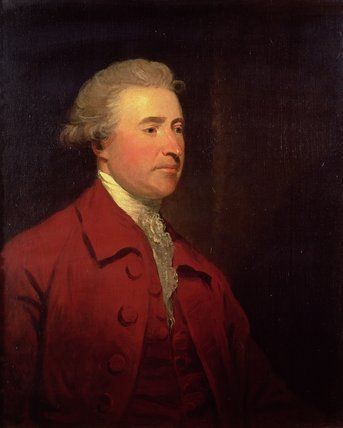
Burke's Wisdom on the Evils of Revolution


Portrait of Edmund Burke (1729-1797)
Date Painted c.1770–1780
James Northcote (1746-1831)
Oil on canvas
76.3 x 63.8 cm
Royal Albert Memorial Museum, Exeter, Devon, UK


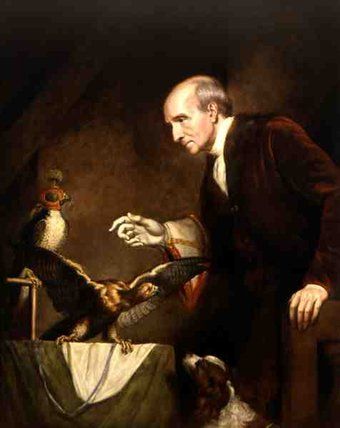
Here is some background on the painter James Northcote:
James Northcote was one of a number of prominent painters of the 18th century who hailed from the Plymouth area of Devon, the most notable of whom was Sir Joshua Reynolds, the founder and first president of the Royal Academy of Arts in London. Today Northcote is chiefly admired for his portraits, though his paintings of animals found favour in his lifetime. In his later years he devoted an increasing amount of time to history paintings, including some scenes from Shakespeare's history plays which were exhibited in Boydell's Shakespeare Gallery. [The rest of the long biography is here].

Self Portrait as a Falconer, 1823
James Northcote
Oil on canvas
127.1x10² cms
Royal Albert Memorial Museum, Exeter, Devon, UK


-------------------------------------------------------------------------------------------------------------------------------------------------------------
"Where men are not acquainted with each other's principles nor experienced in each other's talents, nor at all practiced in their mutual habitudes and dispositions by joint efforts in business; no personal confidence, no friendship, no common interest, subsisting among them; it is evidently impossible that they can act a public part with uniformity, perseverance or efficiency. In a connection, the most inconsiderable man, by adding to the weight of the whole, has his value, and his use; out of it, the greatest talents are wholly unserviceable to the public. No man, who is not inflamed by vain-glory into enthusiasm, can flatter himself that his single, unsupported, desultory, unsystematic endeavours are of power to defeat the subtle designs and united cabals of ambitious citizens. When bad men combine, the good must associate; else they will fall one by one, an unpitied sacrifice in a contemptible struggle."

In: The Works of Edmund Burke in Three Volumes, With a Memior [pdf file
Volume I
Thoughts on the Cause of the Present Discontent. p. 187
-------------------------------------------------------------------------------------------------------------------------------------------------------------

Edmund Burke wrote an extraordinary book titled A Philosophical Enquiry into the Origin of Our Ideas of the Sublime and Beautiful. What is remarkable about it is that Burke wrote it at nineteen years of age. I found this book looking for his seminal Reflections On The French Revolution. The full title of the latter is: Reflections On The French Revolution: What Is Liberty Without Wisdom, and Without Virtue? It Is the Greatest of All Possible Evils. I'm slowly working my way through this, but I found Penguin’s 84-page selection from Reflections On The French Revolution which is titled: The Evils of Revolution. A title in this booklet includes this prescient phrase: "What is liberty without wisdom, and without virtue? It is the greatest of all possible evils," which is a quote from Reflections.

There is much to quote from this tiny book, which is just a preliminary to getting into the real thing. Here are just a few quotes:

About the wrong, and destructive, types of leaders:
Compute your gains: see what is got by those extravagant and presumptuous speculations which have taught your leaders to despise all their predecessors, and all their contemporaries, and even to despise themselves, until the moment in which they became truly despicable.
On leaders:
There is no qualification for government, but virtue and wisdom, actual or presumptive. Wherever they are actually found, they have, in whatever state, condition, profession or trade, the passport of Heaven to human place and honour.
On revolutions:
The worst of these politics of revolution is this; they temper and harden the breast, in order to prepare it for the desperate strokes which are sometimes used in extreme occasions...This sort of people are so taken up with their theories about the rights of man, that they have totally forgot his nature.
On religion and Christianity:
We know, and it is our pride to know, that man is by his constitution a religious animal; that atheism is against, not only our reason but our instincts; that it cannot prevail long.
-------------------------------------------------------------------------------------------------------------------------------------------------------------
Posted By: Kidist P. Asrat
-------------------------------------------------------------------------------------------------------------------------------------------------------------

Friday, March 22, 2013

Finding Excellence


Hardy Geranium
Watercolor by Kidist P. Asrat
2008


Below is what I posted in my art and culture blog Camera Lucida on November 2009 (five years ago!) about conservatives and conservatism:
Doing Things: And finding excellence

I post this with some trepidation, since I don't want it to be misconstrued as an unnecessary focus on myself. But, I have no one else that I can use for this particular kind of example, so here goes.

I've talked extensively about various conservative groups and individuals in the past few months. I've also become aware that some who call themselves conservative are only so in a few (of their favorite) points. Some are outright libertarians, others have crossed the other side to liberalism

I think we spend an inordinate amount of time talking about, berating, criticising and moaning about liberals. Many conservatives have made this their mission (see Michelle Malkin here, who has a new book out on Obama).

I've always refrained from using my blogs as my sounding boards against liberals. I think it is far more important to put conservatives on track, or to point out their errors. This way, a real conservative body can be built. If we blatantly follow every conservative, just because he is not a liberal, then we have short-changed ourselves and the movement too.

But, one important thing is to DO things, as I wrote in a previous post on traditionalism, where small steps a movement make. This is where each individual behaves like a conservative, and not just talks about it. And since this world is a liberal world, that becomes much more difficult than it sounds. But, therein lies the challenge, and not only that, our very survival.

If I can use myself as an example:

I started out in experimental film. I loved handling celluloid. I would shoot, process and edit all my (very short) films myself. But, I found "art" film to be a dead-end. Rather than glorify art, it has become a hotbed for self-expression of the worst sort. Many (the majority) of the films I watched were, well, unwatchable. Aggressively so.

So, I left, rather than fight the failing system. I found textile design, which ironically attracted me because of the same hands-on, textural effect that I liked about film. Then I encountered another problem. I had very little drawing and painting background, and to my great surprise, our design instructors were just not willing (or able) to teach us those fundamentals. I started taking courses at various school boards, where I discovered a hidden gem of true artists, who I believe have been pushed out of the non-art culture prevalent in colleges and universities.

But what about design? Again, I found a vindictive hate of non-weird, non-edgy designs. Also, anything that looked like it had not been done using the much-touted photocopier or computer graphics, was frowned upon. It is too “old-fashioned” was the phrase. And all we want to be is modern, no?

In the end, I even left that group – psychologically, at least. Ordinary people seem to appreciate my efforts. Women like birds and flowers on their furniture fabric. Color and texture are always welcome. I hardly get a “what is that” when I show my work. I think that is the biggest compliment. My colleagues would beg to differ, of course.

My point is that all this is not a matter of perseverance; it is also a matter of pursuing excellence. If we give up on that, no matter how stubborn and persistent we may be, it will all come out wrong. We have to keep these traditions going strong, we have to learn them and learn how to use them. And then use them.

The funny thing about tradition is that it changes subtly through time. Innovations happen by building the new from the old; by adapting the past into our own present environments. This is what modern artists just don’t get. They are stuck in a rut with their experimentations and self-expression. The true inspiration and, paradoxically, change comes by pursuing tradition.